When you find yourself facing a major financial project—whether it is consolidating a mountain of high-interest credit card debt, funding a comprehensive home remodel, or covering unexpected medical expenses—a personal loan is often the most flexible financial tool available. Unlike a mortgage or an auto loan, an unsecured personal loan does not require you to pledge your home or car as collateral. You receive a lump sum of cash up front, which you pay back in fixed monthly installments over a set period of time.
However, before you start comparing interest rates or filling out applications, the most pressing question you need answered is: How much personal loan can you actually qualify for?
Lenders do not simply pull a number out of a hat. Your maximum borrowing capacity is determined by a highly structured mathematical equation that evaluates your income stability, your current debt obligations, and your long-term relationship with credit. While some elite financial institutions offer personal loans up to $100,000, the amount you will be approved for depends entirely on your unique financial footprint. Understanding these underwriting variables allows you to estimate your borrowing power accurately before a lender runs your file.
What Determines Your Maximum Personal Loan Limit?

Every financial institution features its own internal risk tolerance benchmarks, meaning your maximum loan approval limit can vary significantly from one bank to another. However, almost all modern underwriting algorithms evaluate the exact same core components to determine your financial boundaries.
1. Your Verifiable Income Stability
Your income is the primary engine driving your loan application. Lenders must verify that you possess a steady, reliable source of incoming cash flow to sustain your future monthly loan payments. While a higher income generally translates to a higher potential loan amount, underwriters prioritize consistency over raw volume. A steady, predictable salary from a long-term employer is always viewed more favorably than sporadic, highly volatile commission structures or newly launched business ventures.
2. Your Debt-to-Income (DTI) Ratio
Lenders do not look at your income in a vacuum; they evaluate it relative to your existing financial commitments. You could earn a substantial salary every month, but if the vast majority of that cash is immediately consumed by housing costs, auto loans, student loans, and credit card minimums, you will have very little disposable income left over to cover a new personal loan payment. This relationship is measured precisely using your Debt-to-Income (DTI) ratio.
3. Your FICO Credit Score and History
If your income and DTI prove that you can afford to pay back a loan, your credit history tells the lender whether you will pay it back. Your credit score serves as a direct indicator of financial responsibility. High scores prove to underwriters that you manage debt responsibly, making lenders comfortable approving high loan amounts. Low scores indicate a historical pattern of risk, which causes lenders to slash your maximum borrowing cap to minimize potential losses.
How Your Credit Score Directly Impacts Your Personal Loan Eligibility Amount
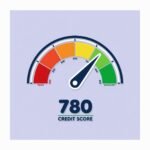
Your credit score is the single most influential variable affecting both the maximum amount of money a lender will give you and the Annual Percentage Rate (APR) you will pay for the privilege. Lenders use your score to categorize you into distinct risk tiers, which carry standard borrowing limits.
While individual lender policies differ, the market generally follows a predictable breakdown matching your consumer credit standing to realistic personal loan thresholds:
| Credit Score Tier | FICO Score Range | Maximum Estimated Loan Limit | Average Expected APR Range |
| Excellent | 740 to 850 | $40,000 to $100,000 | 6% to 11% |
| Good | 670 to 739 | $20,000 to $40,000 | 12% to 20% |
| Fair | 580 to 669 | $5,000 to $20,000 | 21% to 28% |
| Poor | 300 to 579 | Up to $5,000 (Or Denied) | 29% to 36% |
The Relationship Between Max Limits and High APRs
It is important to look at how a low credit score changes your loan dynamics. If you possess a fair or poor credit profile, a lender might technically approve you for a $10,000 loan, but they may couple that approval with an APR near 35%.
When an interest rate climbs that high, your monthly payment shoots up dramatically. Even if the lender is willing to hand over the capital, the sheer cost of the interest often makes it impossible for your monthly budget to absorb the payment safely, naturally limiting how much you can afford to borrow.
The Debt-to-Income (DTI) Ratio Formula Lenders Use to Calculate Your Borrowing Power
When an underwriting algorithm calculates your exact personal loan limit, it relies heavily on your Debt-to-Income (DTI) ratio. This metric identifies exactly how much of your monthly pre-tax income is already promised to other creditors.
To calculate your current DTI ratio, you add together all of your mandatory monthly debt payments and divide that total by your gross monthly income (your total earnings before taxes and deductions are taken out).

What Counts as a Mandatory Monthly Debt?
When calculating this ratio, you must only include fixed, recurring financial obligations that report to the major credit bureaus or carry legal payment mandates:
-
Monthly rent or mortgage payments.
-
Minimum required monthly credit card payments (not your full statement balances).
-
Student loan monthly installments.
-
Auto loan monthly payments.
-
Alimony, child support, or court-ordered legal settlements.
What to Exclude: You do not need to include everyday living expenses such as groceries, fuel, utility bills, streaming subscriptions, or auto insurance premiums in your baseline DTI calculation.
The 36% to 45% DTI Boundary Line
As a general rule of thumb across the consumer finance industry, the absolute maximum back-end DTI ratio most prime personal loan lenders will allow—including the projected payment of your new personal loan—is 45%. However, the absolute sweet spot for securing high loan limits and premium interest rates is keeping your total DTI at or below 36%.
Let’s look at a real-world example to see how a lender utilizes this math to dictate a borrower’s maximum loan size:
Imagine a consumer who earns a gross monthly income of $6,000.
[Gross Monthly Income: $6,000]
            │
            ▼
[Maximum Allowed Debt at 45% DTI: $2,700]
            │
            ▼
[Subtract Current Monthly Debts]
  • Rent: $1,200
  • Car Loan: $400
  • Credit Card Minimums: $200
  • Total Existing Debt: $1,800
            │
            ▼
[Remaining Cash Flow for New Loan: $900 / month]
In this scenario, the absolute maximum monthly payment this borrower can take on without breaking the lender’s 45% DTI ceiling is $900 per month.
If this applicant looks for a 3-year (36-month) personal loan at a 10% APR, a $900 monthly capacity translates to a maximum qualification limit of roughly $28,500. If they attempt to apply for a $40,000 loan, the resulting monthly payment would push their DTI past the institutional limit, resulting in an automated reduction of the loan size or an outright denial.
Unsecured vs. Secured Personal Loans: How Collateral Changes Your Qualification Caps
When researching your borrowing options, you will discover that personal loans are split into two major structural designs: unsecured and secured. Choosing the right loan model can completely change the maximum amount of money a bank is willing to clear for you.
Unsecured Personal Loans
The vast majority of personal loans issued today are unsecured. This means the contract is backed solely by your signature and your financial profile. Because the lender takes on significant risk—if you default on the loan, there is no physical asset for them to easily seize to recover their money—the qualification limits are strict. To access the maximum limits on an unsecured loan, your credit history and income records must be completely free of blemishes.
Secured Personal Loans
A secured personal loan requires you to pledge a highly valuable personal asset as collateral to back the debt contract. Common forms of acceptable collateral include:
-
The clean title to a paid-off vehicle.
-
A personal savings account or a certificate of deposit (CD) held with the bank.
-
A taxable investment or brokerage account.
When you transition to a secured loan structure, you radically alter the lender’s risk assessment. If you experience an unexpected financial emergency and default on your payments, the financial institution possesses a legal right to liquidate your asset to clear the outstanding balance.
Because their financial exposure falls significantly, lenders are often willing to unlock dramatically higher loan caps for non-prime borrowers. If you are struggling to qualify for more than $2,000 on an unsecured basis due to a thin credit file, offering a asset worth $15,000 as collateral can instantly elevate your maximum approval limit to meet your goals.
Step-by-Step Guide to Estimating Your Maximum Personal Loan Limit Before Applying

To avoid damaging your credit score with unnecessary application attempts, you should calculate your borrowing boundaries methodically. Taking an organized approach allows you to approach the market with confidence.
Pre-Application Borrowing Power Checklist
Common Reasons Lenders Limit or Lower Your Requested Loan Amount
It is a common experience for a consumer to submit a loan application requesting $30,000, only to receive a counteroffer from the lender stating they are only approved for $15,000. When an underwriter extends a scaled-back counteroffer, it is usually triggered by specific risk factors built into your application data.
1. Having a Thin Credit File
You could possess a perfect 800 credit score, but if that score is built on just a single credit card with a short two-year history, you possess what lenders refer to as a thin credit file.
Algorithms look for historical depth to predict future behavior. If you have never successfully managed a large installment account in the past, an underwriter will rarely risk a high-value approval on your very first try. They will cap your initial loan at a modest level to observe how you manage the debt over time.
2. A History of High Credit Card Utilization
Your credit utilization ratio measures how much of your total available credit card limits you are actively using at any given moment. If your cards are consistently pushed near their maximum boundaries, your utilization ratio climbs past the recommended 30% threshold. Lenders view maxed-out credit cards as a sign of financial strain, assuming you are relying on borrowed lines to handle daily living expenses. To lower their risk exposure, they will restrict your personal loan limit.
3. A Recent Wave of Hard Credit Inquiries
If your credit report demonstrates that you have applied for multiple credit cards, auto loans, or personal lines of credit over the past few months, it flags your profile as a high risk. Looking for multiple lines of credit in a short window signals to automated systems that you may be facing an unrecorded cash shortfall. To protect their capital, underwriters will reduce your borrowing limit until those inquiries age off your file.
4. Short Job Longevity with Your Current Employer
Even if your monthly income is substantial, starting a brand-new job three weeks ago introduces risk into your file. Statistically, new employment positions face the highest probability of turnover within the first 6 to 12 months. Lenders prefer to see an unbroken two-year history with the same employer or within the exact same career track before clearing high-value personal loan amounts.
How to Legally and Safely Increase the Maximum Loan Amount You Qualify For

If your current financial profile falls short of the money you need for your project, you do not have to settle for unfavorable terms. You can take immediate, strategic steps to optimize your financial standing and naturally increase your borrowing capacity.
Aggressively Reduce Your Existing Credit Card Balances
The fastest way to instantly increase your maximum loan limit is to pay down your outstanding credit card balances. This strategy works a double wonder on your financial profile:
-
It lowers your credit utilization ratio, which triggers a rapid increase in your credit score tier.
-
It reduces your minimum mandatory monthly payments, which clears immediate space in your DTI ratio.
By freeing up your monthly cash flow, the underwriting algorithm can safely expand your maximum personal loan allowance.
Bring a Creditworthy Co-Signer or Co-Borrower on Board
If your alternative income streams or recovering credit score cannot support a high-value loan on their own merits, you can add a trusted family member or spouse to your application as a co-signer.
A co-signer legally guarantees the loan contract, promising to step in and manage the monthly installments if you face an unexpected financial emergency. Because the lender evaluates the co-signer’s strong income records and prime credit standing alongside your own, this strategy can instantly unlock maximum loan caps and significantly lower your interest rates.
Select a Longer Loan Repayment Term
If a lender declines a high loan amount because the resulting monthly payment breaks your allowed DTI ratio, you can adjust the length of your loan contract to resolve the issue.
Choosing a 5-year (60-month) repayment term instead of a 3-year (36-month) term spreads the principal balance over a longer period, lowering your individual monthly payment. This adjustment can bring the monthly obligation safely under the lender’s DTI ceiling, turning a rejection into an approved loan.
The Cost of Long Terms: While extending your loan term lowers your monthly payment to help you qualify for a higher total balance, it also means you will remain in debt longer and accumulate significantly more total interest costs over the life of the loan. Always balance your immediate qualification needs against the long-term cost of borrowing.
Frequently Asked Questions About Personal Loan Qualification Limits
Can I get a $50,000 personal loan with a 600 credit score?
Securing an unsecured $50,000 personal loan with a 600 credit score is extremely difficult through traditional prime lenders. A score of 600 places you in the fair-to-poor credit category, which represents significant risk to underwriters. For an unsecured loan of that size, most prime institutions require an excellent credit score above 720. To obtain $50,000 with a 600 score, you will likely need to look at specialized subprime lenders, offer a highly valuable asset as collateral for a secured loan, or add a co-signer with a strong credit profile.
Does an online pre-qualification guarantee that I will receive the maximum amount shown?
No, an online pre-qualification offer is simply a conditional estimate based on an initial soft credit pull and the self-reported income values you input into the portal. It is not an absolute guarantee of funding. The official loan size and interest rate are only finalized after you submit a formal application, authorize a hard credit check, and upload your real verification paperwork (like bank statements and tax returns) to prove your income claims. If your verified documentation shows inaccuracies, the lender can reduce your final loan amount or decline the request entirely.
How many active personal loans can you legally hold at the same time?
There is no legal or regulatory limit on the number of personal loans an individual can hold simultaneously. You could technically have three or four separate personal loans active at once. However, from a practical underwriting perspective, every active loan you hold adds a significant monthly obligation to your credit profile, driving up your DTI ratio and adding hard inquiries to your file. Most lenders will refuse to issue a new personal loan if you already hold multiple active installment lines, as it signals a high risk of overextension.