
Seeing red across your investment portfolio is a sight that can make even the most seasoned investors feel a pit in their stomach. In the world of finance, few terms carry as much weight—and as much fear—as the “Bear Market.”
But while the headlines might sound apocalyptic, a bear market is a natural, albeit painful, part of the economic cycle. Understanding what it is, why it happens, and how it behaves is the first step toward moving from a state of panic to a state of preparation. In this guide, we will break down everything you need to know about bear markets, from technical definitions to survival strategies that can help you build long-term wealth.
Defining the Bear: The 20% Rule and Beyond
At its most basic level, a bear market is a period when stock prices fall significantly and investor pessimism becomes self-sustaining.
The Technical Threshold
While a “bad day” or a “rough week” might feel like a disaster, Wall Street uses a specific mathematical benchmark to define a bear market: A decline of 20% or more from recent all-time highs in major market indices, such as the S&P 500 or the Dow Jones Industrial Average.
If the market drops 5% or 10%, it is often referred to as a “dip” or a “pullback.” Once it hits 10% but stays below 20%, it is classified as a correction. The 20% mark is the psychological and technical “line in the sand” where a correction transforms into a full-fledged bear market.
Why Is It Called a “Bear” Market?
The animal metaphors in finance aren’t just for flair; they describe the way the animals attack. A bull thrusts its horns upward, symbolizing a rising market. A bear, on the other hand, swipes its paws downward, symbolizing a market that is crashing or retreating.
Bear Market vs. Stock Market Correction: Knowing the Difference
It is easy to confuse a bear market with other types of market volatility. However, the duration and severity of these events differ greatly.
1. Market Corrections
A correction is a decline of at least 10% but less than 20%. These are incredibly common and usually short-lived. On average, a correction happens about once a year. They often serve as a “healthy” reset for an overheated market, bringing prices back in line with actual company earnings.
2. Bear Markets
Bear markets are rarer and more severe. They involve a 20%+ drop and often last much longer than corrections. While a correction might last a few weeks or months, a bear market can drag on for over a year.
3. Recessions
A recession is an economic term, not a stock market term. It is generally defined as two consecutive quarters of negative Gross Domestic Product (GDP) growth. While bear markets often precede or accompany a recession, they are not the same thing. You can have a bear market without a recession, and occasionally, a recession without a traditional bear market.
What Causes a Bear Market? Unpacking Economic Triggers
Bear markets don’t happen in a vacuum. They are usually triggered by a combination of fundamental economic shifts and a sudden evaporation of investor confidence.
Rising Interest Rates and Inflation
When inflation gets too high, central banks (like the Federal Reserve) raise interest rates to cool the economy. Higher rates make it more expensive for companies to borrow money and grow. As borrowing costs rise, corporate profits often fall, leading investors to sell off stocks.
Geopolitical Instability
Wars, trade disputes, or global pandemics (like the events of 2020) create uncertainty. The stock market hates uncertainty. When investors can’t predict what the world will look like in six months, they tend to move their money out of “risky” stocks and into “safe” assets like gold or government bonds.
Bursting Asset Bubbles
Sometimes, the market simply gets too expensive. If investors drive the price of a specific sector (like tech in the late 90s or housing in 2008) far beyond its actual value, a “bubble” forms. When that bubble inevitably bursts, the resulting sell-off can pull the entire market into a bear cycle.
The Psychology of a Down Market: Fear, Panic, and Capitulation
The stock market is driven by human emotion as much as it is by math. In a bear market, the dominant emotion is Fear.
The Feedback Loop
In a bull market, “greed” and “FOMO” (Fear Of Missing Out) drive prices up. In a bear market, the opposite happens. As prices fall, investors panic and sell to “lock in” what they have left. This mass selling causes prices to fall further, which triggers more panic. This is known as a vicious cycle.
Capitulation: The Final Stage
Many analysts look for “capitulation” as a sign that the bear market is nearing its end. Capitulation is the point where the last remaining optimists give up and sell in total panic. Paradoxically, when everyone has finally sold and the sentiment is at its absolute lowest, that is often when the market begins to bottom out and start its recovery.
Historical Bear Markets: Lessons from the Past
To understand the future, we must look at the history of the S&P 500. Bear markets are a recurring feature of the American economy.
-
The Great Depression (1929): The most famous bear market in history, where the market lost nearly 90% of its value over several years.
-
The Dot-Com Bubble (2000): After a decade of massive tech growth, the Nasdaq fell 78% as internet companies with no profits finally collapsed.
-
The Great Recession (2008): Triggered by the subprime mortgage crisis, the S&P 500 fell about 50% from its peak.
-
The COVID-19 Crash (2020): One of the fastest bear markets in history, dropping 30% in mere weeks, followed by an equally fast recovery.
Key Lesson: Every single bear market in history has ended in a new all-time high. The market’s long-term historical trend is always upward, despite these temporary (though painful) interruptions.
How Long Does a Bear Market Last?

The duration of a bear market can vary wildly. On average, bear markets tend to be much shorter than bull markets.
-
Average Duration: Historically, the average bear market lasts about 14 to 15 months.
-
Average Decline: The average loss during these periods is roughly 33%.
-
Recovery Time: It typically takes about 2 years for the market to reach its previous break-even point.
Comparing this to bull markets, which can last for a decade and gain hundreds of percentage points, it becomes clear that the bear is a short-term hurdle in a long-term race.
Investment Strategies for a Bear Market: How to Protect Your Portfolio
You don’t have to be a helpless bystander when the bear strikes. There are specific strategies you can use to mitigate losses and position yourself for the eventual recovery.
1. Dollar-Cost Averaging (DCA)
Instead of trying to “time the bottom” (which is nearly impossible), continue investing a fixed amount of money at regular intervals. When prices are low, your money buys more shares. When the market eventually recovers, those “cheap” shares will be the engine of your wealth growth.
2. Diversification and Asset Allocation
A diversified portfolio is your best defense. While stocks are falling, other assets like Bonds, Real Estate, or Cash Equivalents may hold their value or even rise. Ensure your portfolio isn’t 100% in high-risk tech stocks if you can’t stomach a 20% drop.
3. Focus on Defensive Sectors
Not all companies suffer equally in a bear market. “Defensive” sectors—like Consumer Staples (food, toilet paper), Utilities (electricity, water), and Healthcare—tend to be more resilient. People still need to eat and see the doctor, even during a recession.
4. Avoid “Panic Selling”
Selling during a bear market “realizes” your losses. As long as you hold your shares, your loss is only “on paper.” Historically, investors who stay the course and don’t sell during the panic are the ones who reap the rewards during the next bull run.
The Silver Lining: Why Bear Markets are Wealth-Building Opportunities
It sounds counterintuitive, but for long-term investors, a bear market is actually a gift.
The “Stock Market Sale”
Imagine your favorite clothing store suddenly announced a 30% off sale on everything. You would be excited to shop. A bear market is essentially a sale on the world’s greatest companies. For someone with a 10, 20, or 30-year time horizon, buying high-quality index funds or blue-chip stocks during a bear market is like buying a house at a deep discount.
Building the “Cost Basis”
By buying when prices are low, you lower your average cost basis.
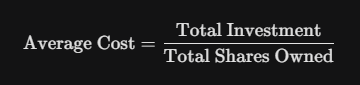
When the market returns to its previous highs, your gains will be significantly larger because you accumulated so many shares at “discounted” prices.
Keeping Your Cool When the Market Gets Cold
A bear market is a test of character and discipline. It is easy to be an investor when everything is green; the real work happens when the screen is red.
Remember that bear markets are temporary, but the growth of the global economy is a long-term force. By staying diversified, utilizing dollar-cost averaging, and maintaining a long-term perspective, you can transform a period of fear into a period of opportunity.
Don’t fear the bear—understand it, prepare for it, and use it to your advantage.