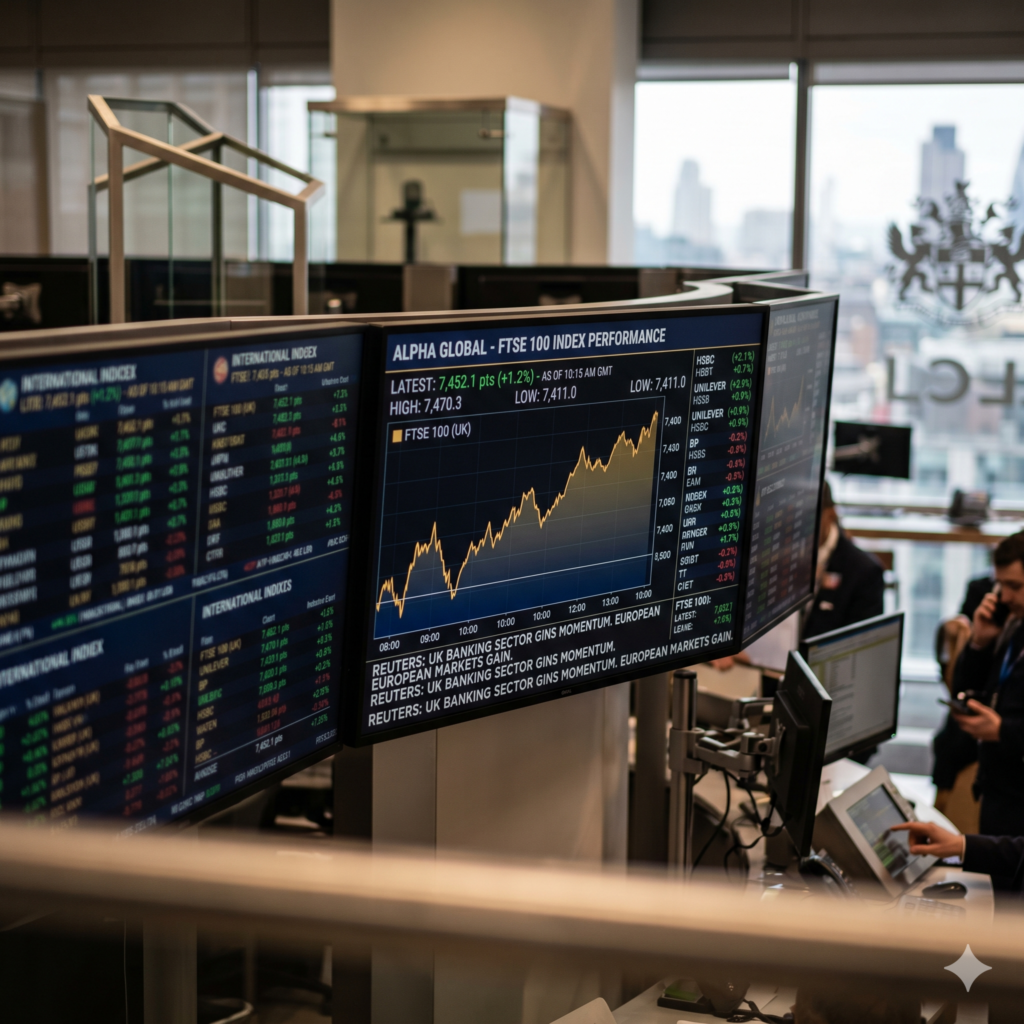
The stock market is often portrayed in one of two ways: a high-octane casino where “wolves” make millions in minutes, or a terrifying black hole where innocent savings go to die. Neither of these is the full truth.
If you’re just starting, you’ve likely been bombarded with advice about “diversification,” “low-cost index funds,” and “buying the dip.” But there is a massive gap between the textbook theory of investing and the gritty reality of holding onto your assets when the world feels like it’s falling apart.
In this deep dive, we’re pulling back the curtain on the “secrets” that financial gurus rarely mention—not because they are necessarily malicious, but because these truths don’t sell catchy newsletters or expensive trading courses.
1. Your Behavioral “Monkey Brain” is Your Worst Enemy

Most people think the stock market is about math, spreadsheets, and economic forecasts. It isn’t. Investing is 90% temperament and 10% intellect.
Humans are biologically wired for the savannah, not the stock market. When we see a “sea of red” on our screens, our amygdala triggers a fight-or-flight response. This is why retail investors notoriously “buy high” (driven by euphoria and FOMO) and “sell low” (driven by panic).
The Cost of Emotional Turbulence
Data from firms like Dalbar consistently show that the average investor drastically underperforms the market index. Why? Because they jump in and out at the wrong times. To succeed, you have to be willing to look at a 30% drop in your net worth and do absolutely nothing—or, even better, buy more.
Pro Tip: If you find yourself checking your portfolio more than once a month, you aren’t an investor; you’re a gambler looking for a dopamine hit.
2. The “Financial Guru” Industrial Complex is Built on Noise
Every day, “experts” on cable news and social media make bold predictions: “The S&P 500 will crash by 40% next week!” or “This AI stock is the next NVIDIA!”
Here is what nobody tells you: Nobody actually knows.
If these gurus could truly predict the market with 100% accuracy, they wouldn’t be selling you a $99 subscription; they would be managing a multi-billion dollar hedge fund in silence. Most financial media is designed to generate clicks and views, not returns. In the stock market, “news” is often just “noise” disguised as information.
3. The Math of Hidden Fees: The “Silent Wealth Erosion”
When you choose a fund, you might see an “Expense Ratio” of 1%. That sounds small, right? $1 for every $100? No big deal.
In reality, a 1% fee can eat up nearly one-third of your total potential wealth over a 30-year horizon. This is because that 1% isn’t just coming out of your principal; it’s coming out of your compounded growth.
The Impact of Fees on $100,000 Over 30 Years (7% Return)
| Fee Percentage | Ending Balance | Total Paid in Fees |
| 0.05% (Low-cost Index) | $749,000 | ~$12,000 |
| 0.50% (Average ETF) | $661,000 | ~$100,000 |
| 1.50% (Active Management) | $498,000 | ~$263,000 |
By choosing an actively managed fund with high fees, you are essentially gifting years of your working life to a fund manager who, statistically, will likely underperform a simple index fund anyway.
4. The Magic of Compounding Requires “Boring” Persistence
We all know the formula for compound interest:
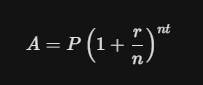
But what people don’t tell you is that the “t” (time) does all the heavy lifting at the very end.
Warren Buffett is one of the wealthiest men in history, but over 90% of his wealth was accumulated after his 65th birthday. The stock market is a game of endurance. The first ten years of investing feel like watching paint dry. You put in money, and it barely moves. But in decades three and four, the “snowball” begins to double in size with terrifying speed.
If you aren’t willing to be “bored” for twenty years, you will never get to the part where you are “rich.”
5. The Stock Market is NOT the Economy
This is a crucial distinction that confuses laypeople. You will often see the stock market hitting all-time highs while the economy feels like a disaster (high unemployment, struggling small businesses).
Why does this happen?
-
The Market is Forward-Looking: Stocks reflect what investors think will happen in 6 to 12 months, not what is happening today.
-
The Market is Weighted: Major indices like the S&P 500 are dominated by massive, global corporations. A local recession might hurt your neighborhood, but it might not affect Apple’s global iPhone sales.
-
Interest Rates: When the economy is bad, central banks often lower interest rates. Lower rates make stocks more attractive compared to “safe” assets like bonds, driving stock prices up even in a weak economy.
6. Inflation is a Guaranteed -100% Return Over Time
People often fear the “risk” of the stock market. But the biggest risk is holding too much cash.
Inflation is the silent thief. If inflation averages 3% per year, the $100 in your pocket today will only buy $50 worth of goods in roughly 24 years.

The stock market is one of the few historical “hedges” against inflation. By owning companies, you own assets that can raise prices to match inflation, protecting your purchasing power. Sitting in “safe” cash is a guaranteed way to lose wealth over the long haul.
7. Diversification is the Only “Free Lunch” (But It Hurts)
Diversification means owning a bit of everything so that no single failure can ruin you. However, the “hidden” part of diversification is that you will always own something that you hate.
If your entire portfolio is going up at once, you aren’t diversified; you’re just lucky. A truly diversified portfolio will always have a “laggard”—perhaps international stocks are down while US tech is up. The temptation is to sell the “loser” and buy more of the “winner.” Resist this. Today’s loser is often tomorrow’s leader.
8. Taxes: The “Invisible” Partner in Your Portfolio
Nobody tells you that the government is a 15% to 37% “partner” in your investment gains. However, the way you invest determines how much they take.
Short-Term vs. Long-Term Capital Gains
If you buy a stock and sell it 11 months later for a profit, you are taxed at your ordinary income rate (High). If you hold that same stock for 12 months and one day, you are taxed at the Long-Term Capital Gains rate, which is often much lower (0%, 15%, or 20%).
The Lesson: “Day trading” isn’t just difficult; it is tax-inefficient. Wealthy investors are almost always “buy and hold” investors because they understand that minimizing taxes is a guaranteed return.
9. Market Volatility is a Feature, Not a Bug
New investors often ask: “How do I avoid a market crash?”
The answer is: You don’t.
Volatility is the “fee” you pay for long-term returns. If the stock market only went up in a straight line, it wouldn’t offer 7–10% returns because there would be no risk. Everyone would do it, and the returns would be bid down to almost zero.
Think of a market crash as a “sale” on the world’s best companies. If you can change your mindset from “Oh no, I’m losing money” to “Everything I want to buy just got 20% cheaper,” you have won the game.
10. The Best Investment Isn’t a Ticker Symbol
If you have $1,000 to invest, putting it into a “hot stock” might make you a few hundred bucks if you’re lucky. But spending that $1,000 on a certification, a skill, or a business that increases your annual income by $10,000 is a 1,000% return.
The stock market is a tool for multiplying wealth, but your career or business is the tool for generating it. In the early stages of your life, focus on increasing your “savings rate” by earning more. A 10% return on $1,000 is nothing. A 10% return on $1,000,000 is life-changing.
The Path to Financial Zen
Building wealth in the stock market isn’t about being the smartest person in the room. It’s about being the most disciplined.
The “secret” is that there is no secret. It’s about spending less than you earn, investing the difference in low-cost diversified assets, and then—this is the hardest part—leaving it alone for thirty years.
The stock market is designed to transfer wealth from the impatient to the patient. Which one will you be?
Final “Cheat Sheet” for Your Strategy:
-
Automation: Set up an automatic transfer so you don’t have to “decide” to invest every month.
-
Emergency Fund: Keep 6 months of cash in a high-yield savings account so you never have to sell stocks during a crash.
-
Low Fees: Use funds with expense ratios under 0.10%.
-
Taxes: Use tax-advantaged accounts like a Roth IRA or 401(k) whenever possible.
-
Ignore the Headlines: The world is always “ending” according to the news. The market doesn’t care.