In an era of fluctuating economic stability and rising living costs, the way we approach the checkout counter has fundamentally changed. A decade ago, the idea of “financing” a gallon of milk or a carton of eggs would have seemed absurd. Today, with the meteoric rise of Buy Now, Pay Later (BNPL) services and specialized credit card features, installment-based grocery shopping has become a mainstream financial strategy.
But just because you can split your supermarket bill into four easy payments doesn’t mean you should. As food inflation continues to squeeze household budgets, many consumers are left wondering: Is financing groceries a savvy way to manage cash flow, or a dangerous slide into a debt trap?
In this comprehensive guide, we will break down the mechanics, the pros and cons, and the long-term financial implications of grocery installments to help you decide if this trend belongs in your wallet.
Understanding the Rise of Buy Now, Pay Later (BNPL) in the Grocery Industry
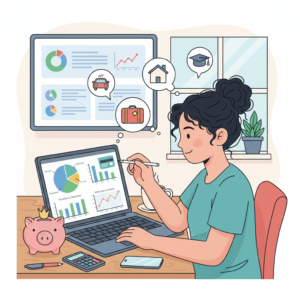
The financial landscape has shifted significantly with the integration of fintech into the retail grocery space. Major retailers have partnered with providers like Klarna, Affirm, and Afterpay to offer installment plans right at the point of sale.
Traditionally, installments were reserved for high-ticket items like furniture, electronics, or appliances—things that provide value over many years. However, the “commoditization of debt” has reached the refrigerator. Grocery stores are now offering these options because they increase the “average order value.” When a customer knows they only have to pay 25% of the bill today, they are statistically more likely to add premium items to their cart.
For the consumer, the appeal is psychological. Breaking a $200 grocery bill into four payments of $50 feels significantly less painful than seeing $200 leave your bank account instantly. But beneath this convenience lies a complex web of financial psychology and credit mechanics that every shopper needs to understand.
The Financial Math: When Installment Payments Actually Make Sense
From a purely mathematical standpoint, financing your groceries can occasionally be a “win” for the consumer, provided the terms are 0% APR (Annual Percentage Rate).
1. Arbitrage and the Time Value of Money
If you have the cash on hand but choose to pay in installments at 0% interest, you are technically practicing a form of “arbitrage.” By keeping that money in a high-yield savings account or a liquid investment for an extra six to eight weeks, you earn a small amount of interest on money that you technically “owe.” While the gains on a $200 grocery bill are nominal, over a year of shopping, this can add up to a meaningful amount of “free” money.
2. Managing “Lumpy” Income
For freelancers, gig workers, or those on commission-based salaries, income isn’t always a steady stream. In a week where income is low but the pantry is empty, installments act as a bridge. It allows for the purchase of necessities without triggering expensive overdraft fees or high-interest credit card debt.
3. Hedging Against Inflation
We are living through a period of significant food price volatility. If you anticipate that the price of non-perishable goods will rise by 10% in the next three months, buying them in bulk today using an interest-free installment plan allows you to “lock in” today’s prices while paying with tomorrow’s (potentially devalued) currency.
The Psychological Trap of Micro-Debt and Lifestyle Creep
While the math might check out in a vacuum, humans do not live in a vacuum. We are emotional spenders. The primary danger of grocery installments isn’t necessarily the interest—it’s the behavioral shift.
The “Ostrich Effect” in Budgeting
When we split payments, we tend to lose track of our total debt load. This is often called “death by a thousand cuts.” A $40 payment for groceries here, a $30 payment for a pair of shoes there, and a $25 payment for a dinner out can quickly snowball. Before you know it, a significant portion of your monthly income is spoken for before you even receive your paycheck.
Artificial Purchasing Power
Financing groceries can create a false sense of wealth. It allows consumers to maintain a lifestyle (buying organic, premium cuts of meat, or luxury snacks) that their current liquid income cannot actually support. This is the definition of lifestyle creep. When the “promotional period” of your life ends—perhaps due to a job loss or an emergency—you are left with a high cost of living and a mountain of micro-debts.
How Grocery Installments Affect Your Credit Score and Financial Health

Many consumers believe that since BNPL services often use “soft” credit checks, they won’t impact their credit score. This is a dangerous misconception.
-
Credit Utilization: If you use a traditional credit card to “parcel” your groceries through a bank-offered installment plan, that balance still counts toward your credit utilization ratio. A high utilization ratio can lower your FICO score.
-
Payment History: Missing just one “small” $50 installment payment can be reported to credit bureaus, potentially tanking your score by dozens of points. For a young person or someone looking to buy a home, the risk of a missed grocery payment ruining a mortgage application is a very real, albeit avoidable, tragedy.
-
Hard Inquiries: Some financing options at the grocery store are actually “store cards” in disguise. These require a hard credit pull, which stays on your report for two years and can temporarily dip your score.
Credit Cards vs. BNPL Apps: Choosing the Right Tool for Your Supermarket Run
If you decide that financing is necessary, you must choose your tool wisely. Not all debt is created equal.
| Feature | Buy Now, Pay Later (BNPL) | Traditional Credit Card |
| Interest Rate | Often 0% if paid on time | 15% – 29% APR if not paid in full |
| Credit Impact | Soft check (usually), but defaults are reported | Hard check to open, constant reporting |
| Rewards | Rare or minimal | Cashback (3-6% on groceries) |
| Consumer Protection | Limited | Robust (fraud protection, dispute rights) |
For most consumers with disciplined spending habits, a dedicated grocery rewards credit card is superior to installments. Some cards offer 6% cashback on groceries. If you pay the balance in full every month, you are effectively getting a 6% discount on your food—something an installment plan rarely offers.
Strategic Grocery Shopping: Better Alternatives to Financing Your Meals
Before reaching for the “pay in 4” button, consider these high-impact strategies to lower your grocery bill without going into debt:
1. The “Unit Price” Mastery
Stop looking at the total price on the shelf. Look at the price per ounce or price per gram. Often, the larger “value pack” is actually more expensive per unit than the medium-sized one. Mastering unit prices can slash 10-15% off your bill instantly.
2. Inventory Management (The “Pantry Challenge”)
Most households have $50 to $100 worth of “hidden” food in the back of the pantry or the bottom of the freezer. Before going to the store and financing more food, spend one week “eating down” what you already own. It’s the ultimate zero-interest way to save money.
3. Generic vs. Name Brand
In the United States, FDA regulations ensure that store-brand (generic) staples like salt, sugar, milk, and many canned goods meet the same safety and nutritional standards as name brands. Switching to generics can save a family hundreds of dollars a month without sacrificing quality.
The Hidden Risks: Late Fees, Interest Rates, and Overspending
The “business model” of many installment providers relies on the “forgetfulness” of the consumer.
-
Late Fees: While some providers claim to be “fee-free,” many charge flat fees ($7 to $10) for every missed payment. On a small grocery installment, that fee could represent a 20% “interest rate” in a single week.
-
Deferred Interest: Some financing plans offer “0% interest for 6 months.” However, if you have even $1 left on the balance at the end of month six, they may charge you backdated interest on the original total amount from day one. This is a common trap in retail financing.
-
The Overspending Multiplier: Internal data from BNPL companies often shows that users spend up to 20% more when they use installments. If financing groceries causes you to buy things you don’t need, the “0% interest” benefit is completely negated by the increased waste.
When is it “Okay” to Installment Your Groceries?
To be clear, financing groceries isn’t always a “bad” financial move. It is a tool, and like any tool, its value depends on the hands of the user. It might be appropriate if:
-
It’s a true emergency: You have no cash, the kids need to eat, and your next paycheck is five days away. In this case, a 0% installment plan is infinitely better than a high-interest payday loan.
-
You are bulk-buying for a specific reason: You’re hosting a large (budgeted) event or stocking up on items that are currently on a once-a-year sale.
-
You are highly disciplined: You have a spreadsheet, you’ve accounted for every penny, and you are simply using the 0% offer to keep your cash in a high-interest account.
The Verdict on Grocery Installments
So, is it worth it to installment your grocery purchases?
For the vast majority of people, the answer is no. The risks of overspending, the complexity of managing multiple micro-payments, and the potential impact on your credit score far outweigh the minor cash-flow benefits. Groceries are a recurring, consumable expense. Financing something that you will eat and “dispose of” within a week is fundamentally different from financing a car that will take you to work for the next five years.
The goal of healthy personal finance is to move toward a “proactive” relationship with money, rather than a “reactive” one. Instead of splitting a high bill at the register, the better move is to use budgeting apps, meal planning, and cashback rewards to ensure that you can always afford your groceries in full.
Final Tip: If you find yourself needing to installment your groceries every single month, it is time to look at your “Food Budget” and “Income” as a whole. You may not have a “payment” problem; you may have a “spending” or “income” problem that needs a more permanent solution than a BNPL app can provide.