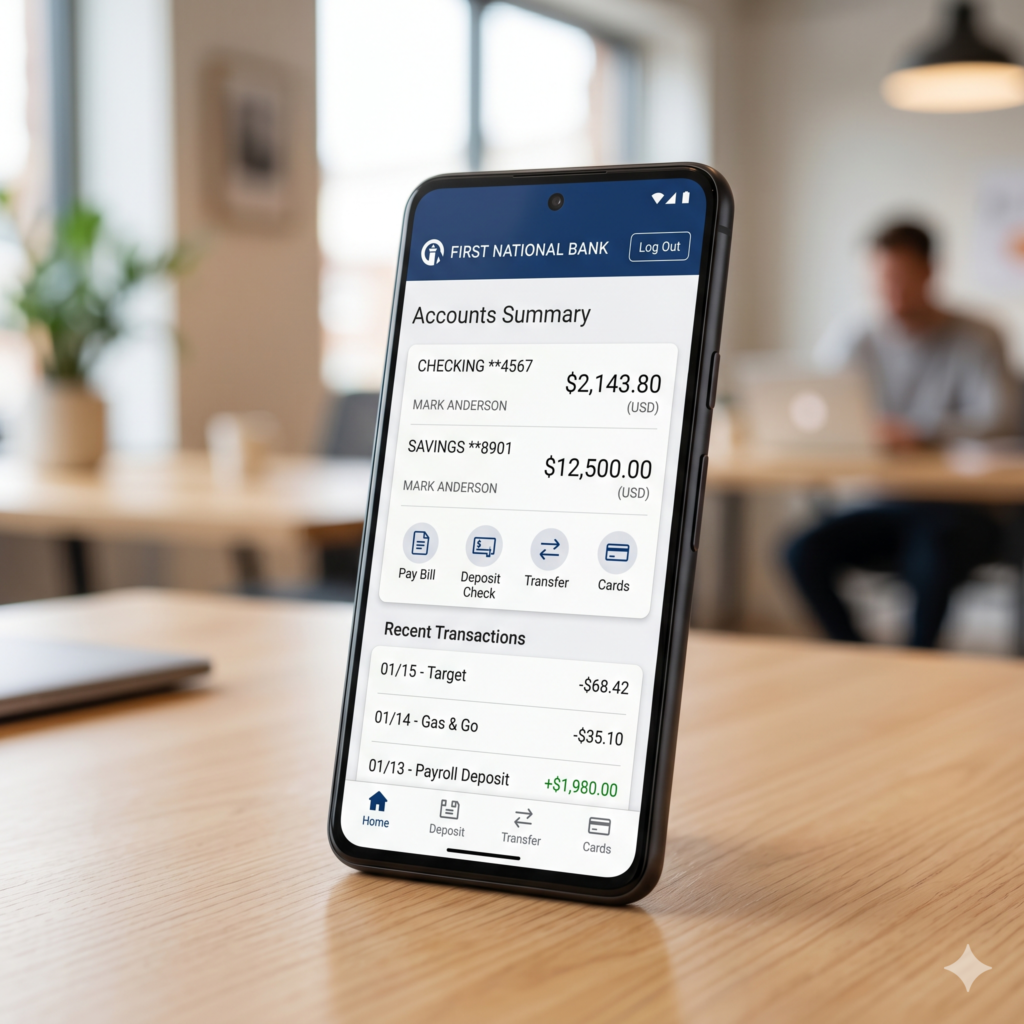
Taking the first step into the world of investing is an exciting milestone on your journey toward financial independence. For decades, the financial industry has built a wall of intimidation around the stock market, using hyper-complex terminology, flashy trading screens, and confusing jargon to make everyday people feel like building wealth is an exclusive club reserved only for Wall Street elites.
In reality, the core fundamentals of building a successful, multi-million dollar investment portfolio are incredibly straightforward and accessible to anyone.
You do not need a massive lump sum of money, an advanced degree in mathematics, or hours of free time every day to start investing. The most successful investors do not build wealth by picking winning lottery stocks or accurately guessing what the market will do tomorrow. Instead, they rely on a structured, rule-based framework built around discipline, consistency, and a deep understanding of their own personal goals.
This comprehensive, beginner-friendly guide will strip away the confusing jargon and provide a clear, step-by-step blueprint explaining exactly how to construct, manage, and scale your very first investment portfolio to secure your financial future.
Setting Up Your Financial Foundation: Essential Pre-Investing Steps to Protect Your Capital
Before you open a brokerage account or buy a single financial asset, you must ensure that your personal finances are structurally sound. Trying to build an investment portfolio on top of a shaky financial foundation is like building a skyscraper on a foundation of shifting sand—a single unexpected life storm can cause the entire structure to collapse, forcing you to ruin your long-term plans.
[Weak Foundation]   ──► No Emergency Savings ──► Market Crash + Life Crisis ──► Forced Liquidation at a Loss
[Strong Foundation] ──► Ironclad Cash Buffer ──► Market Crash + Life Crisis ──► Portfolio Left Untouched to Compound
Eliminating High-Interest Consumer Debt First
Not all debt is created equal, but high-interest consumer debt—such as credit card balances, payday loans, or high-rate personal financing—is an absolute wealth killer. The historical long-term average return of the stock market hovers around 7% to 10% per year when adjusted for inflation. Meanwhile, the average credit card interest rate easily climbs between 18% and 25%.
Mathematically, if you invest money to earn a 10% return while simultaneously paying 20% interest to a credit card corporation, you are actively losing money every single month. Paying off high-interest debt gives you a guaranteed, risk-free “return on investment” equal to the interest rate you are escaping, instantly freeing up your monthly cash flow to build real wealth.
Establishing an Ironclad Emergency Fund
The stock market moves in unpredictable, non-linear waves. While it rises over long horizons, it experiences frequent short-term drops, corrections, and bear markets. If you pour your entire life savings into the market without keeping a separate liquid cushion, you are exposing yourself to extreme operational risk.
If an unexpected emergency strikes—such as a medical bill, a major vehicle breakdown, or an unexpected job loss—during an economic downturn, you will be forced to sell your investments at an absolute loss just to get cash to pay your rent.
To prevent this, save three to six months’ worth of essential living expenses inside a dedicated High-Yield Savings Account (HYSA). Treat this money strictly as a financial safety net. It isn’t meant to make you rich; it is meant to act as a shield, giving you the emotional peace of mind to leave your long-term portfolio perfectly alone to compound through turbulent economic cycles.
Defining Your Financial Goals and Timeline: Matching Your Portfolio with Your Investment Horizon

An investment portfolio is not a generic, one-size-fits-all product. A portfolio designed for a 22-year-old college graduate saving for a retirement forty years away should look completely different from a portfolio designed for a 45-year-old parent saving for a child’s upcoming college tuition. Before you select your assets, you must define your investment horizon—the exact amount of time you have before you need to withdraw the funds.
Short-Term Investing Goals (Less Than 3 Years)
If you need your money within the next 36 months for a specific milestone—such as a down payment on a home, a wedding, or a major business launch—the stock market is not the safe place for this capital. The market is too volatile over brief timelines, and a sudden downturn right before your deadline can completely derail your plans.
-
Best Asset Allocations: High-Yield Savings Accounts (HYSAs), short-term Certificates of Deposit (CDs), and ultra-safe Government Treasury Bills. These vehicles offer complete principal safety and guaranteed returns, ensuring your money is fully available the exact day you need it.
Medium-Term Investing Goals (3 to 10 Years)
Medium-term goals require a balanced, calculated approach. You want to outpace inflation and achieve meaningful capital growth, but you don’t have multiple decades to wait out a prolonged economic recession.
-
Best Asset Allocations: A conservative or moderate blend of broad market exchange-traded funds (ETFs) combined with high-quality, fixed-income corporate or government bond funds. This structure captures steady market gains while establishing a soft financial cushion to dampen short-term volatility.
Long-Term Investing Goals (More Than 10 Years)
When you are investing for a distant future—such as your ultimate retirement or building long-term generational wealth—time is your absolute greatest superpower. Short-term market crashes, news headlines, and daily price fluctuations become completely irrelevant.
-
Best Asset Allocations: An aggressive, growth-oriented portfolio concentrated heavily in global stock equities, innovative sector ETFs, and broad market index funds. You have the luxury of time to comfortably ride out any temporary market cycles, allowing compound interest to work its maximum exponential magic on your principal over decades.
Understanding Risk Tolerance vs Risk Capacity: Balancing Your Emotions with Financial Reality
One of the biggest mistakes a beginner investor can make is blindly copying a high-profile portfolio strategy without analyzing their personal relationship with financial risk. Assessing your risk profile requires balancing two entirely different forces: your emotional risk tolerance and your objective risk capacity.
What is Risk Tolerance? (The Psychological Factor)
Risk tolerance is entirely psychological and emotional. It measures your true behavioral comfort level when watching your investment portfolio fluctuate in value on a daily or weekly basis. It is the answer to an honest question: “Will you stay perfectly calm and rational, or will you lose sleep and panic if you log into your brokerage app and discover your portfolio value has dropped 20% due to a global economic crisis?”
[High Risk Tolerance] ──► Views market drops as a clearance sale ──► Buys more assets at a discount
[Low Risk Tolerance]  ──► Views market drops as personal danger  ──► Panic-sells at the absolute bottom
Some individuals possess a natural detachment from money and can view market volatility as a regular, healthy part of the wealth cycle. Other individuals experience intense anxiety when seeing their hard-earned savings shrink, even temporarily. Recognizing your emotional limits is vital, because forcing yourself into an overly aggressive portfolio can trigger a panic-driven choice to sell your assets at the absolute worst possible moment.
What is Risk Capacity? (The Mathematical Factor)
Risk capacity has absolutely nothing to do with your feelings. It is a mathematical calculation based entirely on your current wealth, age, income stability, and timeline.
A young professional with a highly secure job, zero debt, a robust emergency fund, and forty years until retirement has an incredibly high risk capacity, regardless of whether they feel nervous about the market. Conversely, an individual nearing retirement age has a very low risk capacity, because they do not have the luxury of time to wait out a multi-year economic depression before they need to live off their savings.
A perfectly optimized investment portfolio respects the lower of these two metrics. If your financial capacity is exceptionally high, but your emotional tolerance is low, you must tilt your asset allocation toward stability to protect your peace of mind and prevent emotional trading mistakes.
Strategic Asset Allocation: The Foundational Pillar of Core Portfolio Management
Once you have defined your goals, timeline, and relationship with risk, it is time to master the most critical step in portfolio design: Asset Allocation. Asset allocation is the strategic practice of dividing your investment capital across entirely different types of asset classes, primarily stocks (equities), bonds (fixed income), and cash equivalents.
Historical academic research has consistently proven that asset allocation is the primary driver of your long-term portfolio returns, matters vastly more than individual stock picking or trying to time the market perfectly.
┌────────────────────────────────────────────────────────────────────────┐
│                        CORE PORTFOLIO ASSET CLASSES                    │
├───────────────────────────┬────────────────────────────┬───────────────┤
│    STOCKS (EQUITIES)      │    BONDS (FIXED INCOME)    │CASH EQUIVALENTS│
│   Primary Role: Growth    │  Primary Role: Stability   │ Role: Liquidity│
│     Risk Level: Higher    │     Risk Level: Lower      │ Risk: Minimal │
└───────────────────────────┴────────────────────────────┴───────────────┘
The Three Core Asset Classes Explained
-
Stocks (Equities): When you buy stocks, you are purchasing fractional ownership of real-world corporate businesses. Stocks are the primary growth engine of your portfolio. They carry higher short-term risk and daily price volatility, but they offer the highest historical long-term returns and are your best defense against the wealth-eroding effects of inflation.
-
Bonds (Fixed Income): When you buy bonds, you are acting as a lender to a government entity or a corporation. In exchange, they promise to pay you regular, highly predictable interest payments (coupons) and return your full initial principal at a specific maturity date. Bonds act as the safety anchor of your portfolio, remaining stable or rising in value during periods when the stock market enters a recession.
-
Cash Equivalents: This includes highly liquid, ultra-safe vehicles like High-Yield Savings Accounts, Money Market Funds, and Short-Term Certificates of Deposit. Cash provides absolute capital preservation and zero volatility, though it is highly vulnerable to losing purchasing power over long horizons due to inflation.
By holding a calculated mix of these distinct asset classes, you ensure that your portfolio is never entirely vulnerable to a single economic event. When stocks are crashing, your bonds hold their value. When inflation is rising, your stock equities drive your overall net worth upward.
Building a Diversified Portfolio with Index Funds and ETFs: The Safest Entry Point for Beginners
When beginners think about entering the stock market, they usually picture buying individual shares of prominent tech giants like Apple, Amazon, or Tesla. While picking individual stocks sounds exciting, it exposes your portfolio to an extreme layer of unnecessary risk known as concentration risk or single-company risk.
If that specific corporation faces a major executive scandal, an aggressive competitor, a bad earnings quarter, or changing government regulations, its stock price can plummet overnight, destroying your hard-earned savings.
To eliminate concentration risk instantly, successful long-term investors rely on the power of diversification—which simply means spreading your money across hundreds of different companies spanning multiple industries and global regions. The most efficient, accessible, and low-cost way to achieve instant diversification is through Index Funds and Exchange-Traded Funds (ETFs).
The Mechanics of Index Fund Investing
An index fund is a basket of stocks designed to mirror the performance of a specific financial index perfectly. The most famous benchmark in the world is the S&P 500, which tracks the performance of the 500 largest, most stable, and highly profitable publicly traded corporations in the United States.
When you buy just a single share of an S&P 500 index ETF (under ticker symbols like VOO, IVV, or SPY), your money is instantly distributed across 500 American giants spanning technology, healthcare, finance, consumer goods, and energy.
[Your $100 Investment]
       │
       ├──► Microsoft
       ├──► Apple
       ├──► Amazon
       ├──► Berkshire Hathaway
       └──► Hundreds of other top-tier corporations
If a handful of companies in the index experience a terrible year and face bankruptcy, their losses are effortlessly balanced out and absorbed by other sectors experiencing explosive, record-breaking growth. You do not have to waste hours researching corporate balance sheets or predicting which individual business will win the future; you are simply betting on the long-term, reliable growth of the entire global economy.
Keeping Management Fees Ultra-Low
One of the most critical factors in long-term investing success is minimizing management fees, known as expense ratios. Traditional mutual funds are managed by active Wall Street stock pickers who charge high annual fees (often 1% to 2% of your entire account balance) attempting to outsmart the market.
Historically, the vast majority of these active managers fail to beat a basic, passive index fund over long periods. Index funds are passively run by computers that simply copy the index. Because there is no expensive team of managers to pay, index fund fees are incredibly low—often costing less than 0.05% annually. Over a 30-year investing window, saving 1.5% a year in hidden management fees can translate to tens of thousands of extra dollars sitting in your personal portfolio rather than the pocket of an institutional broker.
Model Portfolios for Every Style: Practical Allocation Examples to Guide Your Strategy

To help remove the guesswork and give you a visual starting point, let us analyze three distinct model portfolios tailored to different investor styles, risk profiles, and time horizons. You can use these benchmarks to design a strategy that aligns perfectly with your financial path.
1. The Conservative Income Portfolio (The Safety Shield)
This allocation is designed explicitly for capital preservation, minimal volatility, and steady, predictable income generation. It is highly suited for individuals nearing retirement, or those with short to medium-term financial goals who cannot afford to take a loss on their core principal.
-
50% Fixed-Income Bond ETFs: Provides an ironclad cushion against market drops and delivers regular, steady interest payouts.
-
30% Broad Market Equity ETFs (S&P 500): Provides a conservative layer of stock market exposure to ensure the portfolio grows fast enough to outpace the wealth-eroding effects of inflation.
-
20% Cash Equivalents (HYSA / Money Market Funds): Establishes ultimate liquidity and absolute capital protection, ensuring quick access to cash at any moment.
┌────────────────────────────────────────────────────────┐
│             CONSERVATIVE PORTFOLIO MATRIX              │
├───────────────────────────┬────────────────┬───────────┤
│         50% BONDS         │   30% STOCKS   │ 20% CASH  │
│     (Fixed Income)        │    (S&P 500)   │  (HYSA)   │
└───────────────────────────┴────────────────┴───────────┘
2. The Moderate Balanced Portfolio (The Sweet Spot)
This is the classic, time-tested balanced framework that serves as the sweet spot for the vast majority of everyday wealth builders. It seeks a harmonious compromise: capturing the heavy wealth-generating power of the stock market while keeping a comfortable buffer to dampen the blow when the economy experiences a natural downturn.
-
60% Broad Market Domestic Equity ETFs: Captures the explosive growth of the top major corporations across the corporate landscape.
-
30% Diversified Bond ETFs: Acts as a stable anchor, stabilizing the portfolio balance and reducing overall account volatility during market corrections.
-
10% International Equity ETFs: Provides geographic diversification, protecting your capital from localized economic crises or domestic currency devaluations.
┌────────────────────────────────────────────────────────┐
│               MODERATE PORTFOLIO MATRIX                │
├──────────────────────────────────────┬───────────┬─────┤
│             60% STOCKS               │ 30% BONDS │ 10% │
│              (Domestic)              │  (Fixed)  │INTL │
└──────────────────────────────────────┴───────────┴─────┘
3. The Aggressive Growth Portfolio (The Wealth Accelerator)
This allocation is designed for maximum long-term capital appreciation and rapid wealth accumulation. It completely avoids safe, slow-moving assets like bonds or cash, viewing them as a missed opportunity to compound capital at a higher rate. It is ideal for young investors with a long time horizon (15+ years) and a rock-solid emotional detachment from short-term market noise.
-
70% Total Stock Market Equity ETFs: Delivers total exposure to the entirety of the corporate stock sector, capturing growth across large, medium, and small companies.
-
20% International Equity ETFs: Spreads capital across developed European and high-growth emerging international markets to capture cross-border gains.
-
10% Thematic High-Growth ETFs: Allows a controlled, strategic bet on cutting-edge, innovative industries like Artificial Intelligence, Cyber Security, Green Tech, or Robotics.
┌────────────────────────────────────────────────────────┐
│               AGGRESSIVE PORTFOLIO MATRIX              │
├───────────────────────────────────────────┬───────┬────┤
│                70% STOCKS                 │  20%  │10% │
│                (Domestic)                 │ INTL  │THEM│
└───────────────────────────────────────────┴───────┴────┘
Automating Your Investment Portfolio: Removing Human Friction via the “Set-and-Forget” Loop
The absolute greatest enemy of a highly successful long-term investment strategy is not market volatility or economic recessions; it is human emotion. Fear and greed are hardwired into our psychology and constantly drive us to make terrible financial decisions. When the stock market is booming and headlines are euphoric, greed tempts us to pour all our savings into overvalued, expensive assets. Conversely, when the market experiences a natural downturn, fear takes over, tempting us to panic-sell our index funds at a massive loss to “save” what cash remains.
The single most effective way to protect your first investment portfolio from your worst emotional impulses is to automate the entire process. By designing a frictionless, automated financial loop, you transform investing from a stressful chore that requires willpower into an invisible utility that operates entirely on autopilot.
Designing Your Hands-Off Wealth Machine
To set up a bulletproof automated portfolio system, configure your accounts to track this precise sequence:
-
Coordinate with Your Paycheck: Identify the exact days your recurring income is deposited into your checking account.
-
Establish an Automated Bank Sweep: Log into your primary checking account and set up a recurring automatic transfer to move your designated investment budget (e.g., $200) into your brokerage platform exactly one or two days after your payday. This sweeps the capital out of your sight before you ever have a chance to look at it as disposable lifestyle cash.
-
Turn on Automated Recurring Purchases: Log into your brokerage application and configure their recurring investment tool. Instruct the platform to take that incoming deposit and immediately buy your chosen model portfolio ETFs.
-
Activate DRIP (Dividend Reinvestment Plan): Ensure you toggle on the DRIP feature on all your assets. This ensures that any cash rewards or dividends your portfolio generates are automatically funneled back into purchasing more fractional shares of that same asset, instantly accelerating your compounding loop without you ever needing to log in.
┌────────────────────────┐
│     Paycheck Lands     │
└───────────┬────────────┘
            │ (1-2 Days Later)
            ▼
┌────────────────────────┐
│   Automatic Transfer   │ ──► Sweeps fixed budget to Brokerage Account
└───────────┬────────────┘
            │ (Next Day)
            ▼
┌────────────────────────┐
│  Recurring ETF Purchase│ ──► Platform buys your assets entirely on autopilot
└────────────────────────┘
When your portfolio operates on a fully automated loop, you eliminate decision fatigue. You no longer have to stare at stock charts, read daily financial news, or debate whether “today is a good day to buy.” The system works quietly in the background, executing your wealth plan while you focus 100% of your energy on living your daily life.
Mastering Dollar-Cost Averaging: The Strategy That Turns Market Crashes Into Wins
When you deploy a fully automated portfolio system, you are automatically practicing a highly sophisticated, world-renowned risk management framework known as Dollar-Cost Averaging (DCA).
Amateur investors waste immense emotional energy trying to time the market perfectly, waiting for stock prices to experience a major crash before they pull the trigger. In reality, attempting to predict short-term market tops and bottoms is an absolute fool’s errand that even professional Wall Street hedge fund managers fail to achieve consistently. Dollar-cost averaging completely removes the need for market timing by embracing daily price volatility as a wealth-building tool.
The Math Behind the DCA Strategy
Because your automated loop deposits a fixed dollar amount every single month (for example, $100), your purchasing power naturally adapts to the shifting price points of the market:
-
When the market is booming: Asset prices are higher, which means your fixed $100 automatically buys fewer individual shares.
-
When the market crashes: Asset prices plummet, which means your fixed $100 suddenly acts like a massive clearance coupon, allowing you to automatically purchase significantly more shares.
Over a long-term holding horizon, this continuous cycle naturally averages out the purchase price of your overall portfolio. You automatically buy less when assets are overpriced and expensive, and heavy amounts when assets are cheap and on sale.
This mathematical reality completely transforms your psychological relationship with economic downturns. Instead of experiencing intense panic when the stock market takes a dive, a disciplined DCA investor remains perfectly calm, knowing their automated system is quietly accumulating extra assets at a massive discount, setting up an explosive financial rebound when the economy inevitably recovers.
Portfolio Rebalancing: Keeping Your Target Risk Allocation Under Control
Once your automated investment portfolio has been running smoothly for several years, your overall account balance will begin to reach substantial levels. However, because different asset classes grow at entirely different speeds, the natural movements of the market will eventually throw your original investment plan completely out of balance. To protect your capital from unintended risk exposure, you must understand how to handle Portfolio Rebalancing.
The Anatomy of Portfolio Drift
Imagine you are a moderate investor, and you initially designed a balanced portfolio structure containing a simple two-fund split: 80% in a broad stock market equity ETF (for aggressive long-term growth) and 20% in a stable government bond ETF (for safety and downside volatility protection).
If the global economy enters a prolonged bull market, your stock ETF will grow at an exponentially faster rate than your bond fund. Over the course of a couple of years, your original 80/20 target mix will naturally drift into a 90/10 split.
[Target Strategy]:   80% Stocks / 20% Bonds ──► Perfect, calculated risk level
[Portfolio Drift]:   90% Stocks / 10% Bonds ──► Portfolio is now dangerously aggressive
Because stock equities now make up a significantly larger chunk of your total net worth than you originally intended, your portfolio has quietly become substantially riskier. If an unexpected economic recession hits, your account balance will experience a much harsher, devastating drop because you no longer maintain an adequate bond cushion to anchor the valuation.
How to Rebalance Your Portfolio Cleanly
To fix portfolio drift, schedule a brief financial review once or twice a year. Compare your actual current percentages to your target goals. If your funds have drifted away from your target by more than 5%, you can rebalance using one of two highly effective methods:
-
The Inflow Redirection Method (Highly Recommended for Beginners): Instead of selling any of your winning stock investments, simply update your automated recurring monthly settings to direct 100% of your fresh upcoming cash inflows to purchase only the underrepresented, lagging bond ETF until your overall portfolio mix naturally returns to its proper balance. This method is highly preferred because it does not trigger any capital gains taxes.
-
The Buy-and-Sell Method: For massive portfolios where fresh monthly cash is not enough to move the needle, you can manually sell off a small fraction of your winning stock ETF and use those exact cash proceeds to purchase more of the cheaper, lagging bond ETF. This disciplined habit forces you to automatically execute the ultimate golden rule of corporate finance: selling high and buying low.
Advanced Core Financial Habits for Long-Term Portfolio Success

Building a highly successful multi-million dollar investment portfolio requires more than just knowing how to operate a brokerage app and reading index charts. The true velocity at which you achieve financial freedom is heavily accelerated by the daily habits you cultivate outside of your investment platform. To supercharge your compounding timeline and maximize your wealth-building potential, integrate these three advanced financial habits into your life.
1. Freeze Your Budget Against “Lifestyle Inflation”
The most common structural obstacle that prevents everyday workers from scaling their wealth is a psychological phenomenon known as lifestyle creep or lifestyle inflation. When we are early in our careers, we learn to live completely comfortably and happily on a modest, entry-level salary. However, as we secure annual corporate raises, switch companies, or receive performance bonuses, our spending habits naturally expand to absorb our new income. We lease a more expensive vehicle, move into a pricier apartment, and dine out at upscale restaurants.
[Income Escalates] ──► Upgrade Lifestyle Instantly ──► Monthly Investments Stay Flat (Slow Growth)
[Income Escalates] ──► Freeze Lifestyle Costs Flat ──► Investment Gap Explodes (Rapid Wealth)
To break this cycle and hyper-accelerate your path to financial freedom, commit to a mandatory 50% Raise Rule. Whenever you secure a higher salary or an employment promotion, resist the urge to immediately upgrade your daily life. Take exactly half of the monthly increase and spend it completely guilt-free on a current want, and immediately update your automated brokerage settings to channel the remaining 50% directly into your recurring portfolio purchases. Since you are already fully accustomed to living comfortably on your previous salary, you won’t experience any material sense of daily sacrifice, yet your wealth accumulation speed will skyrocket.
2. Wipe Out Hidden Financial Leaks via a 90-Day Audit
Modern corporations have transitioned heavily into subscription-based business models because they understand human psychology. They know that once a consumer signs up for a recurring $10 or $15 monthly service, they will quickly forget about it, allowing the company to quietly extract cash from their bank account indefinitely. These tiny, unmonitored recurring expenses are known as financial leaks.
Every 90 days, make it a non-negotiable habit to download your comprehensive bank and credit card statements from the past three months. Actively hunt for hidden leaks: forgotten streaming platforms, unused premium app upgrades, gym memberships you haven’t visited, or excessive convenience fees from food delivery applications.
Canceling just three unnecessary $15 monthly subscriptions instantly frees up $45 a month. If you route that newly recovered cash into your automated portfolio yielding a historical 9% average return over a 30-year career, those forgotten subscriptions transform into over $80,000 of real, tangible future wealth.
3. Maintain Complete Emotional Detachment from Financial News
We live in an information age completely driven by clickbait media structures. Financial news networks, social media creators, and online publications generate revenue based on views, clicks, and emotional engagement. Consequently, their headlines are explicitly designed to keep you in a constant state of either extreme euphoria or intense panic. They will scream that a “historic market collapse is imminent” one week, and claim a “new tech revolution will make you rich overnight” the next.
If you allow these short-term headlines to dictate your financial actions, you will destroy your investment returns. Long-term wealth creation requires absolute emotional detachment.
Understand that stock market volatility is completely normal, expected, and healthy. When the news media screams that the market is crashing, look away from your screen, leave your automated system completely alone, and allow your monthly dollar-cost averaging plan to silently exploit the low prices in the background. Your job as an investor is not to react to the daily noise; your job is to remain disciplined, stay consistent, and let time handle the heavy lifting.
Start Today and Let Time Build Your Fortune
At the end of the day, building immense, life-changing wealth through the stock market does not involve discovering a magical secret stock, timing the market perfectly, or mimicking complex day-trading strategies. The ultimate catalyst for financial freedom is simply consistency combined with time. Because of the exponential nature of compound interest, a small amount of money invested consistently over twenty or thirty years will grow into a fortune vastly larger than a massive sum of money invested frantically right before retirement.
| Implementation Phase | Core Strategic Move | Long-Term Wealth Result |
| Phase 1: Foundation | Pay off high-interest consumer debt and save a 3-6 month emergency fund | Establishes an unbreakable shield that protects your portfolio from forced asset liquidations |
| Phase 2: Allocation | Map your goals and timeline using diversified, low-cost index ETFs | Captures the reliable long-term growth of the entire global economy without single-company risk |
| Phase 3: Automation | Configure a recurring monthly bank sweep to buy assets on autopilot | Eliminates emotional hesitation, decision fatigue, and discipline burnout permanently |
Do not allow analysis paralysis or the fear of a small initial bank balance to keep you sitting on the sidelines of the global economy. Stop waiting for the “perfect financial moment” or a massive salary increase to begin.
Take immediate action today. Log into your banking app, review your cash flow, identify a small, comfortable monthly dollar amount that you can easily live without, and configure your automated transfer to pay your future self first. Stay disciplined, embrace the journey, ignore the daily media noise, and watch your financial independence steadily and permanently become an absolute reality.