
Entering the world of investing often feels like landing in a foreign country where you don’t speak the language. From “bull markets” to “expense ratios,” the jargon can be intimidating enough to keep even the most motivated beginners on the sidelines. However, understanding these terms isn’t just about sounding smart at a dinner party; it is about protecting your capital and making informed decisions that will impact your financial future for decades.
In this comprehensive guide, we will break down the essential investment vocabulary that every beginner must master. By the end of this article, you will have the linguistic foundation needed to navigate brokerage apps, read financial news, and build a strategy that works for you.
Essential Asset Classes: Understanding the Foundation of Your Portfolio

Before you can trade, you need to know what you are trading. An asset class is a grouping of investments that exhibit similar characteristics and are subject to the same laws and regulations.
1. Stocks (Equities)
When you buy a stock, you are buying a piece of ownership in a company. If the company prospers, the value of your shares usually goes up. You might also receive a portion of the company’s profits, known as dividends.
2. Bonds (Fixed Income)
A bond is essentially an IOU. When you buy a bond, you are lending money to a government or a corporation for a set period. In return, they promise to pay you back the original amount plus a fixed amount of interest. Bonds are generally considered “safer” than stocks but typically offer lower returns.
3. Real Estate
This involves investing in physical property—residential or commercial—to earn rental income or profit from the property’s appreciation in value.
4. Cash Equivalents
These are highly liquid investments, such as Money Market Funds or Certificates of Deposit (CDs). They are very low risk and provide easy access to your money, but their returns often struggle to beat inflation.
Decoding Stock Market Jargon: From Market Cap to Dividends
Once you decide to invest in stocks, you’ll encounter specific metrics used to evaluate a company’s “health.”
Market Capitalization (Market Cap)
This is the total value of all a company’s shares of stock. It is calculated by multiplying the current stock price by the total number of outstanding shares.
-
Large-Cap: Companies with a market cap of $10 billion or more (e.g., Apple, Microsoft).
-
Mid-Cap: Companies valued between $2 billion and $10 billion.
-
Small-Cap: Companies valued between $300 million and $2 billion. Small-caps often have higher growth potential but come with much higher risk.
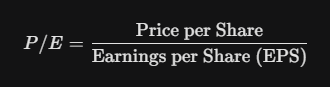
P/E Ratio (Price-to-Earnings Ratio)
The P/E Ratio is a tool used to determine if a stock is overvalued or undervalued. It tells you how much investors are willing to pay per dollar of earnings.
Dividends and Dividend Yield
A dividend is a distribution of a portion of a company’s earnings to its shareholders. The Dividend Yield is represented as a percentage of the current share price. If a stock is $100 and pays $5 in annual dividends, the yield is 5%.
Bull vs. Bear Market: Understanding Market Cycles
The “mood” of the market is often described using animal metaphors. Understanding where we are in the cycle helps manage expectations.
The Bull Market
A Bull Market is a period where stock prices are rising or expected to rise. It is characterized by optimism, high investor confidence, and strong economic growth. Historically, bull markets last much longer than bear markets.
The Bear Market
A Bear Market occurs when prices drop by 20% or more from recent highs. It is often accompanied by a recession and widespread pessimism. While scary, bear markets are a natural part of the economic cycle and often provide the best “buying opportunities” for long-term investors.
Investment Fund Vocabulary: ETFs, Mutual Funds, and Expense Ratios
Most beginners should not start by picking individual stocks. Instead, they use funds that “bundle” many investments together.
1. Mutual Funds
A Mutual Fund is a pool of money from many investors that is managed by a professional fund manager. The manager decides which stocks or bonds to buy. These often have higher fees because of the active management involved.
2. ETFs (Exchange-Traded Funds)
An ETF is similar to a mutual fund but trades on a stock exchange just like an individual stock. You can buy or sell them throughout the day. ETFs are often passive, meaning they simply track an index rather than trying to “beat” the market.
3. Index Funds
An Index Fund is a type of fund designed to mimic the performance of a specific benchmark, such as the S&P 500. They are famous for having very low fees and consistently outperforming actively managed funds over the long term.
4. Expense Ratio
This is the annual fee you pay to the fund management company, expressed as a percentage of your investment.
-
A “Good” Ratio: Below 0.10%.
-
A “Bad” Ratio: Above 0.75%.
Over 30 years, a high expense ratio can eat up 20–30% of your total wealth.
Trading Terms: How to Buy and Sell Like a Professional

When you open your brokerage app and prepare to make your first trade, you will see a few different options for how that trade is executed.
Ask and Bid Prices
-
Bid: The highest price a buyer is willing to pay for a stock.
-
Ask: The lowest price a seller is willing to accept.
-
Spread: The difference between the bid and ask prices.
Market Order vs. Limit Order
-
Market Order: An instruction to buy or sell a stock immediately at the best available current price. This guarantees the trade happens but doesn’t guarantee the exact price.
-
Limit Order: An instruction to buy or sell only if the stock hits a specific price. This guarantees the price but doesn’t guarantee the trade will actually be executed if the stock never hits that price.
Liquidity
Liquidity refers to how quickly and easily an asset can be converted into cash without affecting its price. Cash is the most liquid asset; real estate is highly illiquid.
The Math of Success: ROI, Volatility, and Compound Interest
To track your progress, you need to understand the metrics of growth and risk.
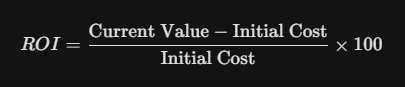
ROI (Return on Investment)
This is the percentage of profit or loss on an investment relative to its cost.
Volatility
Volatility represents how much the price of an investment “swings” up and down. High volatility means the price moves drastically in short periods. While volatility is often equated with risk, it is actually just a measure of price movement.
Compound Interest
Often called the “eighth wonder of the world,” compound interest is when your interest begins to earn interest. This is the primary engine of wealth creation for long-term investors.
Risk Management Terminology: Diversification and Asset Allocation
The only way to survive a bear market is to have a plan for risk.
Diversification
This is the practice of spreading your investments across different assets to reduce exposure to any single one. As the saying goes, “Don’t put all your eggs in one basket.” If one company goes bankrupt, a diversified investor only loses a small fraction of their portfolio.
Asset Allocation
This is the ratio of different asset classes in your portfolio (e.g., 80% stocks and 20% bonds). Your Risk Tolerance—your ability to handle market drops without panicking—should dictate your asset allocation.
Rebalancing
Over time, some investments will grow faster than others, changing your original asset allocation. Rebalancing is the process of selling some of the “winners” and buying more of the “losers” to bring your portfolio back to its original target.
Tax and Account Terminology: Keeping More of Your Profits

It isn’t just about how much you make; it’s about how much you keep after the government takes its share.
Capital Gains Tax
This is a tax on the profit you make when you sell an investment for more than you paid for it.
-
Short-Term: If you held the asset for less than a year (taxed at higher rates).
-
Long-Term: If you held the asset for more than a year (taxed at lower, preferential rates).
Tax-Advantaged Accounts (US Context)
-
401(k): An employer-sponsored retirement plan that allows you to contribute “pre-tax” dollars.
-
IRA (Individual Retirement Account): A personal account that offers tax breaks for retirement savings.
-
Roth IRA: An account where you contribute “after-tax” money, but all growth and future withdrawals are tax-free.
Advanced Comparison: ETFs vs. Mutual Funds
To help you decide where to put your money, let’s look at the key differences between these two common vehicles:
| Feature | ETF (Exchange-Traded Fund) | Mutual Fund |
| Trading | Trades like a stock (all day) | Traded once a day after market close |
| Management | Mostly Passive (follows index) | Often Active (manager picks) |
| Fees | Generally very low | Can be high |
| Minimums | Cost of one share (or less) | Often $1,000 to $3,000+ |
| Tax Efficiency | Highly efficient | Less efficient due to internal trades |
Turning Knowledge Into Wealth
The world of finance is intentionally complicated, but once you peel back the layers of jargon, the concepts are remarkably simple. You are buying pieces of businesses, lending money to institutions, and using the power of time to multiply your savings.
Don’t feel like you need to memorize this entire glossary today. Instead, use it as a reference. The most important “term” in investing isn’t a word—it’s action. The best way to learn the language of money is to start speaking it by opening an account and making your first small investment.
The more you know, the less you fear. And in the stock market, fear is the only thing that stands between you and your financial freedom.
Quick Summary Checklist for Beginners:
-
Portfolio: Your collection of all investments.
-
Asset Allocation: Your mix of stocks, bonds, and cash.
-
Index Fund: The easiest way to diversify for cheap.
-
DCA (Dollar-Cost Averaging): Investing the same amount every month.
-
HODL: A slang term meaning to hold onto your investments long-term through market volatility.