You walk into your local grocery store to buy the same items you buy every week: a gallon of milk, a carton of eggs, a loaf of bread, and a tank of gas on the way home. A year ago, this trip cost you $50. Today, you stare at the receipt and see $65.
You didn’t buy anything extra. The quality of the milk hasn’t improved. Yet, your money seems to have evaporated.
This is not a glitch in the matrix. This is Inflation.
It is the most discussed yet least understood force in economics. Politicians blame it on opponents, news anchors talk about it with grim faces, and grandparents reminisce about the days when a movie ticket cost a nickel. But what exactly is it? Why does it happen? And most importantly, does it mean you are getting poorer?
In this comprehensive guide, we will strip away the complex academic jargon. We will explore the mechanics of inflation, why the price of your coffee keeps going up, and the specific strategies you can use to protect your hard-earned wealth from eroding away.
What is Inflation? A Simple Definition for Non-Economists
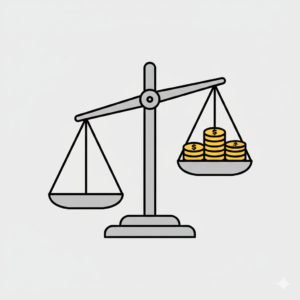
At its simplest level, inflation is the rate at which the prices of goods and services increase over time.
However, looking at it merely as “price increases” is looking through the wrong end of the telescope. Instead, you should view inflation as a decline in your purchasing power.
Imagine your money is a battery. In a non-inflationary world, that battery stays fully charged forever. In our real world, inflation is a slow leak. If you put a $100 bill in a shoebox under your bed today and take it out in ten years, it will still say “$100” on the face. But it might only buy you $70 worth of stuff.
Inflation isn’t just about things getting more expensive; it is about your money becoming less valuable. It is the gradual loss of the currency’s ability to command resources.
The Three Main Engines: What Causes Inflation?
Economists often argue about the nuances, but inflation generally stems from three specific scenarios. Think of these as the “Engines of Inflation.”
1. Demand-Pull Inflation (“Too Much Money Chasing Too Few Goods”)
This is the most common form. Imagine there is a concert with only 10,000 seats, but 100,000 people want to go. The price of tickets will skyrocket.
When an economy is booming, unemployment is low, and people are confident, they spend money. If the demand for cars, houses, and electronics exceeds the manufacturing capacity (supply), businesses raise prices because they know people will pay.
2. Cost-Push Inflation (The Supply Shock)
This happens when it becomes more expensive for companies to produce goods.
For example, if the price of oil doubles, it costs more to transport lettuce from California to New York. The trucking company charges the grocery store more, and the grocery store charges you more. The demand for lettuce didn’t change, but the cost to get it to your table did.
3. Built-In Inflation (The Wage-Price Spiral)
This is a psychological cycle. As the price of goods rises, workers demand higher wages to maintain their standard of living. Employers grant these raises, but then they raise the prices of their products to cover the increased labor costs. This loops back around, causing workers to ask for another raise. It becomes a self-fulfilling prophecy.
How Do We Measure It? The CPI and The “Basket of Goods”
How does the government know inflation is at 3% or 8%? They don’t just guess. They use a metric called the Consumer Price Index (CPI).
Imagine a giant virtual shopping cart. Inside this cart, the Bureau of Labor Statistics puts a “basket” of goods that represents what an average urban American buys.
-
Food: Cereal, milk, coffee, chicken.
-
Energy: Gasoline, electricity bills.
-
Housing: Rent and mortgage equivalents.
-
Services: Medical care, haircuts, airline tickets.
-
Apparel: Jeans, sneakers, coats.
Every month, they check the price of this exact same basket.
-
If the basket cost $100 last year and $105 this year, the CPI has risen by 5%. Inflation is 5%.
Note: There is also the PPI (Producer Price Index), which measures inflation from the perspective of the seller (wholesale prices). The PPI is often a leading indicator—if it gets expensive for factories to buy steel today, it will be expensive for you to buy a car tomorrow.
The Good, The Bad, and The Ugly: Is Inflation Always Evil?

It is natural to hate paying more for things. However, economists will tell you that a little bit of inflation is actually healthy for an economy.
The “Goldilocks Zone” (2% Target)
The Federal Reserve (the US Central Bank) generally aims for an annual inflation rate of 2%.
Why? Because a slow, predictable rise in prices encourages spending. If you know a washing machine will cost slightly more next year, you are more likely to buy it today. This spending drives economic growth.
The Nightmare: Deflation
The opposite of inflation is Deflation (falling prices). While this sounds great to a shopper (“Cheaper cars!”), it is devastating for an economy.
If prices are falling, you will delay buying that car because it will be cheaper next month. If everyone stops buying, companies fire workers. Unemployed people spend less, causing prices to drop further. This is the “Deflationary Spiral” that caused the Great Depression.
The Disaster: Hyperinflation
This is when inflation spirals out of control (usually defined as exceeding 50% per month). This happens when governments print money recklessly to pay debts.
Historical examples include Germany in the 1920s (where people used wheelbarrows of cash to buy bread) or Zimbabwe in the 2000s. In these scenarios, currency becomes essentially worthless paper.
Winners and Losers: Who Gets Hurt the Most?
Inflation does not affect everyone equally. It redistributes wealth in ways that can be surprising.
The Losers
-
Savers: If you have $50,000 sitting in a standard bank account earning 0.01% interest, and inflation is 5%, you are losing 4.99% of your wealth every year. You are being penalized for saving.
-
Fixed-Income Retirees: If you live on a pension that pays $2,000 a month and does not adjust for inflation, your quality of life slowly degrades as that $2,000 buys less and less.
-
Lenders: Banks that loaned money at low rates lose out because they are being paid back with “cheaper” dollars.
The Winners
-
Debtors (Borrowers): If you have a fixed-rate 30-year mortgage at 3%, and inflation jumps to 8%, you are winning. You are paying back a huge loan with money that is worth less than when you borrowed it. Your wages likely go up over time, but your mortgage payment stays the same.
-
Asset Owners: People who own real estate, stocks, or commodities generally see the value of their assets rise alongside inflation.
The Hidden Inflation: Shrinkflation and Skimpflation
Sometimes, companies are afraid to raise the price tag because they know it scares away customers. So, they get sneaky.
Shrinkflation
Have you noticed your bag of chips has more air in it? Or that the candy bar looks a little thinner?
Shrinkflation is when the price stays the same ($4.99), but the size of the product shrinks (from 16oz to 14oz). You are paying more per ounce, but the sticker price didn’t move.
Skimpflation
This is harder to spot. It happens when companies cut costs by reducing the quality of the service or product.
-
A hotel stops offering daily housekeeping.
-
An airline creates longer hold times for customer service.
- A food manufacturer switches from real sugar to high-fructose corn syrup.You are paying the same price for an inferior experience.
The Role of the Federal Reserve: The Economy’s Thermostat

Who controls inflation? In the United States, it is the job of the Federal Reserve (The Fed). Think of the Fed as the guy controlling the thermostat of the economy.
-
When the economy is too cold (Recession): The Fed lowers interest rates. Cheap loans encourage businesses to expand and people to buy houses. The economy heats up.
-
When the economy is too hot (High Inflation): The Fed raises interest rates.
How Raising Rates Fights Inflation
When the Fed raises the “Federal Funds Rate,” it becomes more expensive for banks to borrow money. Banks pass this cost to you.
-
Mortgage rates go up.
-
Car loan rates go up.
-
Credit card APRs go up.
When borrowing is expensive, people buy fewer houses and cars. Businesses stop expanding. Demand drops. When demand drops, prices cool down.
It is a bitter pill to swallow, but raising interest rates is the primary weapon to kill high inflation.
How to Protect Your Wealth: Investing Strategies for Inflationary Times
Now that you understand the beast, how do you fight it? Leaving your money under the mattress is a guaranteed loss. Here are proven strategies to hedge against inflation.
1. The Stock Market (Equities)
Historically, stocks are one of the best long-term hedges against inflation. Why? Because companies are businesses. When their costs go up, they raise their prices. If Coca-Cola has to pay more for sugar, they charge more for a can of Coke. Their revenue rises, and their stock price usually follows.
2. Real Estate
Real estate is a “hard asset.” It has intrinsic value.
-
Appreciation: Property values tend to rise with inflation.
-
Rent: If you are a landlord, you can increase rent as the cost of living increases.
-
Debt Destruction: As mentioned earlier, paying a fixed mortgage with inflated dollars is a financial hack.
3. TIPS (Treasury Inflation-Protected Securities)
For conservative investors, the US government offers TIPS. These are bonds specifically designed to fight inflation. The principal value of a TIPS bond is adjusted based on the Consumer Price Index (CPI). If inflation goes up, the value of your bond goes up. You won’t get rich, but you won’t lose purchasing power.
4. Commodities and Gold
Gold has been the traditional “safe haven” for thousands of years. When paper currency loses trust, people flock to gold. While its record is mixed in the short term, it generally holds value over centuries. Other commodities like oil, copper, and agricultural products also tend to spike during inflationary periods.
5. Invest in Yourself (Human Capital)
This is often overlooked. The best hedge against inflation is your ability to earn money.
If you are highly skilled, you have bargaining power. You can negotiate a raise that matches or exceeds inflation. If your salary is stagnant while prices rise, you are falling behind. Constant upskilling is the ultimate inflation shield.
Making Peace with the Cycle

Inflation is not an anomaly; it is a feature of the modern economic system. It is the inevitable shadow of a growing economy.
While seeing prices rise at the gas pump or the grocery store induces anxiety, understanding the mechanics behind it gives you power. It shifts your mindset from “victim” to “strategist.”
Instead of complaining about the price of eggs, focus on the variables you control:
-
Minimize cash drag: Keep your emergency fund in a High-Yield Savings Account (HYSA) rather than a zero-interest checking account.
-
Invest for growth: Ensure your portfolio has exposure to assets that outpace inflation over the long run.
-
Manage debt: Lock in fixed rates when low, and pay off variable-rate debt (like credit cards) aggressively before rates rise.
You cannot control the Federal Reserve, and you cannot control supply chains. But you can control your personal economy. By staying informed and proactive, you can ensure that while the dollar may fluctuate, your financial future remains rock solid.