In the rapidly changing economic landscape of 2026, financial literacy is no longer a luxury; it is a survival skill. With shifting inflation rates, the evolution of digital assets, and the constant noise of social media “finfluencers,” it is easy to feel overwhelmed.
However, the fundamental rules of wealth creation rarely change. While the technology of money evolves, the psychology of money remains constant. The difference between financial stress and financial freedom often comes down to the information you consume.
Investing in your own financial education is the single best investment you can make. For the price of a lunch, a book can provide you with a lifetime of wisdom from the world’s greatest investors and thinkers.
If you are ready to take control of your wallet, crush debt, and build lasting wealth this year, you need a roadmap. We have curated the definitive list of the top 5 personal finance books that are essential reading for 2026. Whether you are a complete beginner or looking to optimize your portfolio, these pages hold the keys to your financial future.
Why Financial Literacy is Your Most Valuable Asset in 2026
Before we dive into the specific titles, it is crucial to understand why reading these books is necessary right now. The economy of 2026 presents unique challenges. Traditional pension plans are almost extinct. Social Security faces future uncertainty. The responsibility for your financial well-being rests entirely on your shoulders.
Many people believe that being “good with money” is a talent you are born with. This is a myth. Financial literacy is a skill, just like driving a car or cooking a meal. It is learned.
The ROI of Reading
Think about the Return on Investment (ROI). A book costs roughly $20. If that book teaches you how to negotiate a $5,000 raise, avoid a $20,000 investment mistake, or pay off $10,000 in credit card debt, the return is astronomical. There is no stock in the world that yields returns as high as a good book.
1. The Psychology of Money by Morgan Housel
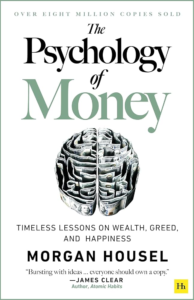
Best For: Understanding why you behave the way you do with money.
If you only read one book on this list, make it this one. Most finance books are full of charts, formulas, and math. Morgan Housel’s masterpiece is different. It argues a simple but profound truth: Doing well with money has a little to do with how smart you are and a lot to do with how you behave.
Why It Is Essential for 2026
In an era of high-frequency trading and crypto volatility, human emotions—fear, greed, and envy—are the biggest threats to your wealth. Housel uses short, digestible chapters to explain why reasonable people make irrational financial decisions.
Key Takeaways
-
Wealth is what you don’t see: Housel distinguishes between “being rich” (high income, flashy cars) and “being wealthy” (freedom, unspent money, options).
-
The Power of Compounding: He illustrates how Warren Buffett’s wealth is not just about skill, but about time. The vast majority of Buffett’s net worth was accumulated after his 60th birthday.
-
Getting wealthy vs. Staying wealthy: These are two different skills. Getting wealthy requires risk; staying wealthy requires humility and fear.
The Verdict: This book will change your mindset. It teaches you to stop trying to be a genius and start trying to be reasonable.
2. I Will Teach You To Be Rich by Ramit Sethi
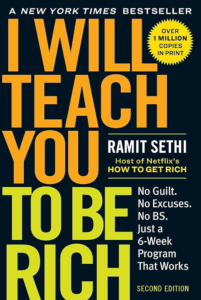
Best For: Automated money management and “guilt-free” spending.
The title sounds like a scam, but the content is gold. Ramit Sethi is the anti-frugality expert. While other gurus tell you to stop buying lattes and cut out all joy, Sethi asks a different question: “What is your Rich Life?”
Why It Is Essential for 2026
We live in a subscription economy. Sethi’s approach is modern and practical. He focuses on “Big Wins”—like negotiating your salary, optimizing your credit cards, and automating your investments—so you can stop worrying about the price of appetizers.
Key Takeaways
-
The 6-Week Program: The book is structured as a six-week action plan. It walks you through calling your credit card company to waive fees, opening the right High-Yield Savings Accounts, and setting up automatic transfers.
-
Conscious Spending: This is Sethi’s core philosophy. Spend extravagantly on the things you love (travel, shoes, food) as long as you cut costs mercilessly on the things you don’t (cable TV, generic brands).
-
The Ladder of Personal Finance: He provides a clear hierarchy of where your next dollar should go, removing the guesswork from investing.
The Verdict: If you want a step-by-step manual that tells you exactly which bank accounts to open and what scripts to use when negotiating, this is the book for you.
3. The Simple Path to Wealth by JL Collins
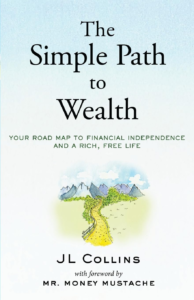
Best For: Investing strategy and the path to Financial Independence (FI).
Investing can seem terrifyingly complex. Wall Street wants you to think you need expensive advisors and complicated algorithms to succeed. JL Collins wrote this book (originally a series of letters to his daughter) to prove that the best investment strategy is also the simplest.
Why It Is Essential for 2026
With the rise of “gamified” trading apps and complex derivatives, Collins’ message of simplicity is a breath of fresh air. He advocates for a “set it and forget it” strategy that outperforms most professional hedge fund managers over the long term.
Key Takeaways
-
VTSAX and Chill: Collins advocates for investing primarily in low-cost, broad-market Index Funds (specifically the Total Stock Market Index Fund). He explains why betting on the entire US economy is safer and more profitable than picking individual stocks.
-
The F-You Money: He reframes savings not as a chore, but as buying your freedom. Having a stash of money allows you to walk away from toxic jobs or bad situations.
-
Market Volatility: He provides a psychological armor against stock market crashes, explaining that the market always goes up eventually, and panic selling is the only way to truly lose.
The Verdict: This is the bible of the FIRE (Financial Independence, Retire Early) movement. It turns investing from a scary gamble into a boring, reliable wealth-building machine.
4. Rich Dad Poor Dad by Robert Kiyosaki
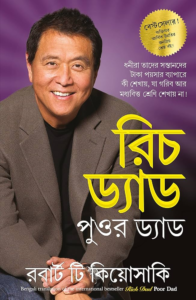
Best For: Shifting your paradigm about assets and liabilities.
First published in 1997, this book remains a bestseller in 2026 for a reason. It is not a “how-to” book; it is a “how-to-think” book. Kiyosaki tells the story of his two dads: his biological father (highly educated but poor) and his friend’s father (a dropout who became a multimillionaire).
Why It Is Essential for 2026
The traditional advice of “Go to school, get good grades, get a safe job” is less relevant today than ever. Kiyosaki challenges the employee mindset and encourages readers to think like investors and business owners.
Key Takeaways
-
Assets vs. Liabilities: This is the most famous concept in the book. An asset puts money in your pocket (rental property, stocks). A liability takes money out of your pocket (your house, your car). Most people struggle because they buy liabilities they think are assets.
-
Work to Learn, Don’t Work to Earn: especially for young people, Kiyosaki advises taking jobs for the skills they teach (sales, management) rather than the paycheck.
-
Mind Your Own Business: Even if you have a day job, you should be building your own asset column on the side.
The Verdict: While some of the specific real estate advice may be dated, the fundamental mindset shift—that you must acquire assets to become free—is timeless and critical.
5. The Total Money Makeover by Dave Ramsey
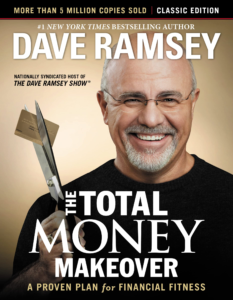
Best For: People drowning in debt who need a restart.
If you have credit card debt, student loans, or car payments that are keeping you up at night, Dave Ramsey is the drill sergeant you need. His approach is not about advanced math (mathematically, the “Debt Snowball” isn’t the most efficient), but it is about psychological victories.
Why It Is Essential for 2026
Consumer debt is at an all-time high. High interest rates in 2026 make debt more dangerous than ever. Ramsey’s “Baby Steps” provide a clear, non-negotiable path out of the hole.
Key Takeaways
-
The Debt Snowball: List your debts from smallest balance to largest. Pay minimums on everything but the smallest. Attack the smallest with everything you have. When it’s gone, roll that payment into the next one. The quick wins keep you motivated.
-
Cash is King: Ramsey advocates for cutting up credit cards and using cash or debit cards only. It forces you to feel the “pain” of spending money.
-
The Emergency Fund: Before you pay off debt, save $1,000 fast. This prevents you from using credit cards when a minor emergency inevitably happens.
The Verdict: If you are financially fit, this book might feel too basic. But if you are in financial trouble, this book is the lifeline that has saved millions of families from bankruptcy.
How to Apply What You Read: From Passive Reader to Active Investor
Reading these books is only the first step. The danger of “self-help” is that it can become “shelf-help”—you read the book, feel inspired, and then change nothing about your behavior.
To truly benefit from these books in 2026, you need an implementation strategy.
The “One Takeaway” Rule
Do not try to overhaul your entire financial life in one weekend. For every book you read, select just one major action item to implement immediately.
-
Read I Will Teach You To Be Rich? Open a High-Yield Savings Account.
-
Read The Simple Path to Wealth? Set up your 401(k) contribution.
-
Read The Total Money Makeover? Cut up your credit cards.
Audiobooks vs. Physical Books
For busy professionals, audiobooks are a fantastic tool. You can “read” while commuting, working out, or doing chores. However, for finance books, having a physical or digital copy is often better. You will want to highlight passages, bookmark charts, and return to specific chapters when you are ready to execute a strategy.
Key Financial Concepts You Will Master

By reading these top 5 books, you will gain fluency in the language of money. Here are a few concepts you will stop fearing and start using:
-
Compound Interest: Understanding that time is your greatest lever.
-
Index Funds: The realization that you don’t need to pick the winning needle; you can just buy the whole haystack.
-
Inflation Hedging: How to keep your purchasing power safe as prices rise.
-
Tax Efficiency: Learning the difference between a Roth IRA and a Traditional IRA, and why it matters for your retirement.
Your 2026 Financial Chapter Starts Now
The year 2026 can be the year you finally stop stressing about money. It can be the year you stop living paycheck to paycheck. It can be the year you start building generational wealth.
But it won’t happen by accident. It happens by decision.
These five books—The Psychology of Money, I Will Teach You To Be Rich, The Simple Path to Wealth, Rich Dad Poor Dad, and The Total Money Makeover—cover every base. They address the mindset, the mechanics, the investing strategy, the business acumen, and the debt elimination required for total financial freedom.
Do not let another year slip by. Go to the library, download the audiobook, or order a copy today. Your future self is begging you to read them.
Which book will you start with?