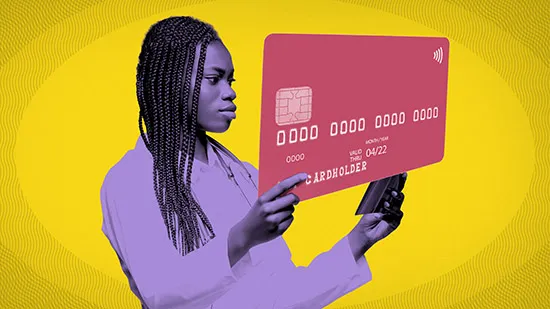
Credit cards may appear to be simple tools for making purchases, but each transaction activates a complex global network of institutions, technology, and financial agreements. Every swipe, tap, or online payment moves through an invisible infrastructure that connects consumers, merchants, banks, and payment processors.
From a financial perspective, credit cards are not just lending tools—they are part of a sophisticated payment ecosystem that enables billions of transactions daily.
The Four-Party Payment Model
Most credit card transactions operate within a four-party system:
- Cardholder (the user)
- Merchant (the seller)
- Issuing bank (provides the card)
- Acquiring bank (processes merchant payments)
Connecting all of them is the payment network, which facilitates communication and transaction approval.
This structure ensures that funds move efficiently between all participants.
Authorization: The First Step
When a card is used, the transaction begins with authorization.
The payment request travels from the merchant to the acquiring bank, then through the card network to the issuing bank.
The issuing bank checks the cardholder’s available credit, verifies security details, and approves or declines the transaction.
This entire process typically takes just seconds.
Clearing and Settlement
After authorization, transactions move to clearing and settlement.
Clearing involves confirming transaction details between parties. Settlement is the actual transfer of funds from the issuing bank to the acquiring bank.
Although authorization is instant, settlement may take one or more business days.
This delayed movement of funds is a key feature of the system.
Interchange Fees and Cost Structure
Every credit card transaction includes fees paid by the merchant.
The largest component is the interchange fee, which goes to the issuing bank. Additional fees are paid to the payment network and acquiring bank.
These costs are built into the pricing structure of goods and services, making them an indirect cost for consumers.
Payment Networks and Global Reach
Payment networks enable transactions across borders and currencies.
They standardize communication protocols, security measures, and processing systems.
This global reach allows a credit card issued in one country to be used almost anywhere in the world.
Fraud Detection and Security Systems
Modern credit card systems rely heavily on advanced security technologies.
Fraud detection algorithms analyze transaction patterns in real time, identifying unusual behavior.
Technologies such as EMV chips, tokenization, and two-factor authentication enhance security.
These systems reduce fraud while maintaining transaction speed.
Tokenization and Digital Payments
Tokenization replaces sensitive card information with a unique identifier during transactions.
This process protects card data, especially in digital and mobile payments.
As online and contactless payments grow, tokenization has become a critical component of payment security.
The Role of Credit in Transactions
Unlike debit cards, credit cards involve borrowing.
The issuing bank effectively extends a short-term loan for each transaction, which the cardholder repays later.
This credit component adds complexity, as it introduces risk management and interest calculations into the system.
Merchant Acceptance and Infrastructure
Merchants must have the necessary infrastructure to accept credit cards, including point-of-sale systems and payment gateways.
These systems connect to acquiring banks and payment networks, enabling transaction processing.
Widespread acceptance is essential for the effectiveness of credit card systems.
Speed vs Complexity
Despite the complexity of the underlying system, credit card transactions are designed to be fast and seamless.
This balance between speed and complexity is achieved through highly optimized technology and standardized processes.
Users experience simplicity, while the system manages intricate financial interactions.
Cross-Border Transactions and Currency Conversion
When credit cards are used internationally, additional processes are involved.
Currency conversion, foreign transaction fees, and cross-border settlement all come into play.
These factors add cost and complexity but enable global commerce.
Data and Consumer Insights
Credit card transactions generate vast amounts of data.
Financial institutions analyze this data to understand spending patterns, manage risk, and offer personalized services.
Data has become a valuable asset within the credit card ecosystem.
The Economics of Payment Processing
The credit card system is supported by multiple revenue streams:
- Interchange fees
- Network fees
- Interest charges
- Merchant service fees
These flows sustain the infrastructure and incentivize participation from all parties.
The Invisible Network of Modern Commerce
Credit cards are not just financial products—they are part of a global infrastructure that powers modern commerce.
They connect consumers and businesses across borders, enabling transactions that would otherwise be complex or impossible.
The System Behind Every Purchase
Every credit card transaction is the result of coordinated activity between multiple institutions, technologies, and financial agreements.
While users experience a simple tap or swipe, the underlying system is one of the most advanced networks in finance.
In the broader context of financial systems, credit cards represent the intersection of technology, credit, and global commerce—quietly powering everyday economic activity.