Lending is one of the most essential processes in finance, acting as the bridge between surplus capital and financial demand. While loans are often seen as straightforward agreements between borrower and lender, their underlying structure reflects a complex economic system driven by pricing mechanisms, risk transfer, and capital efficiency.
From a financial perspective, lending is not merely about providing funds—it is about evaluating uncertainty, pricing risk accurately, and maintaining a sustainable flow of capital through the economy.
Lending as Financial Intermediation
At its core, lending is a form of financial intermediation. Institutions such as banks collect deposits from savers and allocate those funds to borrowers.
This process increases efficiency by connecting those who have excess capital with those who need it. Without intermediation, the process of matching lenders and borrowers would be far less effective.
Financial intermediaries also reduce risk by diversifying across multiple loans and applying credit analysis techniques.
The Pricing of Credit Risk
Interest rates in lending are not uniform—they reflect the level of risk associated with each borrower. Higher-risk borrowers are typically charged higher rates to compensate for the increased probability of default.
This pricing mechanism ensures that lenders are compensated for the uncertainty they assume. It also influences borrower behavior, as higher costs may discourage excessive borrowing.
Accurate risk pricing is essential for maintaining profitability and stability within lending institutions.
Time Value of Money in Lending
The concept of the time value of money is fundamental to lending. Money available today is worth more than the same amount in the future due to its earning potential.
Interest payments compensate lenders for deferring consumption and taking on risk. The longer the loan term, the greater the impact of time on total repayment.
This principle underlies all lending decisions and shapes the structure of loan agreements.
Credit Supply and Demand Dynamics
The availability of loans is determined by the interaction between supply and demand for credit. When demand for loans is high, interest rates may rise as lenders allocate limited capital.
Conversely, when credit supply is abundant, competition among lenders can drive rates down.
These dynamics are influenced by economic conditions, central bank policies, and market expectations.
Default Probability and Expected Loss
Lending decisions are based on expected outcomes rather than certainties. Lenders estimate the probability of default and the potential loss if default occurs.
Expected loss is calculated by combining these factors, allowing lenders to assess whether a loan is financially viable.
This probabilistic approach is central to modern credit risk management.
Loan Amortization and Cash Flow Structure
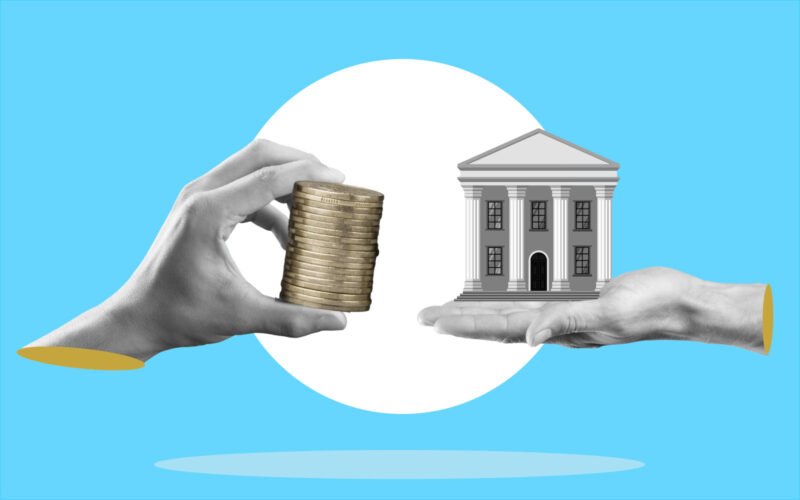
Many loans are structured with amortization schedules, where payments are made periodically and include both principal and interest.
In the early stages of a loan, a larger portion of the payment goes toward interest. Over time, the proportion shifts toward principal repayment.
This structure affects both borrower affordability and lender cash flow, making it a key aspect of loan design.
Secured vs Unsecured Lending
Lending can be categorized into secured and unsecured forms. Secured loans require collateral, reducing risk for lenders and often resulting in lower interest rates.
Unsecured loans rely solely on the borrower’s creditworthiness. These loans carry higher risk and typically have higher interest rates.
The choice between these forms depends on the nature of the loan and the borrower’s financial profile.
Credit Cycles and Economic Impact
Lending activity follows credit cycles that align with broader economic trends. During economic expansion, lending increases as confidence grows.
In periods of contraction, lenders become more cautious, reducing credit availability. This tightening can amplify economic downturns.
Understanding credit cycles is essential for analyzing economic fluctuations and financial stability.
Securitization and Risk Distribution
Securitization allows lenders to convert loans into tradable securities. By pooling loans and selling them to investors, lenders can transfer risk and free up capital.
This process increases liquidity in financial markets and expands lending capacity. However, it also introduces complexity and potential systemic risk.
Proper management of securitization is critical for maintaining stability.
Liquidity Risk in Lending Institutions
Lending institutions must balance long-term loans with short-term funding sources. This creates liquidity risk—the possibility that they may not have enough funds to meet obligations.
Effective liquidity management involves maintaining reserves and access to funding markets.
Failure to manage liquidity can lead to financial instability, even if the underlying loans are sound.
Regulation and Credit Discipline
Regulatory frameworks impose limits on lending practices to ensure stability. Capital requirements, lending standards, and reporting rules are designed to reduce excessive risk-taking.
These regulations promote discipline and protect both borrowers and the financial system.
Compliance is essential for maintaining trust and preventing financial crises.
Lending as a Driver of Economic Activity
Lending plays a central role in economic development. It enables businesses to invest, consumers to spend, and governments to finance projects.
By facilitating the flow of capital, lending supports growth, innovation, and job creation.
Its impact extends across all sectors of the economy.
The Financial Structure of Credit Systems
Lending is a complex financial process that combines risk assessment, pricing, and capital allocation. It transforms savings into productive investment and supports the functioning of modern economies.
By understanding the economics of lending, one gains insight into how financial systems operate and how capital is distributed over time.
In the broader context of finance, lending remains a foundational mechanism that drives both opportunity and stability.