Looking Beneath the Surface of the Stock Market
Most people see the stock market as a place where prices go up and down based on news, earnings, or trends. But beneath that surface exists a deeper layer—the microstructure of the market.
Market microstructure refers to the mechanics of how trades actually happen: who is buying, who is selling, how orders are matched, and how liquidity flows. Understanding this layer gives a completely different perspective on price movements.
What Really Moves Prices
Prices don’t move simply because a company is “good” or “bad.” They move because of imbalances between buyers and sellers.
Core Drivers of Price Movement
- Aggressive buying pushing prices up
- Aggressive selling pushing prices down
- Lack of liquidity amplifying movements
Even small imbalances can cause large price changes if liquidity is thin.
Order Types and Their Impact
Every trade in the market is executed through orders, and different types of orders affect price behavior differently.
Market Orders
Executed immediately at the best available price. These orders move the market because they consume liquidity.
Limit Orders
Placed at a specific price. These orders provide liquidity and act as barriers that slow price movement.
The interaction between these two types creates the constant push and pull in the market.
Liquidity: The Invisible Force
Liquidity determines how easily assets can be bought or sold without affecting price.
High Liquidity
- Stable price movements
- Smaller spreads between buy and sell prices
- Easier trade execution
Low Liquidity
- Larger price swings
- Higher volatility
- Increased risk
Liquidity is often more important than the asset itself when analyzing short-term behavior.
Bid-Ask Spread and Market Efficiency
Every asset has two prices:
- Bid: what buyers are willing to pay
- Ask: what sellers are willing to accept
The difference between them is the spread.
Why the Spread Matters
- Narrow spreads indicate efficiency
- Wide spreads signal uncertainty or low liquidity
Traders and institutions pay close attention to spreads when making decisions.
The Role of Market Participants
Different players operate in the market, each with distinct objectives.
Retail Investors
Individual participants who typically trade smaller amounts and often react to news or trends.
Institutional Investors
Large entities such as funds and banks that move significant capital and influence long-term trends.
Market Makers
Participants who provide liquidity by continuously offering to buy and sell assets. They help maintain market stability.
Each group contributes differently to price formation.
Order Flow and Market Direction
Order flow refers to the sequence of buy and sell orders entering the market.
Why Order Flow Matters
- Reveals real-time demand and supply
- Indicates short-term momentum
- Helps identify potential reversals
Strong buying flow can sustain upward movement, while strong selling flow can trigger declines.
Volatility as a Structural Feature
Volatility is not random—it emerges from the structure of the market.
Causes of Volatility
- Sudden changes in liquidity
- Large institutional orders
- News events altering expectations
Understanding volatility as a structural outcome helps reduce emotional reactions.
Market Depth and Price Stability
Market depth refers to the number of buy and sell orders at different price levels.
Deep Markets
- More stable prices
- Resistance to large moves
Shallow Markets
- Sensitive to large trades
- Prone to sharp fluctuations
Depth acts as a buffer against extreme movements.
The Feedback Loop of Price and Behavior
Price movements influence behavior, and behavior influences price.
Example Loop
- Price rises
- More buyers enter
- Demand increases
- Price rises further
This feedback loop can create trends, bubbles, or crashes.
Timeframes and Market Interpretation
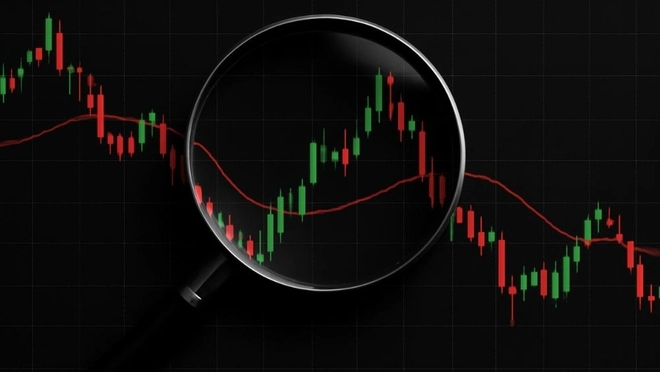
The same market behaves differently depending on the timeframe.
Short-Term
- Driven by order flow and liquidity
- More noise and volatility
Long-Term
- Driven by fundamentals and economic factors
- Smoother trends
Understanding timeframe context is essential for proper analysis.
Information vs. Reaction
Markets do not move purely on information—they move on how participants react to information.
Key Insight
- The same news can cause different reactions
- Expectations matter more than facts
- Surprises create the biggest movements
This explains why markets sometimes rise on bad news or fall on good news.
Structural Inefficiencies
Despite being highly advanced, markets are not perfectly efficient.
Sources of Inefficiency
- Delayed reactions to information
- Behavioral biases
- Liquidity imbalances
These inefficiencies create opportunities for informed participants.
Risk Through a Structural Lens
Risk is not just about price dropping—it’s about how the market behaves under stress.
Structural Risk Factors
- Liquidity drying up
- Spreads widening
- Increased volatility
Understanding these factors provides a more realistic view of risk.
Long-Term Perspective on Market Mechanics
Over time, the stock market reflects economic growth, innovation, and capital flow. However, in the short term, it is driven by micro-level interactions between participants.
By understanding the underlying mechanics—order flow, liquidity, and participant behavior—you gain a deeper perspective that goes beyond charts and headlines. This allows for more informed decisions and a clearer interpretation of how markets truly function.