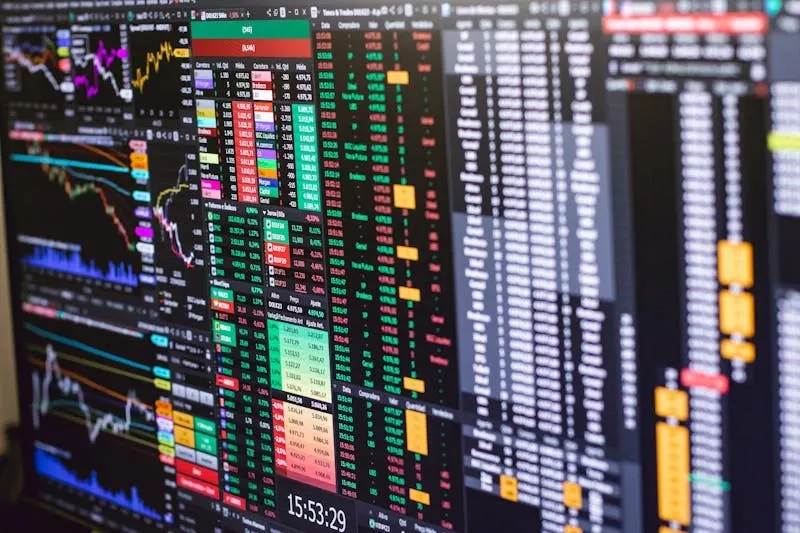
Market microstructure is the study of how financial markets operate at a granular level. In 2026, understanding microstructure is essential for investors seeking to optimize execution, interpret price movements accurately, and manage trading costs effectively.
This article examines how orders are processed, how liquidity is formed, and how trading behavior influences price efficiency in modern equity markets.
The Concept of Market Microstructure
Market microstructure focuses on the mechanisms that facilitate trading.
Core Elements:
- Order flow
- Bid-ask spreads
- Liquidity provision
- Execution systems
These components determine how prices are formed and how efficiently trades are executed.
Order Types and Execution Mechanics
Orders are the fundamental inputs of market activity.
Common Order Types:
- Market orders (immediate execution)
- Limit orders (price-controlled execution)
- Stop orders (trigger-based execution)
Each order type affects price dynamics differently.
The Bid-Ask Spread
The bid-ask spread represents the difference between the highest price a buyer is willing to pay and the lowest price a seller is willing to accept.
Importance:
- Indicator of market liquidity
- Direct cost of trading
- Reflects supply-demand imbalance
Narrow spreads typically indicate highly liquid markets.
Liquidity and Market Depth
Liquidity measures how easily assets can be bought or sold without affecting price.
Components:
- Trading volume
- Order book depth
- Market participation
Higher liquidity reduces transaction costs and price volatility.
Role of Market Makers
Market makers provide continuous buy and sell quotes.
Functions:
- Facilitate trade execution
- Maintain liquidity
- Reduce price gaps
They profit from the bid-ask spread while stabilizing the market.
Order Flow and Price Impact
Order flow refers to the sequence and size of buy and sell orders.
Key Concepts:
- Large orders can move prices
- Imbalanced order flow signals trends
- Institutional activity influences market direction
Understanding order flow improves trade timing and execution.
Price Discovery Process
Price discovery is the mechanism through which markets determine asset prices.
Influencing Factors:
- New information
- Earnings reports
- Macroeconomic data
Efficient markets incorporate information rapidly into prices.
Trading Costs and Slippage
Execution costs extend beyond visible fees.
Cost Components:
- Bid-ask spread
- Slippage (difference between expected and actual price)
- Market impact
Minimizing these costs improves net returns.
High-Frequency Trading (HFT)
High-frequency trading uses algorithms to execute trades at extremely high speeds.
Characteristics:
- Low latency execution
- High trade volume
- Short holding periods
HFT firms contribute to liquidity but can also increase short-term volatility.
Algorithmic Execution Strategies

Algorithmic trading optimizes execution efficiency.
Strategies:
- Time-weighted average price (TWAP)
- Volume-weighted average price (VWAP)
- Smart order routing
These methods reduce market impact and improve execution quality.
Market Efficiency and Information Flow
Market efficiency reflects how quickly information is incorporated into prices.
Types:
- Weak form efficiency (past prices)
- Semi-strong form (public information)
- Strong form (all information)
Higher efficiency reduces arbitrage opportunities.
Volatility and Microstructure Effects
Short-term price volatility is often driven by microstructure dynamics.
Drivers:
- Order imbalance
- Liquidity fluctuations
- Trading volume spikes
Understanding these effects improves short-term market analysis.
Dark Pools and Alternative Trading Venues
Not all trades occur on public exchanges.
Dark Pools:
- Private trading venues
- Reduced market impact for large trades
- Limited transparency
These venues are commonly used by institutional investors.
Technology and Market Infrastructure
Modern markets rely on advanced technological systems.
Components:
- Electronic trading platforms
- Data transmission networks
- Matching engines
Technology ensures speed, accuracy, and scalability.
Regulatory Oversight in Market Microstructure
Regulation ensures fair and transparent trading environments.
Focus Areas:
- Market manipulation prevention
- Transparency requirements
- Fair access to markets
Regulatory frameworks maintain market integrity.
Microstructure Dynamics in a Modern Market Environment
As markets become increasingly electronic and data-driven, microstructure dynamics play a larger role in price behavior. Understanding liquidity, execution, and trading mechanics provides a competitive advantage in both short-term and long-term investing.
Investors who incorporate microstructure analysis into their strategies can improve execution quality, reduce costs, and enhance overall performance.