
Building a stock portfolio is arguably one of the most effective ways to build generational wealth. However, for a beginner, the stock market can look less like a wealth-building machine and more like a casino.
You see headlines about market crashes, you hear about the latest “meme stock” skyrocketing 500% in a day, and you feel paralyzed. Where do you start? How do you pick the right companies? How do you avoid losing everything?
The truth is, successful long-term investing is boring. It is not about guessing the next Amazon; it is about discipline, asset allocation, and understanding the power of compound interest.
In this comprehensive guide, we will walk you through the entire process of building a robust, long-term stock portfolio from zero. We will strip away the Wall Street jargon and focus on actionable strategies that have stood the test of time.
The Foundation: Financial Health Before Investment

Before you buy your first share of stock, you must lay the groundwork. Investing is a marathon, not a sprint, and you cannot run a marathon with a broken leg. In financial terms, that “broken leg” is high-interest debt and a lack of liquidity.
1. The Emergency Fund Barrier
Never invest money you might need in the next 3 to 5 years. The stock market is volatile. If you invest your rent money hoping to make a quick profit, and the market drops 20% (which happens), you will be forced to sell at a loss to pay your bills.
-
Rule of Thumb: Before opening a brokerage account, save 3 to 6 months of living expenses in a High-Yield Savings Account. This is your safety net.
2. Eliminating Toxic Debt
If you have credit card debt with an interest rate of 20% or more, investing in the stock market makes no mathematical sense. The average long-term return of the stock market is roughly 8-10% (historically). You cannot out-earn a 20% interest rate. Pay off the credit cards first; that is a guaranteed 20% return on your money.
Defining Your Investment Goals and Risk Tolerance
You cannot build a house without blueprints. Similarly, you cannot build a portfolio without knowing what you are building it for.
The “Sleep Test”
Risk tolerance is personal. It is defined by how much volatility you can handle without panicking.
-
Aggressive: You are young (20s-30s) and can handle seeing your portfolio drop 30% because you have decades to recover. You want maximum growth.
-
Conservative: You are nearing retirement or hate risk. You prefer stability and income over massive growth.
The Time Horizon
Time is the investor’s best friend.
-
Short Term (<5 years): This money belongs in bonds, CDs, or savings accounts, not stocks.
-
Long Term (>10 years): This is where stocks shine. History shows that over any 20-year rolling period, the S&P 500 has rarely lost money.
Opening the Right Brokerage Account
To buy stocks, you need a broker. Gone are the days of calling a guy in a suit to place a trade for a $50 commission. Today, you have access to discount brokerages directly from your phone.
What to Look for in a Broker
-
Zero Commissions: Most major US brokers (like Fidelity, Schwab, or Vanguard) charge $0 for stock and ETF trades. Do not pay commissions.
-
Fractional Shares: This is crucial for beginners. Some stocks cost $500 or $1,000 per share. Fractional shares allow you to invest $50 into a $500 stock, buying 0.1 shares.
-
User Interface: Ensure the platform provides good research tools and educational resources.
Asset Allocation: The “Secret Sauce” of Portfolio Stability
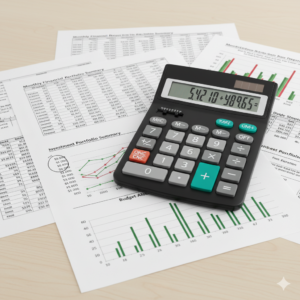
This is the most technical but most important part of the guide. Asset Allocation is how you divide your money among different types of investments.
Studies suggest that 90% of your portfolio’s performance is determined by asset allocation, not by picking individual stocks.
A popular strategy for beginners is the “Core and Satellite” method.
-
The Core (80%): This is the boring, stable foundation. It usually consists of low-cost Index Funds or ETFs (Exchange Traded Funds) that track the broad market.
-
The Satellite (20%): This is your “fun” money. You use this portion to pick individual stocks you believe in, high-growth sectors, or speculative plays.
If your “Satellite” picks go to zero, your “Core” keeps you safe. If your “Satellite” picks go to the moon, your overall return gets a nice boost.
ETFs vs. Individual Stocks: Which is Right for You?
Should you buy shares of Apple and Tesla, or should you buy a fund that holds them for you?
The Case for ETFs (Exchange Traded Funds)
An ETF is a basket of stocks. For example, an S&P 500 ETF buys the 500 largest companies in America.
-
Pros: Instant diversification. If one company goes bankrupt, it barely hurts your portfolio. Low maintenance.
-
Cons: You will never “beat the market” because you are the market.
The Case for Individual Stocks
-
Pros: Potential for massive returns. Buying Amazon in 1997 would have made you a millionaire with a small investment.
-
Cons: High risk. High effort. Requires reading balance sheets and listening to earnings calls.
Recommendation for Beginners: Start with 90% ETFs. Only move to individual stocks once you understand how to read a financial statement.
How to Analyze a Stock: Key Metrics for Laypeople

If you decide to pick individual stocks for your “Satellite” portfolio, you cannot just buy what is popular on social media. You need to look at the fundamentals. Here are three simple metrics to start with.
1. P/E Ratio (Price-to-Earnings)
Think of this as the price tag of the stock. It measures the current share price relative to its per-share earnings.
-
High P/E (e.g., 50+): The market expects massive growth. If the company stumbles, the stock will crash.
-
Low P/E (e.g., <15): The stock might be undervalued (a bargain) or the company might be in trouble. Context matters.
2. Dividend Yield
Some companies pay you just for owning their stock. This is called a dividend.
-
If a stock costs $100 and pays $3 a year in dividends, the Yield is 3%.
-
Dividends are excellent for “reinvesting” to compound your growth or for providing income in retirement.
3. The “Moat” (Competitive Advantage)
This isn’t a number; it’s a concept popularized by Warren Buffett. Does the company have a “moat” protecting it from competitors?
-
Brand Moat: Coca-Cola (everyone knows the brand).
-
Switching Cost Moat: Microsoft (businesses can’t easily switch away from Excel).
-
Network Effect Moat: Visa/Mastercard (everyone uses them because everyone accepts them).
The Importance of Sector Diversification
A common mistake beginners make is buying five different stocks that all do the same thing. If you own Google, Microsoft, Apple, Nvidia, and Amazon, you might think you are diversified because you own five companies. You are not. You are 100% exposed to the Technology Sector.
If the tech sector crashes, your entire portfolio crashes. A truly balanced portfolio includes:
-
Financials: Banks and Insurance.
-
Consumer Staples: Food, hygiene, things people buy even during a recession.
-
Healthcare: Pharmaceuticals and hospitals.
-
Industrials: Manufacturing and logistics.
-
Energy: Oil, gas, and renewables.
By spreading your money across different sectors, you ensure that a downturn in one industry doesn’t wipe you out.
Execution Strategy: The Magic of Dollar-Cost Averaging (DCA)
Now that you know what to buy, when should you buy it?
Should you wait for a crash? Should you wait for a dip?
The answer is: Don’t wait. Just buy.
What is Dollar-Cost Averaging?
DCA is the strategy of investing a fixed amount of money at regular intervals, regardless of the stock price.
-
Example: You invest $500 on the 1st of every month.
Why DCA Works
-
Removes Emotion: You don’t have to stress about whether the market is “too high” or “too low.”
-
The Math Benefit: When prices are high, your $500 buys fewer shares. When prices are low (during a crash), your $500 buys more shares. This naturally lowers your “average cost per share” over time.
-
Habit Forming: It treats investing like a monthly bill, ensuring you actually save money.
Portfolio Maintenance: Rebalancing and Reviewing

Building a portfolio is not a “set it and forget it” for 30 years task. It requires annual maintenance, known as Rebalancing.
The Drift
Imagine you started with a 50/50 split between Stocks and Bonds.
Over a year, stocks had a huge bull run and went up 20%. Bonds stayed flat.
Your portfolio is now roughly 60% Stocks / 40% Bonds. You are now taking more risk than you intended.
How to Rebalance
To fix this, you sell some of the “Winners” (Stocks) and use that money to buy the “Losers” (Bonds) to get back to your 50/50 target.
-
Psychological Hurdle: It feels wrong to sell the thing that is doing well to buy the thing that is doing poorly. But this forces you to follow the golden rule: Buy Low, Sell High.
International Exposure: Don’t Forget the Rest of the World
Many investors suffer from “Home Country Bias.” If you live in the US, you likely only buy US stocks. If you live in Europe, you likely buy European stocks.
However, the US market is not the only market. Emerging markets (like China, India, Brazil) and developed international markets (like Japan, UK, Germany) offer diversification benefits.
-
Sometimes the US dollar is weak, and international stocks outperform.
-
A solid long-term portfolio often allocates 10% to 20% to International ETFs to capture global growth.
Common Pitfalls That Destroy Long-Term Returns
Even with a perfect portfolio, human psychology can ruin everything. Here are the traps to avoid.
1. FOMO (Fear Of Missing Out)
Your neighbor tells you he made 300% on a crypto-coin or a penny stock. You feel jealous. You sell your boring index funds to chase that hot trend. Usually, by the time you hear about it, the peak has passed, and you buy at the top, losing money. Stick to your plan.
2. Panic Selling
The market drops 10%. The news says “Recession Imminent.” You get scared and sell everything to “cash out” and save your money.
This is the worst mistake you can make. You lock in your losses. Historically, the best days in the market often happen right after the worst days. If you are not invested, you miss the recovery.
3. Over-Checking Your Portfolio
If you are a long-term investor, checking your account every day is torture. It triggers emotional responses. Try to check your portfolio only once a month or once a quarter.
The Journey of a Thousand Miles

Building a stock portfolio from zero seems daunting, but it is simply a series of small, consistent steps.
-
Secure your financial safety net.
-
Choose a low-cost broker.
-
Build a core of diversified ETFs.
-
Add satellite stocks if you wish.
-
contribute money every single month (DCA).
-
Stay patient.
Wealth is not built overnight. It is built by the boring, unsexy compounding of interest over decades. The best time to plant a tree was 20 years ago. The second best time is today. Start your portfolio now, and your future self will thank you.