In a world of “get rich quick” schemes and social media influencers flaunting overnight success, the reality of wealth building often feels frustratingly slow. We are bombarded with stories of crypto-millionaires and “meme stock” winners, leading many to ask: If I start today, how long until I’m actually wealthy?
The honest answer? It depends. But while that might sound vague, wealth building is actually governed by a set of predictable mathematical laws. Whether you are aiming for a million-dollar nest egg or a passive income that covers your lifestyle, the timeline is a result of three variables: your savings rate, your rate of return, and—most importantly—time.
In this guide, we’ll strip away the hype and look at the realistic timelines for building wealth, the “engines” that speed up the process, and why the first $100k is always the hardest.
The Compound Interest Engine: Why Time is Your Greatest Asset
If you want to understand how long it takes to build wealth, you have to understand Compound Interest. Often cited as the “eighth wonder of the world,” compound interest is the process where your earnings begin to earn their own earnings.
To visualize this, consider the standard compound interest formula:
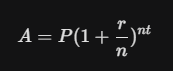
In this equation, $t$ (time) is the exponent. This means that as time goes on, the growth isn’t just a straight line; it’s a curve that gets steeper and steeper.
The “S-Curve” of Wealth
For the first 10 to 15 years of investing, your wealth will feel like it’s growing at a snail’s pace. You might be putting in $500 a month and seeing only small gains. This is the “Foundation Phase.” However, once you cross a certain threshold, the interest earned every year begins to exceed the amount you are contributing from your paycheck. This is the “Acceleration Phase,” where wealth begins to “snowball.”
The Rule of 72: A Simple Way to Predict Wealth Growth

One of the best “mental hacks” for laypeople to understand their timeline is the Rule of 72. This is a quick way to estimate how long it will take for your money to double at a given annual rate of return.
How to Use the Rule of 72:
Simply divide 72 by your expected annual return.
-
At a 7% return (typical for a balanced portfolio): $72 / 7 = 10.3$ years to double.
-
At a 10% return (historic S&P 500 average): $72 / 10 = 7.2$ years to double.
-
At a 4% return (conservative bonds): $72 / 4 = 18$ years to double.
By using this rule, you can map out your journey. If you have $100,000 today and you want to get to $400,000, you need two “doubles.” At a 10% return, that will take you approximately 14.4 years.
Savings Rate vs. Investment Returns: Which Matters More?
In the beginning, your savings rate (how much you actually put into the market) is far more important than your investment return (how well the market performs).
The Math of the Early Years
If you have $5,000 invested, a “stellar” 20% return only gives you $1,000. However, if you simply find a way to save an extra $200 a month, you’ve added $2,400 to your account—over double what the “stellar” return provided.
The Shift to Returns
As your portfolio grows, the math flips. Once you have $1,000,000, a simple 5% market gain adds $50,000 to your net worth—an amount that is very difficult for most people to “save” from their salary in a single year.
The takeaway: In your 20s and 30s, focus on increasing your income and lowering expenses to boost your savings rate. In your 40s and 50s, focus on asset allocation and tax efficiency to protect and grow your returns.
The Realistic Timeline: From Zero to Financial Freedom
While everyone’s “wealth number” is different, we can use average data to create a realistic roadmap. Assuming a starting balance of zero and an inflation-adjusted 7% annual return:
-
To reach $100,000: Investing $1,000/month takes about 7 years.
-
To reach $500,000: Investing $1,000/month takes about 20 years.
-
To reach $1,000,000: Investing $1,000/month takes about 28 years.
Notice how it takes 20 years to get to the first $500k, but only 8 more years to get the next $500k. That is compounding in action. This is why the common advice is to “start as early as possible.” Every year you wait in your 20s is a year of massive growth you miss out on in your 60s.
Avoiding the ‘Wealth Killers’: Inflation and Lifestyle Creep

Even the best investment strategy can be derailed by two silent enemies: Inflation and Lifestyle Creep.
The Hidden Tax: Inflation
If your portfolio grows by 8% but inflation is 4%, your “real” wealth only grew by 4%. This is why keeping all your money in a traditional savings account is a losing battle; the interest rate rarely keeps up with the rising cost of living. To build wealth, you must invest in “productive assets” like stocks or real estate that historically outpace inflation.
The Success Trap: Lifestyle Creep
As people earn more, they tend to spend more. They get a raise and immediately move into a more expensive apartment or buy a newer car. This is “Lifestyle Creep.” It keeps you on a treadmill where your income goes up, but your savings rate stays at zero. To build wealth quickly, you must maintain a “gap” between what you earn and what you spend.
The Three Phases of the Wealth Journey
Understanding which phase you are in can help manage your expectations and keep you from getting discouraged.
Phase 1: The Accumulation Phase (Years 1–15)
This is the “grind.” Your net worth is small, and market fluctuations feel meaningful. Your main goal here is consistency. You are building the habits that will sustain you later.
Phase 2: The Momentum Phase (Years 15–25)
This is the most exciting phase. You start seeing “green” in your account that doesn’t come from your paycheck. Your investments are doing the heavy lifting. At this stage, your primary goal is to stay the course and avoid making emotional mistakes during market downturns.
Phase 3: The Preservation/Distribution Phase (Year 25+)
You have reached your “wealth goal.” Now, the focus shifts from growth to protection. You may move money into more stable assets (like bonds or dividend-paying stocks) to ensure that your wealth lasts for the rest of your life.
Why the First $100,000 is the Hardest
There is a famous quote by Charlie Munger, the late vice chairman of Berkshire Hathaway: “The first $100,000 is a [challenge], but you have to do it. I don’t care what you have to do—if it means walking everywhere and not eating anything that wasn’t purchased with a coupon, find a way to get your hands on $100,000.”
Why is that specific number so important? Because until you reach that level, the “engine” doesn’t have enough fuel.
-
A 7% return on $10,000 is only $700—not enough to change your life.
-
A 7% return on $100,000 is $7,000—enough to pay for a vacation or cover a few months of rent.
-
A 7% return on $1,000,000 is $70,000—a full-time salary for many people.
Once you hit $100k, the “math” starts working for you rather than you working for the math.
Behavioral Finance: The Reason Most People Never Get Wealthy
If the math is so simple, why isn’t everyone wealthy? Because humans are not rational calculators; we are emotional creatures.
The Panic Factor
When the market drops 20%, our “fight or flight” response kicks in. Many people sell their investments at the bottom to “protect” what’s left. This turns a temporary “paper loss” into a permanent “realized loss.”
The Comparison Trap
We see our neighbor with a new Tesla or a friend on a luxury vacation, and we feel “behind.” This leads to taking unnecessary risks or dipping into investment accounts to fund a lifestyle we can’t afford yet.
The Golden Rule: Wealth is what you don’t see. It’s the money in the brokerage account, not the expensive car in the driveway.
Frequently Asked Questions (FAQ)

Can I build wealth if I start in my 40s?
Yes! While you missed the early compounding of your 20s, you likely have a higher earning potential now. By maximizing retirement accounts (like 401ks and IRAs) and utilizing “catch-up contributions,” you can still build a significant nest egg in 20 years.
What is the best asset for long-term wealth?
Historically, a diversified portfolio of low-cost stock market index funds has been the most reliable way for the average person to build wealth. It offers the best balance of growth, liquidity, and ease of use.
Should I pay off debt before investing?
Generally, if your debt has an interest rate higher than what you expect to earn in the market (e.g., credit card debt at 20%), pay that off first. If it’s low-interest debt (e.g., a 3% mortgage), it often makes more sense to invest.
Focus on the Process, Not the Destination
Building wealth is not an event; it is a process. It takes time, discipline, and a willingness to be “bored” with your investments. If you are looking for excitement, go to Las Vegas. If you are looking for wealth, buy quality assets and leave them alone for 20 years.
The best time to start was 20 years ago. The second best time is today. Every dollar you invest now is a “seed” that will grow into the shade you sit under in the future.