
The stock market remains one of the most important pillars of modern finance. In 2026, it continues to connect companies that need capital with investors who want to grow their money over time. With the rise of digital platforms, investing in stocks has become faster, easier, and more accessible to people around the world.
Today, investors can buy shares instantly through mobile apps, track global markets in real time, and use artificial intelligence tools to analyze financial data. These advancements have transformed investing into something far more dynamic and widely available than in previous decades.
However, despite technological progress, the stock market still carries uncertainty. Prices change constantly due to economic conditions, corporate performance, interest rates, global events, and investor behavior. This makes understanding stocks essential for anyone looking to invest wisely.
This guide explains what stocks are, how they work, why they matter, and how investors use them to build long-term financial success in 2026.
What Are Stocks?
Stocks represent partial ownership in a company.
When you buy a stock, you own a small share of that business. If the company grows and becomes more profitable, the value of your shares may increase.
Companies issue stocks to raise money for:
- Expanding operations
- Developing new products
- Funding innovation
- Hiring employees
- Paying business expenses
In exchange, investors gain ownership rights and potential financial returns.
How the Stock Market Works
The stock market is a place where buyers and sellers trade shares of companies.
Prices are determined by supply and demand. When demand is high, prices rise. When selling pressure is higher, prices fall.
Stock prices are influenced by:
- Company earnings
- Economic indicators
- Interest rates
- Industry trends
- Global news and events
Because of these factors, prices change constantly during trading hours.
Ways Investors Earn Money from Stocks
Investors can generate returns in several ways:
Capital Gains
Buying a stock at a lower price and selling it at a higher price.
Dividends
Some companies distribute part of their profits to shareholders.
Long-Term Appreciation
Holding strong companies over time as their value increases.
Each method supports different financial goals.
Types of Stocks
Common Stocks
The most widely used type of stock, often including voting rights.
Preferred Stocks
Offer more stable dividends but less control in company decisions.
Growth Stocks
Companies expected to grow rapidly, often in technology sectors.
Value Stocks
Stocks that appear undervalued compared to their financial performance.
A key figure associated with value investing principles is Warren Buffett.
Why Stock Prices Change
Stock prices move constantly due to:
- Company performance
- Economic conditions
- Interest rate changes
- Global events
- Investor sentiment
These fluctuations are a normal part of financial markets.
Risks of Stock Investing
Investing in stocks involves risks such as:
- Market volatility
- Short-term losses
- Economic downturns
- Company underperformance
- Emotional decision-making
Understanding risk is essential for long-term success.
Long-Term Investing Strategy
Long-term investing focuses on holding stocks for many years.
This approach relies on:
- Business growth over time
- Compound returns
- Reduced emotional trading
- Recovery from market downturns
It is widely used for retirement and wealth building.
Short-Term Trading
Short-term trading focuses on quick profits from price movements.
It includes:
- Frequent buying and selling
- Technical analysis
- Market timing attempts
- Higher risk exposure
While it can be profitable, it requires discipline and experience.
Why People Invest in Stocks
Common motivations include:
- Building wealth
- Retirement planning
- Passive income
- Inflation protection
- Financial independence
Stocks remain one of the strongest long-term wealth-building tools.
Market Cycles: Bull and Bear Markets
Bull Market
A period of rising prices and strong investor confidence.
Bear Market
A period of falling prices and economic uncertainty.
Understanding these cycles helps investors stay disciplined during volatility.
Diversification in Investing
Diversification means spreading investments across multiple assets.
Benefits include:
- Reduced risk
- More stable returns
- Protection from individual losses
Many investors use ETFs to diversify efficiently.
Technology and Modern Investing
In 2026, technology plays a major role in investing.
Investors now use:
- Mobile trading platforms
- AI-powered analytics tools
- Automated investment systems
- Real-time financial dashboards
These tools make investing more accessible and efficient.
Common Investing Mistakes
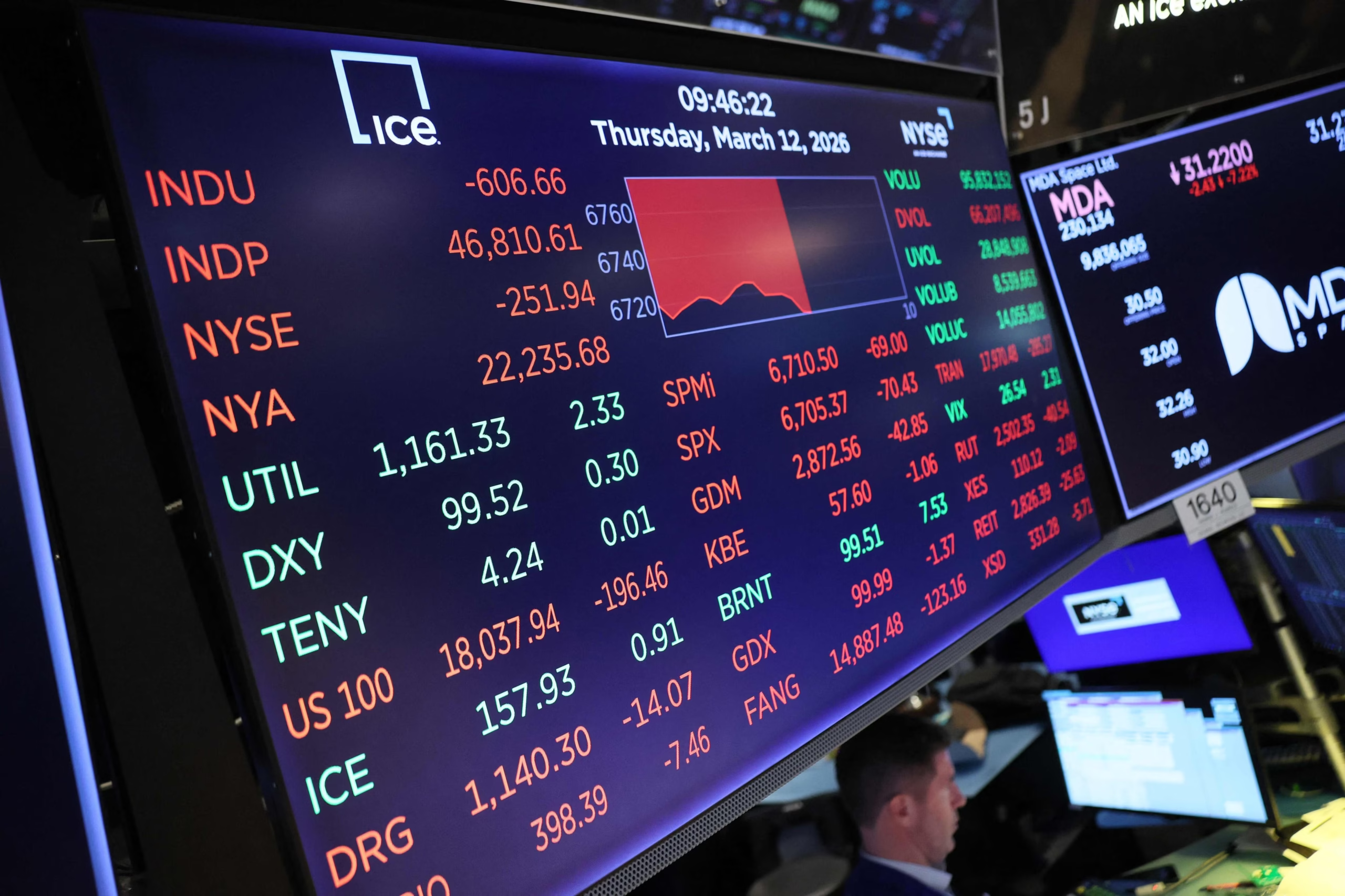
Many investors lose money due to avoidable mistakes:
- Emotional trading
- Lack of research
- Poor diversification
- Trying to time the market
- Panic selling during downturns
Avoiding these mistakes improves long-term results.
Smart Investing Principles
Successful investors often follow simple rules:
- Invest consistently
- Think long-term
- Diversify portfolios
- Research before investing
- Stay disciplined during volatility
Consistency is often more important than prediction.
The Future of Stock Investing
Stock markets will continue evolving with technology.
Future trends may include:
- AI-driven investing systems
- Global market accessibility
- Automated portfolio management
- Smarter financial tools
- Increased retail investor participation
Despite innovation, the core principle remains unchanged: investing in strong companies over time.
Building Wealth Through Stock Investing
Stock investing remains one of the most effective ways to build long-term wealth. While it carries risk, it also offers strong potential for financial growth when approached with patience and discipline.
In 2026, investing is more accessible than ever, but success still depends on knowledge, strategy, and emotional control.
Long-Term Success in the Stock Market
Long-term success comes from consistency rather than short-term prediction. Investors who focus on diversification, education, and disciplined decision-making are often better positioned for financial stability and growth.