
Entering the world of investing feels like stepping into a high-stakes arena. You have your capital ready, your goals set, and a sense of excitement about the future. However, for many beginners, the very first hurdle—choosing a brokerage—is where the most significant errors occur.
Choosing the wrong brokerage isn’t just a minor inconvenience; it is a strategic error that can drain your portfolio through hidden fees, limit your growth through poor tools, and cause unnecessary stress during market volatility. In this guide, we dive deep into the common pitfalls that lead new investors to the wrong platforms and how you can avoid them to ensure a smooth financial journey.
The “Shiny Object” Trap: Why Beginners Prioritize UI Over Utility
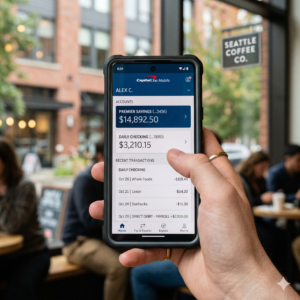
In the age of fintech, many brokerages are designed more like social media apps than financial institutions. They use bright colors, gamified notifications, and “one-click” trading buttons to make the experience feel effortless. While a clean interface is helpful, beginners often fall into the trap of choosing a broker based solely on how the app looks.
The Danger of Gamification
When a platform rewards you with virtual confetti for making a trade, it encourages frequent activity. For a beginner, frequent trading is often the quickest way to lose money. Real investing is frequently boring and requires patience. If your brokerage makes it feel like a video game, you might find yourself taking risks you aren’t prepared for.
Utility vs. Aesthetics
A professional-grade brokerage might look “intimidating” or “old-fashioned” at first glance. However, these platforms often provide the deep research, data, and stability that “pretty” apps lack. Beginners often regret choosing the “cool” app when they realize it lacks the advanced charting or fundamental data needed to make an informed decision.
Decoding the Fee Maze: Why “Free” Trading Isn’t Always Free
The most successful marketing campaign in the history of investing is the “Zero Commission” movement. Almost every major US broker now offers $0 commissions on stocks and ETFs. Because of this, beginners often assume that trading is entirely free. This is one of the most expensive misconceptions in the industry.
The Rise of Payment for Order Flow (PFOF)
If you aren’t paying a commission, the broker is still making money. Many do this through Payment for Order Flow. They sell your trade orders to high-frequency trading firms. While you pay $0 in fees, you might get a slightly worse execution price. On a large trade, this “hidden” cost can actually be higher than a traditional $5 commission would have been.
Understanding the “Miscellaneous” Fee Schedule
Beginners often overlook the “small” fees that add up:
-
Inactivity Fees: Some brokers charge you just for holding an account if you don’t trade often enough.
-
Transfer-Out Fees (ACATS): If you realize you chose the wrong broker and want to move your stocks to a new one, you might be hit with a $75 to $100 fee.
-
Wire Transfer Fees: Moving your own money back to your bank account can sometimes cost $25 per transaction.
-
Paper Statement Fees: Believe it or not, some brokers still charge $2 to $5 a month if you don’t opt into digital-only delivery.
The Support Gap: Why Beginners Regret Choosing “Ghost-Town” Brokerages
When the markets are green and everything is going well, you don’t care about customer service. But what happens when there is a technical glitch during a market crash? Or when your tax documents are incorrect?
The Importance of Human Interaction
Many new, tech-focused brokerages rely almost entirely on AI chatbots or “Help Center” articles. Beginners often choose these platforms because they are easy to sign up for. However, when a real problem arises—such as a frozen account or a complex dividend issue—they find it impossible to reach a human being.
The Value of 24/7 Availability
The stock market doesn’t wait for business hours. Choosing a broker with 24/7 phone support and physical branches (if you prefer in-person help) can be a lifesaver. Beginners often fail to realize that reliability is a form of profit. If you can’t access your account to sell during a downturn because the app crashed, the “free” trades weren’t worth it.
Overlooking Asset Classes: When Your Broker Limits Your Strategy

A common mistake beginners make is choosing a broker that only offers a narrow range of investments. You might start out only wanting to buy Apple or Tesla stock, but as you learn more, your strategy will likely evolve.
Beyond Stocks and ETFs
As you grow as an investor, you might want to explore:
-
Options Trading: For hedging or generating income.
-
Fixed Income: Treasury bonds, corporate bonds, or CDs.
-
Mutual Funds: Professional management for specific sectors.
-
International Markets: Buying stocks directly on the London or Tokyo exchanges.
-
Fractional Shares: The ability to buy $5 worth of an expensive stock.
Many “beginner” apps only offer stocks and a limited selection of ETFs. If you outgrow your broker within six months, you’ll face the headache of moving your assets, which we already noted can be expensive and time-consuming.
Security and Regulation: The Hidden Risks of Offshore Platforms
With the rise of social media “finfluencers,” many beginners are led toward offshore or unregulated trading platforms. These platforms often promise high leverage (borrowing money to trade) or access to “secret” assets.
SIPC and FDIC Protection
In the United States, legitimate brokerages are members of the SIPC (Securities Investor Protection Corporation). This protects your assets (up to $500,000) if the brokerage firm goes bankrupt. Many beginners unknowingly choose “brokers” that are actually just unregulated websites. If that company disappears tomorrow, your money goes with it.
The Danger of Excessive Leverage
Unregulated brokers often offer 100x or 500x leverage. For a beginner, this is financial suicide. It allows you to control a huge amount of money with a small deposit, but a tiny move in the market can wipe out your entire account in seconds. Legitimate, regulated US brokers have strict limits on leverage to protect the investor.
Education vs. Information: The Content Quality Trap
Every brokerage has a “blog” or an “education” section. Beginners often choose a broker because they like their educational videos. However, there is a big difference between marketing content and financial education.
Conflicting Interests
A brokerage makes money when you trade. Therefore, their “education” often focuses on how to trade frequently or how to use complex tools. They rarely provide deep education on “Buy and Hold” strategies because that doesn’t generate revenue for them.
Seeking Objective Research
Top-tier brokerages provide access to third-party research from firms like Morningstar, CFRA, or Reuters. Beginners often choose brokers that only provide “social sentiment” (what other users are saying). Following the “herd” on a social trading app is a recipe for buying at the top and selling at the bottom.
The Technology Mismatch: Choosing a Platform That Is “Too Simple”
While we warned against overly complex platforms, the opposite is also true. Some platforms are so simplified that they withhold vital information from the user.
Essential Tools for Every Beginner
Even if you are a “buy and hold” investor, you need:
-
Real-Time Quotes: Some brokers show data that is 15 minutes old unless you pay a fee.
-
Basic Technical Indicators: Moving averages and RSI are essential even for basic timing.
-
Fundamental Data: P/E ratios, dividend history, and earnings reports should be integrated into the platform.
Beginners who choose platforms that are “too simple” often find themselves having to use three different websites just to research one stock. A good brokerage should be a “one-stop shop” for both execution and research.
Comparison Table: What Beginners Want vs. What They Actually Need
| What Beginners Look For | What They Actually Need | Why It Matters |
| Cool Mobile App | Desktop Stability | Complex analysis is difficult on a 6-inch screen. |
| $0 Commissions | Low Spreads/PFOF Transparency | Hidden execution costs can be higher than fees. |
| Social Media Hype | SIPC/FINRA Regulation | Protecting your principal is the first rule of investing. |
| Quick Sign-up | Human Customer Support | You’ll need a real person when things go wrong. |
| Simple Charts | Depth of Research | Making decisions on “vibes” is not a strategy. |
The Psychology of the Wrong Choice: Why We Follow the Crowd
Why do so many people end up with the same three or four “trendy” brokers? It comes down to Social Proof. We see an ad on YouTube or a post on Reddit, and we assume that because “everyone” is using it, it must be the best.
The Echo Chamber Effect
Online communities often become echo chambers for specific platforms. If a platform has a “referral program” where users get a free stock for signing up friends, people will praise that platform regardless of its quality. Beginners often fall for these referral loops without checking the broker’s underlying health or fee structure.
How to Choose the Right Brokerage: A Step-by-Step Framework

If you are a beginner, stop looking for the “best” broker and start looking for the “best for you.” Follow these steps:
-
Define Your Style: Are you going to buy one ETF every month and forget it? Or do you want to learn how to trade options?
-
Check the Asset List: Ensure they offer exactly what you want to trade (Crypto, Bonds, Fractional Shares).
-
Read the “Fee Schedule” (Not the landing page): Search the website for a PDF titled “Fee Schedule.” Look for inactivity, wire, and transfer fees.
-
Test the Support: Before depositing money, send a question to their support team. See how long it takes for a human to respond.
-
Verify Regulation: Ensure they are SIPC and FINRA members. You can check this on the FINRA BrokerCheck website.
Your Broker Is Your Partner, Not Just a Tool
Choosing a brokerage is one of the most important “foundational” decisions you will make. The wrong choice leads to a “death by a thousand cuts” through fees and poor execution. The right choice provides a wind at your back, giving you the tools, security, and support you need to grow your wealth over decades.
Don’t be swayed by flashy marketing or a free $5 stock. Focus on the long-term infrastructure of the platform. After all, you aren’t just looking for a place to buy a stock; you are looking for a partner in your financial future.