
Purchasing a home is likely the single largest financial transaction you will ever make. It is the culmination of years of dreaming, saving, and planning. However, the excitement of browsing listings and attending open houses can quickly be overshadowed by the daunting reality of the mortgage process.
For most, a “good” home financing deal isn’t just about getting an approval; it is about securing terms that protect your financial future. A difference of just 0.5% in an interest rate can mean tens of thousands of dollars over the life of a 30-year loan.
In this guide, we will break down the mechanics of home financing, from credit preparation to the final signature at the closing table, ensuring you have the tools to navigate the market like an expert.
Understanding the Foundation: How Home Financing Actually Works
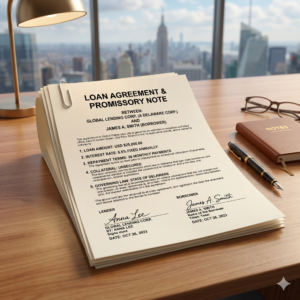
Before diving into the “how-to,” it is essential to understand what home financing—commonly known as a mortgage—actually is. A mortgage is a secured loan where the property itself serves as collateral. If you fail to make payments, the lender has the right to take possession of the home through foreclosure.
The Anatomy of a Mortgage Payment
Every monthly payment you make is typically split into four parts, often referred to as PITI:
-
Principal: The amount that goes toward paying down the original balance of the loan.
-
Interest: The cost of borrowing the money, paid to the lender.
-
Taxes: Property taxes collected by the lender and held in an escrow account to be paid to the local government.
-
Insurance: This includes homeowners insurance and, in some cases, Private Mortgage Insurance (PMI).
Preparing Your Financial Profile for Maximum Approval Odds
Lenders don’t just look at your bank balance; they look at your “financial health” through a very specific lens. To get the best deal, you need to begin preparing at least six to twelve months before you plan to buy.
The Magic of the Credit Score
Your credit score is the primary factor in determining your interest rate. While you can get a loan with a score in the 600s, the “best” rates are usually reserved for those with a 740 or higher.
Pro Tip: Avoid opening new credit cards or taking out auto loans in the year leading up to your home purchase. Each “hard inquiry” can ding your score, and new debt increases your liability.
Managing Your Debt-to-Income (DTI) Ratio
Lenders use the DTI ratio to ensure you aren’t overextending yourself. Most conventional lenders want your total monthly debt payments (including the new mortgage) to be below 43% of your gross monthly income. If you can get this number below 36%, you will be seen as a low-risk borrower, which can help in negotiations.
Decoding Different Loan Types: Which One is Right for You?
One of the biggest mistakes buyers make is assuming there is only one type of “mortgage.” In reality, there is a variety of products designed for different financial situations.
| Loan Type | Best For | Typical Down Payment | Key Benefit |
| Conventional | Borrowers with good credit | 3% – 20% | No upfront insurance fees if 20% down. |
| FHA Loans | First-time buyers / Lower credit | 3.5% | Easier to qualify with lower scores. |
| VA Loans | Veterans and Service Members | 0% | No down payment or monthly insurance. |
| USDA Loans | Rural property buyers | 0% | Zero down payment for specific areas. |
| Jumbo Loans | High-value luxury homes | 10% – 20% | For loans exceeding local limits. |
Fixed-Rate vs. Adjustable-Rate Mortgages (ARMs)
-
Fixed-Rate: Your interest rate stays the same for the entire life of the loan (usually 15 or 30 years). This offers maximum stability.
-
Adjustable-Rate (ARM): The rate is fixed for an initial period (e.g., 5 or 7 years) and then adjusts annually based on market trends. These are risky but can be beneficial if you plan to sell the home before the adjustment period begins.
The Down Payment Myth: Do You Really Need 20%?
The “20% down payment” rule is perhaps the most persistent myth in real estate. While putting 20% down is ideal because it allows you to avoid Private Mortgage Insurance (PMI) and gives you instant equity, it is not a requirement for most.
The Trade-off of Lower Down Payments
Many modern programs allow for as little as 3% or 3.5% down. However, you must weigh the benefits:
-
Lower Down Payment: Allows you to buy sooner and keep cash in your pocket for repairs or emergencies.
-
Higher Down Payment: Lowers your monthly payment, reduces total interest paid, and eliminates the need for PMI.
If you put down less than 20%, remember that PMI is typically an added cost that protects the lender, not you. Once your home’s value grows and you reach 20% equity, you can usually request to have this insurance removed.
Interest Rates vs. APR: Knowing the Real Cost
When you see an advertisement for a 6.0% interest rate, you might also see a higher number next to it labeled APR (Annual Percentage Rate).
Why APR Matters More
The interest rate is just the cost of the principal. The APR includes the interest rate plus the fees involved in getting the loan (such as origination fees, mortgage insurance, and points).
-
Interest Rate: Used to calculate your monthly payment.
-
APR: Used to compare the total cost of the loan between different lenders.
Always compare lenders based on the APR to see who is truly offering the best deal.
The Power of Pre-Approval in a Competitive Market

In a “seller’s market,” you cannot even look at a house without a Pre-Approval Letter. This is different from a “pre-qualification,” which is just a rough estimate.
A pre-approval means the lender has verified your income, taxes, and credit. It tells the seller two things:
-
You are a serious buyer.
-
The bank has already vetted you and is likely to fund the deal.
Without this letter, your offer will likely be ignored in favor of a buyer who has already done their homework.
Navigating Closing Costs: The “Hidden” Fees of Buying a Home
Many buyers save for years for a down payment only to be shocked by Closing Costs. These are the fees paid at the end of the transaction to finalize the loan.
Typically, closing costs range from 2% to 5% of the purchase price. They include:
-
Appraisal Fees: To ensure the house is worth what you’re paying.
-
Title Insurance: To protect against future legal claims on the property.
-
Loan Origination Fees: The lender’s “cut” for processing the paperwork.
-
Recording Fees: Paid to the local government to register the change of ownership.
Negotiating Seller Concessions
In some markets, you can ask the seller to pay a portion of your closing costs. This is known as a “seller concession.” While this might make your offer slightly less attractive to the seller, it can save you thousands of dollars in upfront cash.
Common Mistakes to Avoid During the Financing Process
Even a “perfect” loan can fall through at the last minute if you aren’t careful. Here are the most common pitfalls:
-
Changing Jobs: Lenders want to see stability. Quitting your job or switching to a commission-based role during the “underwriting” phase can lead to an instant denial.
-
Making Large Deposits: If $10,000 suddenly appears in your bank account, the lender will need to document exactly where it came from to ensure it isn’t an undisclosed loan.
-
Ignoring the “Final Walkthrough”: While this is more about the house than the loan, ensuring the property is in the agreed-upon condition is vital before the funds are released.
-
Forgetting About Maintenance: A “good” financing deal is one you can actually afford. If the mortgage takes up 40% of your income, you won’t have money left for a broken water heater or a leaking roof.
The Step-by-Step Timeline of Home Financing

-
Preparation (6-12 Months Prior): Check credit, pay down debt, and save for the down payment.
-
Pre-Approval (1-2 Months Prior): Contact lenders and get your letter.
-
The House Hunt: Find your home and make an offer.
-
Loan Application: Once the offer is accepted, you officially apply for the mortgage on that specific property.
-
Appraisal & Inspection: The lender ensures the house is worth the loan amount.
-
Underwriting: The “black box” phase where a human expert verifies every detail of your life.
-
Closing: You sign a mountain of paperwork, pay your closing costs, and get the keys!
Your Home, Your Investment
Securing a good home financing deal is not a matter of luck; it is a matter of strategy. By understanding the types of loans available, polishing your credit, and knowing the difference between interest and APR, you place yourself in the driver’s seat.
A mortgage should be a tool that helps you build wealth, not a burden that creates stress. Take your time, compare multiple lenders, and don’t be afraid to ask questions. Your future self—and your bank account—will thank you for the diligence you put in today.