Why the Smallest Details Matter
In finance, people often focus on big decisions—investments, salaries, major purchases. But what truly shapes long-term outcomes are often small, repeated actions.
These actions are heavily influenced by something subtle but powerful: financial friction.
Financial friction refers to the effort, time, or resistance required to complete a financial action. It might seem insignificant, but it plays a huge role in determining whether you save, spend, invest, or delay.
What Is Financial Friction?
Financial friction is any barrier that makes an action harder or easier to perform.
Examples
- The number of steps required to make a purchase
- Time needed to transfer money
- Effort required to cancel a subscription
- Complexity of opening an investment account
Friction influences behavior by shaping what feels easy and what feels difficult.
High Friction vs. Low Friction
Not all friction is bad. It depends on where it exists.
High Friction (Good for Spending Control)
- Manual payment processes
- Extra confirmation steps
- Delays before purchases
Low Friction (Good for Positive Habits)
- Automatic savings
- One-click investing
- Scheduled bill payments
The key is placing friction strategically.
The Psychology Behind Friction
Humans naturally gravitate toward the easiest path.
Behavioral Pattern
- Easy actions are repeated
- Difficult actions are avoided
- Over time, habits form around convenience
This means friction doesn’t just affect decisions—it creates habits.
How Modern Finance Reduces Friction
Technology has dramatically lowered friction in financial systems.
Examples
- Contactless payments
- Stored card details
- Instant transfers
- Subscription auto-renewals
While convenient, this can lead to unintentional spending.
The Hidden Risk of Convenience
When spending becomes effortless, awareness often decreases.
Effects
- Reduced perception of cost
- Increased impulse purchases
- Difficulty tracking expenses
Low friction makes it easier to spend without thinking.
Increasing Friction to Control Spending
One of the most effective strategies is adding friction intentionally.
Practical Methods
- Remove saved payment methods
- Use manual transfers for purchases
- Set spending confirmations
- Introduce a waiting period before buying
These small barriers create space for better decisions.
Reducing Friction for Positive Actions
While adding friction helps control spending, removing it helps build good habits.
Examples
- Automating savings contributions
- Setting up recurring investments
- Enabling automatic bill payments
This ensures important actions happen consistently.
Friction and Subscription Economy
Subscriptions are designed with low entry friction and high exit friction.
Pattern
- Easy to start (one click)
- Difficult to cancel (multiple steps)
This leads to ongoing costs that many people overlook.
Time Friction and Financial Decisions
Sometimes the barrier is not effort, but time.
Examples
- Delaying investment decisions
- Postponing financial planning
- Avoiding reviewing expenses
This type of friction leads to inaction, which has its own cost.
Designing Your Personal Friction System
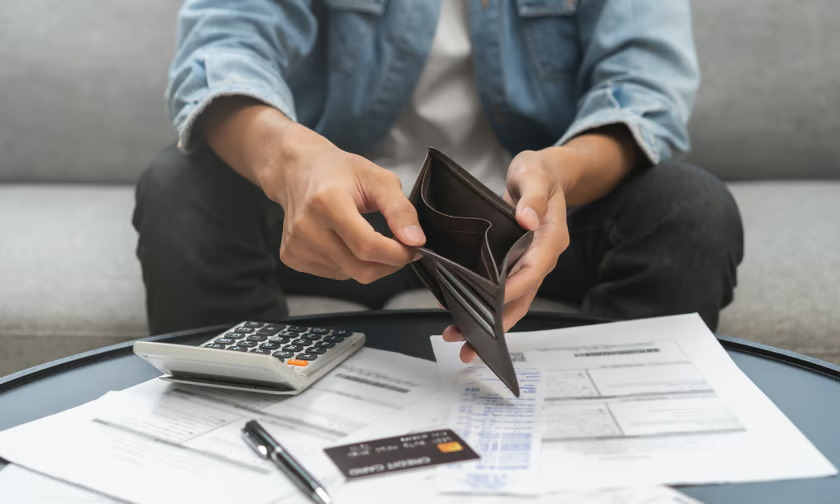
You can control friction instead of being controlled by it.
Strategy
- Increase friction for spending
- Decrease friction for saving and investing
- Maintain awareness of automated processes
This creates a system that works in your favor.
Friction and Emotional Spending
Friction can interrupt emotional decisions.
Example
- Adding a delay before purchases
- Requiring a second confirmation
This pause allows logic to replace impulse.
Long-Term Impact of Friction Design
Small adjustments in friction lead to large outcomes over time.
Positive Effects
- Reduced unnecessary expenses
- Increased savings consistency
- Better financial discipline
These changes compound through repetition.
Common Mistakes
People often misplace friction.
Examples
- Making saving complicated
- Keeping spending effortless
- Ignoring automatic expenses
Correcting this imbalance is key.
The Strategic Perspective
Financial success is not only about knowledge—it’s about environment design.
Friction is part of that environment. It determines which actions feel natural and which require effort.
The Real Advantage
Most people try to rely on willpower to manage money. But willpower is limited.
By adjusting financial friction, you reduce the need for discipline and let your system guide your behavior automatically.
In the end, the goal is simple: make good financial decisions easy, and bad ones harder. That small shift can transform your entire financial trajectory.