
For decades, the stock market was perceived as a playground for the wealthy—a place where you needed a high-priced broker, a three-piece suit, and at least $10,000 just to get through the door. If you didn’t have a large sum of capital, you were simply locked out of the world’s greatest wealth-building machine.
However, as we move through 2026, the landscape has fundamentally shifted. Technology, competition among brokerage firms, and the rise of fractional shares have democratized the market. The short answer to “How much money do I need?” is simpler than you think: You can start with as little as $1.
But while you can start with a single dollar, there is a big difference between starting and succeeding. This 3,000-word guide will break down the realistic costs of investing, how to navigate the market with a small budget, and why the amount you invest matters far less than when you begin.
The Death of the Minimum Balance: How 2026 Made Investing Accessible
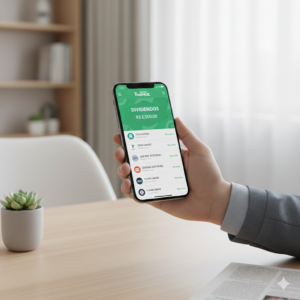
The first hurdle many beginners face is the “Minimum Opening Deposit.” In the past, many brokerage firms required $500 to $2,500 just to open an account. Today, major platforms have largely eliminated these requirements.
The Rise of Fractional Shares
In the past, if you wanted to buy a share of a high-priced tech company trading at $3,000, you needed exactly $3,000. Today, most modern brokerages offer Fractional Shares. This allows you to buy a “slice” of a company based on the dollar amount you have. If you have $10, you can own a tiny piece of that $3,000 company.
Zero-Commission Trading
Another “hidden cost” that used to plague small investors was the trading fee. It used to cost $7 to $10 every time you bought or sold a stock. If you only had $50 to invest, a $10 fee meant you were down 20% before you even started. In the current market, almost all major U.S. brokers offer zero-commission trades for stocks and ETFs, making small-scale investing mathematically viable.
Determining Your “Investable Surplus”: Why Your Emergency Fund Comes First
Before we talk about how much you should put into stocks, we must talk about how much you should keep out of them. Investing is a long-term game, and the biggest mistake a beginner can make is investing money they will need for rent next month.
The “Peace of Mind” Buffer
Before you put $1 into the stock market, you should have a “Starter Emergency Fund” of at least $1,000 to $2,000. Stocks are volatile; they can go down 10% in a week. If you have an emergency and are forced to sell your stocks while the market is down, you are locking in a loss.
Calculating Your Monthly Investment Budget
A common financial goal is the 15% Rule: aiming to invest 15% of your gross income. However, if you are just starting, don’t let this number intimidate you. Investing $20 a week is infinitely better than investing $0 while waiting until you can afford $500.
The Cost of Different Investment Vehicles: Stocks, ETFs, and Mutual Funds
Not all investments carry the same “entry price.” Understanding the different “wrappers” for your money will help you decide where your limited capital should go first.
Individual Stocks
If you want to buy a whole share of a company, your minimum is simply the current share price. In 2026, some stocks trade for $10, while others trade for hundreds. Fractional shares make this irrelevant, but you should still be aware of the “price” of the companies you admire.
Exchange-Traded Funds (ETFs)
ETFs are like a basket of stocks. Instead of buying one company, you buy a tiny piece of hundreds. For a beginner with $50, an ETF is often the smartest move because it provides instant diversification.
Mutual Funds
Some older, traditional mutual funds still have “initial minimums” of $1,000 or $3,000. Unless you have a specific reason to be in a mutual fund, beginners are usually better served by the ETF version of that same fund, which usually has no minimum.
The Hidden Costs of Investing: Expense Ratios and Taxes

Even in a “zero-commission” world, there are costs you need to be aware of. These aren’t paid out of your pocket; they are “leaked” from your returns.
Understanding Expense Ratios
If you buy an ETF, the company managing it (like Vanguard or BlackRock) charges a small annual fee called an Expense Ratio.
-
A “Cheap” Fund: 0.03% to 0.10% ($0.30 to $1.00 per year for every $1,000 invested).
-
An “Expensive” Fund: 0.75% to 1.50% ($7.50 to $15.00 per year for every $1,000).
For a beginner, sticking to low-cost index funds is the best way to ensure your small starting amount isn’t eaten away by fees.
The Impact of Taxes on Small Portfolios
If you invest in a “Standard Brokerage Account,” you will owe taxes on your dividends and any profits you make when you sell. To maximize your money, beginners should first look into Tax-Advantaged Accounts like a Roth IRA or a 401(k), where your money can grow tax-free.
The Math of Starting Small: The Power of Time vs. Capital
If you only have $100 to start, you might feel like it won’t make a difference. This is a psychological trap. In investing, Time is more powerful than money.
The Compound Interest Curve
Consider two investors:
-
Investor A: Starts at age 20, investing just $50 a month for 10 years, then stops and never adds another penny.
-
Investor B: Starts at age 30, investing $100 a month (double the amount) for 35 years until retirement.
Because of the way compound interest works, Investor A will often end up with more money at retirement simply because their “small” amount had an extra decade to grow.
Strategies for Investing with Less Than $500
If you are starting with a small “seed” of capital, your strategy should focus on simplicity and cost-efficiency.
-
Focus on “Broad Market” ETFs: Don’t try to pick the “next big stock” with your first $100. Buy an ETF that tracks the S&P 500 or the Total Stock Market.
-
Automate Your Contributions: Set up a “micro-transfer” of $5 or $10 every week. This is known as Dollar Cost Averaging.
-
Reinvest Your Dividends: Most brokers allow for “DRIP” (Dividend Reinvestment Plan). This takes the small 25-cent or 50-cent dividends you receive and automatically buys more shares, compounding your growth.
When is a Small Amount “Too Small” to Invest?
Technically, no amount is too small, but there is a point of diminishing returns. If your brokerage has any monthly “maintenance fees” (which most don’t anymore, but check!), and those fees are $5 a month, then investing only $10 a month is a bad idea because you are losing 50% to fees.
As long as you are using a No-Fee, No-Commission Broker, there is no reason to wait. The educational value of having “skin in the game” is worth more than the $5 you might earn in interest. When you own a stock—even just $1 worth—you start paying attention to the news, the economy, and how businesses work.
Expanding Your Portfolio: When to Add More Capital

As your income grows, your investment amount should scale. Once you have mastered the habit of investing $50 a month, look for ways to “bump” that up.
-
The “Windfall” Strategy: Use tax refunds, birthday money, or work bonuses to make “lump sum” contributions.
-
The “Raise” Strategy: Every time you get a raise at work, commit to putting 50% of that raise toward your investments before you have a chance to get used to the higher paycheck.
Don’t Let the Number Stop You
The question “How much money do I need to invest?” is often a form of procrastination. We tell ourselves we’ll start when we have “real money.” But for the successful investor, all money is real money.
In 2026, the barriers are gone. The gatekeepers have been removed. Whether you have $5 or $5,000, the best time to start was yesterday. The second best time is today. Open an account, buy a fractional share of a company you believe in, and start your journey toward financial freedom.