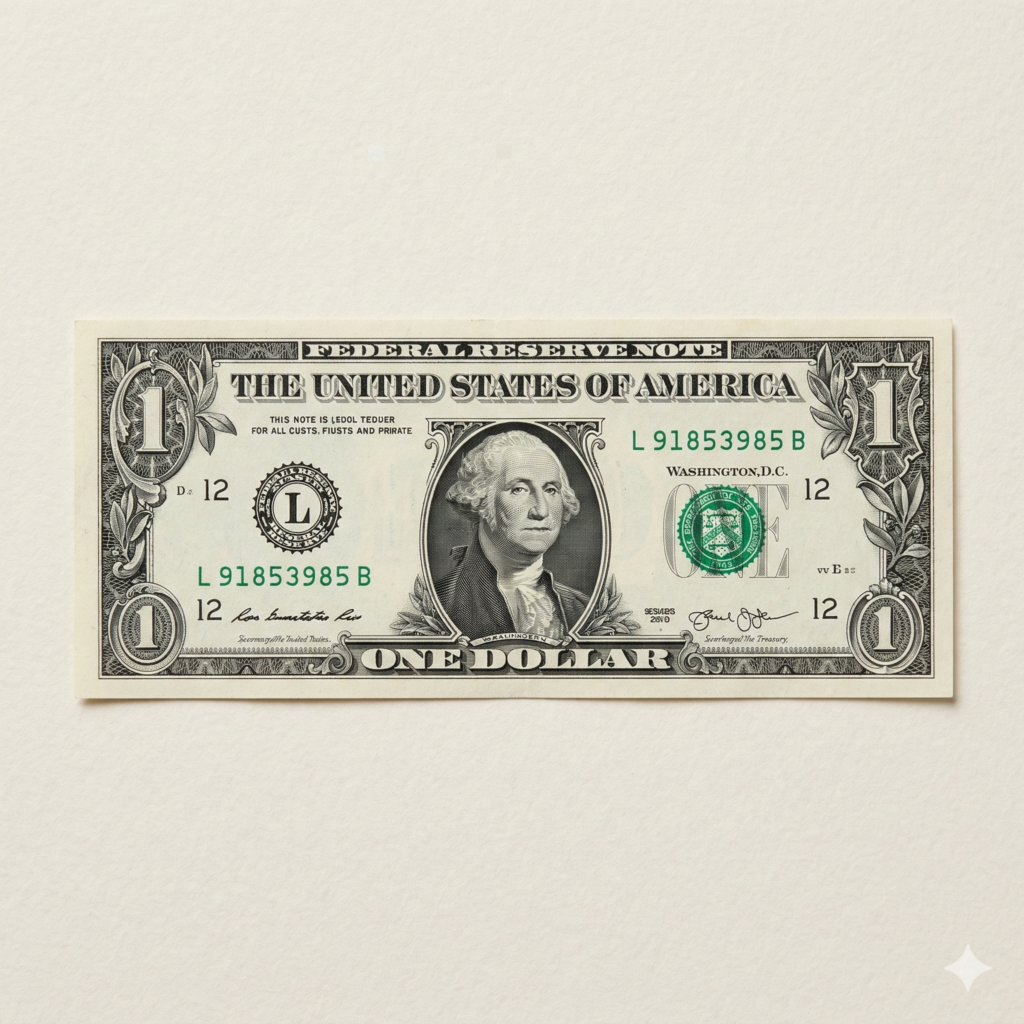
In times of economic hardship, a seemingly simple question often arises: “If the government needs more money to pay for healthcare, infrastructure, or debt, why can’t they just print more of it?” It sounds like a logical solution. After all, the government controls the mint. However, history and economic theory show us that simply increasing the supply of currency without a corresponding increase in economic output is a recipe for disaster. This phenomenon is known as inflation, and in its extreme forms, it can lead to the total collapse of a nation’s economy.
Understanding why printing money leads to rising prices is essential for anyone looking to master their personal finances and understand the global market. In this 3,000-word deep dive, we will break down the mechanics of money, the laws of supply and demand, and the historical cautionary tales that every investor should know.
The Fundamental Relationship Between Money and Value

To understand why printing money causes inflation, we must first define what money actually is. Money is not “wealth” in itself; it is a claim on wealth. It is a medium of exchange that represents the goods and services available in an economy.
The Island Analogy
Imagine an island that only produces 100 loaves of bread per year. In circulation on this island, there is a total of $100. In this simple economy, each loaf of bread will naturally cost $1.
Now, imagine the “Central Bank” of the island decides to print another $100 and distribute it to the citizens. The total money supply is now $200. Does the island have more bread? No. There are still only 100 loaves. Since everyone now has more money to bid on the same amount of bread, the price of each loaf will rise to $2.
The citizens aren’t “richer.” They have twice as much money, but that money only buys half as much as it used to. This is the essence of inflation.
The Law of Supply and Demand in the Currency Market
Economics is governed by the law of supply and demand. This law applies to cars, houses, and even the dollar in your pocket.
Scarcity Gives Money Its Power
For a currency to function as a store of value, it must be relatively scarce. When a central bank (like the Federal Reserve in the U.S.) floods the market with new currency, the “supply” of dollars increases. If the “demand” for those dollars (the amount of goods and services people want to buy) stays the same, the value of each individual dollar drops.
Velocity of Money
It’s not just about how much money exists; it’s about how fast it moves. This is known as the Velocity of Money. If the government prints money and people save it in their basements, inflation might stay low. However, when that money enters the economy—spent on groceries, cars, and rent—it creates an upward pressure on prices because more “dollars” are chasing the same “stuff.”
Why Governments Are Tempted to Print Money Anyway
If printing money is so dangerous, why do governments keep doing it? The temptation usually stems from three main factors:
-
Debt Management: Governments often borrow money to fund projects. If a government owes $1 trillion, it is much easier to pay back that debt if the value of the dollar has decreased. Printing money allows them to pay back debts with “cheaper” currency.
-
Short-Term Stimulus: During a recession, the government may print money to stimulate spending. This can provide a temporary “sugar high” to the economy, but if not managed carefully, it leads to a long-term “inflation hangover.”
-
The “Hidden Tax”: Inflation acts as a hidden tax. The government doesn’t have to pass a bill to take your money; they simply decrease the purchasing power of the money you already have.
The Quantitive Theory of Money: MV = PY
For those who want a more technical understanding, economists use a formula known as the Exchange Equation:
-
M = Money Supply
-
V = Velocity (how many times a dollar is spent)
-
P = Price Level (inflation)
-
Y = Real GDP (economic output/goods produced)
If V (velocity) and Y (output) are stable, and you increase M (money supply), then P (prices) must go up. The only way to print money without causing inflation is if the economy (Y) grows at the same rate. If the factory produces more bread, you can print more money to buy it. If the factory stays the same, the price goes up.
Historical Lessons: When Printing Money Went Horribly Wrong
History is littered with examples of nations that tried to print their way to prosperity, only to end in “Hyperinflation.”
The Weimar Republic (Germany, 1923)
After World War I, Germany faced massive reparations. To pay them, they printed marks. At one point, prices doubled every few days. People brought wheelbarrows full of cash just to buy a loaf of bread. Children played with stacks of worthless money like building blocks.
Zimbabwe (2008)
Zimbabwe is a modern example. The government printed so much money that they eventually issued a 100 Trillion Dollar Bill. Despite being a “trillionaire,” a citizen couldn’t even afford a bus ticket. The economy eventually collapsed, and they had to abandon their currency for the U.S. Dollar.
The Difference Between “Good” Inflation and “Bad” Inflation
Most central banks actually aim for a small amount of inflation—usually around 2%.
Why 2%?
A tiny bit of inflation encourages people to spend and invest their money today rather than hoarding it forever. If prices were falling (deflation), people would wait to buy a car because it would be cheaper next month. This leads to an economic standstill.
The problem arises when inflation jumps to 5%, 10%, or 20%. At these levels, people lose faith in the currency, and the “cost of living” crisis begins.
How Inflation Affects Your Personal Finances

When the government prints money and inflation rises, it changes the “rules” of the financial game.
-
Savers Lose: If your money is sitting in a standard savings account earning 0.1% interest, but inflation is 5%, you are losing 4.9% of your wealth every year.
-
Debtors Win: If you have a fixed-rate mortgage, inflation is your friend. You are paying back the bank with money that is worth less than when you borrowed it.
-
Investors Must Pivot: To survive inflation, you must own Real Assets. This includes real estate, stocks, and commodities like gold. These assets tend to rise in price along with inflation, protecting your purchasing power.
The Role of the Federal Reserve and Interest Rates
In the United States, the primary tool to fight the inflation caused by money printing is Interest Rates.
When inflation gets too high, the Fed raises interest rates. This makes it more expensive to borrow money (for cars, houses, and businesses). This “cools off” the economy, slows down the velocity of money, and hopefully brings inflation back down to that 2% target.
The Delicate Balance of Modern Economics
Printing money is not a “free lunch.” While it can provide a temporary escape from a crisis, the long-term cost is always paid by the citizens through higher prices and diminished savings. Economic prosperity comes from productivity—the ability to create more goods and services—not from simply adding zeros to a piece of paper.
As an informed citizen and investor, understanding this balance is the key to protecting your family’s future in an ever-changing economic world.