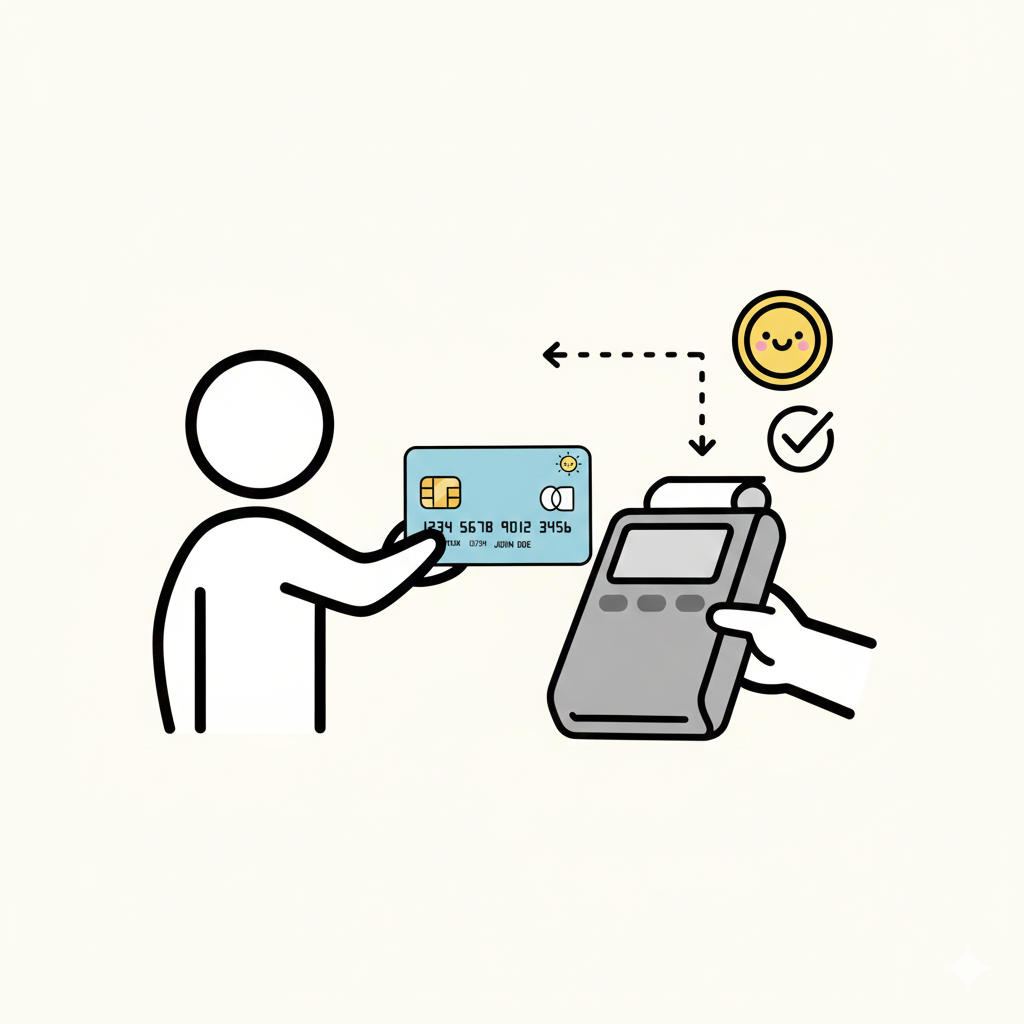
Credit cards have become so ubiquitous in our daily lives that we rarely stop to think about the technology, history, and psychology behind these small pieces of plastic (or metal). We use them for everything from a $5 coffee to a $5,000 international flight. They are the engines of modern commerce, yet most people only understand them in terms of “balance” and “interest.”
The story of the credit card is a fascinating mix of accidental inventions, complex mathematics, and behavioral science. If you have ever wondered why your card has 16 digits, why you spend more when you don’t use cash, or how a forgotten wallet changed financial history forever, you are in the right place.
In this deep dive, we explore seven curiosities about credit cards that even the most seasoned financial experts might not know.
1. The “Forgotten Wallet” That Launched an Industry
The credit card industry as we know it didn’t start in a boardroom; it started with an embarrassing dinner in New York City. In 1949, a businessman named Frank McNamara was dining at the Major’s Cabin Grill. When the bill arrived, he realized he had left his wallet in another suit.
McNamara had to call his wife to bring him cash to pay the bill. Vowing never to be embarrassed like that again, he came up with the idea for a card that could be used as a “buy now, pay later” tool at multiple establishments.
In 1950, he returned to the same restaurant and paid with a small cardboard card. This was the birth of the Diner’s Club Card. Unlike modern cards, it didn’t have a revolving balance; you had to pay the full amount at the end of every month. It was the first “universal” credit card, and it changed the concept of consumerism by decoupling the act of buying from the physical possession of cash.
2. The Secret Code: Decoding Your 16-Digit Card Number
To most people, the 16 digits on the front of a credit card are just a random string of numbers. In reality, they are a highly structured identification system governed by international standards (ISO/IEC 7812).
The Major Industry Identifier (MII)
The very first digit of your card tells you what kind of institution issued it:
-
1 and 2: Airlines
-
3: Travel and Entertainment (e.g., American Express)
-
4: Banking and Financial—Visa
-
5: Banking and Financial—Mastercard
-
6: Merchandising and Banking (e.g., Discover)
The Issuer Identification Number (IIN)
The first six digits (now moving toward the first eight in some regions) tell the network exactly which bank issued the card. The digits that follow are your unique account number.
The Luhn Algorithm: The Math That Prevents Typos
The last digit of your card is called a “Check Digit.” It is calculated using the Luhn Algorithm (also known as the $Mod_{10}$ formula). This formula performs a series of mathematical operations on the first 15 digits. If you mistype a single number when shopping online, the website knows instantly because the sequence no longer matches the check digit. This prevents millions of accidental transaction errors every day.
3. The Psychology of “Frictionless” Spending

Have you ever wondered why it feels “easier” to spend $100 on a credit card than it does to hand over five $20 bills? This is a phenomenon known in behavioral economics as the “Pain of Paying.”
When you pay with cash, you experience a high level of “friction.” You physically see the money leaving your hand, which triggers a psychological response similar to physical pain in the brain. Credit cards, and now digital wallets, are designed to be “frictionless.”
The “Decoupling” Effect
Because there is a time gap between the purchase and the actual payment of the bill, your brain decouples the pleasure of the purchase from the pain of the expense. Studies have consistently shown that consumers are willing to spend up to 100% more on the exact same items when using a credit card compared to cash. This is why rewards programs are so effective; they add a layer of “pleasure” (earning points) to the act of spending, further masking the financial cost.
4. The Magnetic Stripe and the CIA Connection
The magnetic stripe on the back of your card (the “magstripe”) was a revolutionary piece of technology that allowed for instant data reading. It was invented by an IBM engineer named Forrest Parry in 1960.
The legend goes that Parry was struggling to attach a piece of magnetized tape to a plastic card. Adhesives kept warping the tape or making it unreadable. His wife, who was using a flat iron to press clothes at the time, suggested he try ironing the tape onto the plastic. It worked perfectly.
But here is the real curiosity: The magstripe technology was actually perfected through a contract with the CIA. The government needed a way to put secure data on identification badges for high-security facilities. The same technology that kept Cold War secrets safe eventually became the way you buy your groceries.
5. Why Most Credit Cards Have an Expiration Date
If you look at your card, you’ll see an expiration date, usually three to five years after it was issued. Most people assume this is because the plastic wears out or the chip degrades. While that is partially true, there are three more important reasons for expiration:
-
Security Refresh: Every time a new card is issued, you get a new CVV (the three-digit code on the back). This helps combat long-term fraud if your card information was leaked years ago.
-
Technological Updates: It gives the bank a chance to push out new tech. For example, the transition from magnetic stripes to EMV chips, and now to contactless (NFC) cards, happened largely through the natural cycle of card expiration.
-
Marketing and Re-engagement: A new card in the mail is a psychological “re-start.” It reminds the customer of the bank’s brand and often encourages them to use the card more frequently.
6. The Legend of the “Black Card” (Amex Centurion)
The most famous credit card in the world, the American Express Centurion Card, started as an urban legend. In the 1980s, rumors circulated that there was a secret “black card” for the ultra-wealthy that could buy anything from a private jet to a tank.
The rumors weren’t true—until American Express decided to make them true. In 1999, seeing the marketing potential of the myth, they launched the Centurion card.
Facts About the Real Black Card:
-
It is made of anodized titanium.
-
It is “invite-only.” You generally have to spend and pay off at least $250,000 to $500,000 a year on your regular Amex cards just to be considered.
-
The initiation fee is reportedly $10,000, with an annual fee of $5,000.
-
The card has “no preset spending limit,” and famous stories include a cardholder using it to buy a $170 million painting at an auction just to earn the frequent flyer points.
7. The Mathematical Trap of the “Minimum Payment”
Credit card companies are required to show you a “Minimum Payment” on your statement. While this looks like a helpful suggestion, it is actually a mathematical tool designed to maximize interest revenue for the bank.
The minimum payment is usually calculated as 1% to 2% of your total balance plus interest. Because the payment is so low, it barely touches the “principal” (the original amount you spent).
The Danger of the 30-Year Credit Card
If you have a $5,000 balance at a 20% interest rate and you only make the minimum payment, it will take you approximately 22 years to pay off that debt, and you will have paid over $12,000 in interest—more than double what you actually spent. This is why credit cards are often called the most expensive form of debt; the math is designed to keep you in the cycle for as long as possible.
Bonus: The Death of the Signature and the Rise of Biometrics

For decades, the signature on the back of the card was the “ultimate” security measure. In reality, it was almost never checked by merchants. As of 2018, all major card networks (Visa, Mastercard, Amex, Discover) made signatures optional.
The future of credit card curiosity lies in Biometric Cards. Some banks are already testing cards with built-in fingerprint scanners. Instead of entering a PIN or signing a receipt, you simply place your thumb on the card while tapping it. This combines the physical possession of the card with your unique biological data, making credit card theft almost impossible in a physical retail environment.
Knowledge is the Best Financial Tool
Credit cards are masterpieces of engineering, psychology, and history. From their humble beginnings in a New York restaurant to the titanium cards of the elite, they have reshaped how humans interact with value.
By understanding these curiosities—especially the math of the Luhn algorithm and the psychology of frictionless spending—you can become a more conscious consumer. Treat your credit card as the powerful tool it is, but never forget the complex systems working behind that 16-digit number.