The debate over credit cards is as old as the cards themselves. Ask a financial minimalist, and they will tell you that credit cards are a dangerous trap designed to keep you in a cycle of debt. Ask a “travel hacker” or a financial strategist, and they will argue that credit cards are the most powerful tool in your wallet, offering free flights, protection against fraud, and a path to a perfect credit score.
So, which is it? Are credit cards good or bad?
The reality is that a credit card is a neutral financial tool. Much like a hammer, it can be used to build a house (your financial future) or it can be used to tear one down. The outcome depends entirely on the person holding the tool. In this comprehensive guide, we will explore the intricate pros and cons of credit cards, the psychology of spending, and how to ensure your cards work for you rather than against you.
Why the “Are Credit Cards Good or Bad” Debate Matters in 2026

In today’s digital economy, avoiding credit cards entirely is becoming increasingly difficult. From booking a rental car to securing a hotel room, “plastic” is often a requirement. However, with household debt levels fluctuating and interest rates remaining a significant factor in monthly budgets, understanding the mechanics of these cards is essential for anyone looking to achieve financial independence.
For a layperson, the terms can be confusing. APR, billing cycles, credit utilization, and rewards structures often feel like they are written in a different language. To determine if a credit card is right for you, we must look at both the objective mathematical benefits and the subjective behavioral risks.
The Financial Advantages: Why Credit Cards Can Be Your Best Ally
When used with discipline, credit cards offer benefits that cash and debit cards simply cannot match. Here is why many financial experts consider them essential for a modern financial life.
1. Building a Robust Credit History and FICO Score
In the United States and many international markets, your credit score is a gatekeeper to your financial life. It determines whether you get approved for a mortgage, the interest rate on your car loan, and sometimes even your ability to rent an apartment or get a job.
Credit cards are the most accessible way to build this history. By making small purchases and paying them off in full every month, you demonstrate to lenders that you are a responsible borrower. Specifically, cards help with:
-
Payment History: Showing a long track record of on-time payments.
-
Credit Mix: Adding variety to your types of debt.
-
Length of Credit History: Keeping an old card open increases the average age of your accounts.
2. Unparalleled Consumer Protection and Security
If someone steals your debit card and drains your bank account, your actual cash is gone until the bank finishes its investigation—which could take weeks. During that time, your rent check might bounce.
With a credit card, you are spending the bank’s money, not your own. If a fraudulent charge appears, you simply dispute it, and the money never leaves your pocket. Under federal law in the U.S. (the Fair Credit Billing Act), your liability for unauthorized charges is capped at $50, and most major issuers offer Zero Liability policies.
3. Rewards, Cashback, and Travel Perks
Credit card companies charge merchants a fee for every transaction. To compete for your business, they “kick back” some of that money to you in the form of rewards.
-
Cashback: Earning 1% to 5% back on every purchase is essentially a permanent discount on everything you buy.
-
Travel Points: For frequent flyers, points can be redeemed for international business-class flights or luxury hotel stays that would otherwise cost thousands of dollars.
-
Sign-up Bonuses: Many cards offer “introductory bonuses” where you can earn $200 to $1,000 in value just for meeting a initial spending requirement.
The Dark Side of Plastic: How Credit Cards Can Ruin Your Finances
While the benefits are lucrative, the risks are equally significant. For millions of people, credit cards lead to a downward spiral that takes years to escape.
1. The High Cost of Interest (APR)
The primary way credit card companies make money is through Annual Percentage Rate (APR). While a mortgage might have an interest rate of 6% or 7%, credit cards often carry rates between 18% and 30%.
If you carry a balance, the math works against you. Consider this: if you have a $5,000 balance at a 25% APR and only make the minimum payment, you could end up paying back over $10,000 over several years. The interest compounds daily, meaning you are paying interest on your interest.
2. The “Frictionless” Spending Trap
Psychological studies have shown that people spend more when using a card than when using physical cash. This is known as the “Pain of Paying.” When you hand over a $100 bill, you feel the loss immediately. When you tap a card or a phone, the “pain” is delayed until the bill arrives weeks later. This lack of friction leads to impulse buys and “lifestyle creep,” where your spending grows faster than your income.
3. The Minimum Payment Illusion
Credit card statements are required by law to show a “minimum payment.” For a $2,000 balance, the minimum might only be $40. This creates a false sense of security, leading the consumer to believe they are “handling” their debt, when in reality, they are barely covering the interest while the principal remains untouched.
Understanding the “Credit Utilization Ratio”

If you want to master the credit card game, you must understand Credit Utilization. This is the second most important factor in your credit score, accounting for 30% of your total FICO score.
Lenders want to see this ratio below 30%, and ideally below 10%. If you have a credit limit of $10,000 and you spend $9,000, your score will drop even if you pay it off in full at the end of the month. This is because, at the moment the statement closes, it looks like you are “maxed out” and high-risk.
Credit Cards vs. Debit Cards: A Side-by-Side Comparison
| Feature | Credit Cards | Debit Cards |
| Source of Funds | Bank’s Line of Credit | Your Bank Account |
| Interest | High (if not paid in full) | None |
| Credit Building | Yes (Reports to bureaus) | No |
| Fraud Protection | High (Legal protections) | Medium (Varies by bank) |
| Spending Limit | Your Credit Limit | Your Account Balance |
| Rewards | Extensive | Minimal to None |
How to Turn Your Credit Cards into a “Good” Financial Tool
If you want the rewards and security without the debt, you must follow a strict set of rules. Financial experts often call this “using a credit card like a debit card.”
-
Pay in Full, Every Time: Never carry a balance from month to month. Set up Auto-Pay for the “Statement Balance” (not the minimum payment).
-
Avoid Using Cards for “Wants” You Can’t Afford: If you don’t have the cash in your bank account right now to buy that new TV, don’t put it on the credit card.
-
Monitor Your Accounts Weekly: Don’t wait for the monthly statement. Use the mobile app to check your spending every few days to stay mindful of your budget.
-
Know Your Fees: Avoid cards with high annual fees unless the rewards specifically outweigh the cost. Most beginners should start with a “No Annual Fee” card.
Common Myths About Credit Cards
Myth: Carrying a balance helps your credit score.
False. This is one of the most damaging myths in personal finance. Paying your bill in full every month is what builds your score. Carrying a balance only costs you money in interest and does nothing to improve your creditworthiness.
Myth: Closing an old credit card is good for your score.
False. Closing an account can actually hurt your score by reducing your total available credit (increasing your utilization) and shortening the average age of your accounts. Unless the card has an expensive annual fee you don’t want to pay, it’s usually better to keep it open and use it once every six months for a small purchase.
Myth: Checking your own credit score lowers it.
False. When you check your own score (a “soft inquiry”), it has zero impact on your credit. Only when a lender checks your credit for a loan application (a “hard inquiry”) does it potentially drop your score by a few points.
The Role of Credit Cards in Small Business and Entrepreneurship
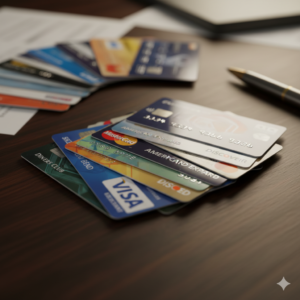
For business owners, credit cards are often a vital source of short-term capital. Business credit cards allow entrepreneurs to:
-
Separate Personal and Business Expenses: Essential for tax purposes and legal protection.
-
Manage Cash Flow: Using the 21-day grace period to buy inventory before customers pay their invoices.
-
Earn Higher Rewards: Business cards often offer higher multipliers on categories like shipping, advertising, and office supplies.
However, the risk is magnified. If a business venture fails, the owner is often personally liable for the credit card debt, which can lead to personal bankruptcy.
Identifying the Warning Signs of Credit Card Misuse
How do you know if credit cards have become “bad” for you? Watch for these red flags:
-
You are only making the minimum payments.
-
You are using one card to pay off another (Balance Transfer shuffling).
-
You find yourself hiding your credit card statements from your spouse or partner.
-
You are using credit cards for basic necessities like groceries because your bank account is empty.
If any of these apply, it is time to stop using the cards immediately and look into a Debt Consolidation Loan or a strict Budgeting Plan.
Are Credit Cards Good or Bad?
The answer is that credit cards are excellent for the disciplined and dangerous for the impulsive.
If you are a person who tracks their spending, respects a budget, and understands the math of interest, credit cards will provide you with thousands of dollars in rewards, free insurance on your purchases, and a top-tier credit score that saves you money on every other loan in your life.
If you struggle with impulse control or use debt to fund a lifestyle your income cannot support, credit cards will act as an anchor, dragging down your net worth and causing years of stress.
The goal should not be to fear credit cards, but to respect them. Treat them with the same caution you would use with any powerful tool, and they will help you build a solid financial foundation.