Credit cards are one of the most powerful financial tools ever invented. In the right hands, they offer convenience, security, and valuable rewards. Yet, for millions of households, they are not a tool for wealth, but a source of immense stress and financial ruin.
The statistics are staggering. Total household debt continues to climb globally, with credit card balances often leading the charge. But why? Is it simply a matter of people spending more than they earn? Is it a lack of math skills? Or is the system designed to keep us borrowing?
The truth is a complex mix of psychology, economics, and systemic design. It isn’t just about buying too many lattes; it is about how our brains are wired and how financial institutions capitalize on that wiring.
This comprehensive analysis delves deep into the root causes of credit card debt. We will move beyond the surface-level advice of “stop spending” to understand the behavioral and structural mechanics that lead people into the red—and keep them there.
The Psychology of “Frictionless” Spending

To understand debt, you must first understand the brain. One of the primary reasons people overspend on credit cards is a psychological concept known as “decoupling.”
The Pain of Paying
Behavioral economists have long studied the “pain of paying.” When you pay with physical cash, you experience a visceral, negative emotional response. You hand over a $50 bill, and you watch it leave your hand. You feel the loss immediately.
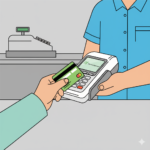
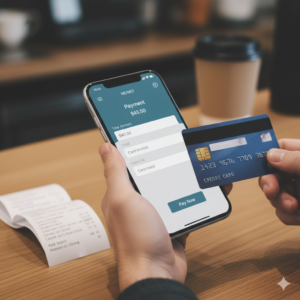
Credit cards—and increasingly, mobile wallets like Apple Pay or Google Pay—remove this pain. The transaction is abstract. You swipe a piece of plastic or tap a phone, and you get the product immediately. The “pain” (paying the bill) is pushed weeks into the future.
The disconnect
This separation between the pleasure of consumption and the pain of payment tricks the brain. It makes a $100 dinner feel free in the moment. By the time the bill arrives 30 days later, the dopamine rush of the purchase is gone, but the debt remains. This “frictionless” nature of credit cards is a major driver of subconscious overspending.
The “Minimum Payment” Illusion
If you look at your credit card statement, the most prominent number is usually not your total balance, but the Minimum Payment. This is by design.
The Anchor Effect
Psychologically, the minimum payment acts as an “anchor.” If you owe $5,000, but the bank tells you that you only need to pay $125 today to be in “good standing,” your brain perceives $125 as the acceptable standard. It feels manageable. It feels safe.
The Mathematical Trap
In reality, the minimum payment is a financial trap. It is usually calculated as 1% to 3% of your balance—just enough to cover the interest and a tiny fraction of the principal.
-
The Scenario: If you owe $5,000 at an 18% interest rate and only pay the minimum, it could take you over 20 years to pay off the debt.
-
The Cost: In that time, you would pay thousands of dollars in interest—often double or triple the original purchase price.
Many people fall into debt not because they are refusing to pay, but because they are faithfully paying the minimum, thinking they are doing the right thing, while the interest compounds faster than they can clear the balance.
Financial Literacy: Understanding APR and Compound Interest
A significant contributor to debt is a lack of understanding regarding how Annual Percentage Rate (APR) actually works.
The Silent Killer
Most people know their interest rate is “around 20%,” but they don’t understand the ferocity of compound interest working against them. Albert Einstein reportedly called compound interest the “eighth wonder of the world,” noting that “he who understands it, earns it; he who doesn’t, pays it.”
When you save money, compound interest makes you rich. When you borrow on credit cards, it keeps you poor.
-
Credit card interest is calculated daily.
-
If you don’t pay the full balance, interest is charged on your average daily balance.
-
If you make a new purchase while carrying a balance, you usually have no “grace period,” meaning interest starts accruing the second you swipe the card.
Because this math is invisible (it happens in the bank’s servers, not before your eyes), many consumers underestimate how quickly a manageable balance can balloon into an unmanageable burden.
The Role of Emergencies and Lack of Savings
Not all debt is caused by reckless spending on luxury items. A massive portion of credit card debt is structural, resulting from the “liquidity gap.”
The Emergency Fund Void
Statistically, a large percentage of adults do not have enough cash savings to cover a $1,000 emergency. When life happens—a car transmission fails, a tooth breaks, or a child gets sick—the credit card is often the only lifeline available.
The Spiral
Once the card is used for an emergency, the user is now burdened with a monthly payment they didn’t have before. This reduces their disposable income for the next month, making it even harder to save, which makes them even more vulnerable to the next emergency. It becomes a cycle:
-
Emergency occurs.
-
Credit card is used.
-
Monthly expenses rise (due to debt payment).
-
Cash flow tightens.
-
Credit card is used for groceries because cash is tight.
-
Debt increases.
Lifestyle Inflation and Social Comparison
We live in the era of social media, where consumption is constantly on display. This fuels Lifestyle Inflation and the pressure to “Keep up with the Joneses.”
The Instagram Effect
In previous decades, you only compared yourself to your neighbors. Today, you compare yourself to influencers, celebrities, and the curated “highlight reels” of everyone you went to high school with. This creates a distorted reality where it seems like everyone is vacationing in Europe, driving new cars, and dining at expensive restaurants.
FOMO (Fear Of Missing Out)
To bridge the gap between their actual income and the lifestyle they see online, people use credit. The desire to fit in, to participate in trends, and to signal status is a powerful emotional driver that overrides financial logic. Credit cards bridge the gap between “what I earn” and “who I want to be.”
The Gamification of Rewards Points
Banks are marketing geniuses. They have turned spending money into a game.
The “Points” Justification
“I’ll put it on the card to get the points/miles.”
This is a common justification for spending. However, studies show that people tend to spend significantly more when chasing rewards than they would otherwise.
-
The Math: If you spend an extra $100 to earn $2 worth of points (2% cash back), but you carry a balance and pay 20% interest, you have lost the game.
-
The rewards system is designed to encourage usage. It validates the purchase. It makes the consumer feel savvy (“I’m earning a free flight!”) even as they dig a deeper hole of debt.
Predatory Lending and Easy Access
We cannot ignore the supply side of the equation. Access to credit is incredibly easy, sometimes aggressively so.
The Pre-Approved Offer
Mailboxes and email inboxes are flooded with “Pre-Approved” offers. For someone struggling to make ends meet, a letter saying “You have $5,000 available right now” feels like a lifeline, not a loan.
Banks often target individuals who are likely to carry a balance (revolvers) rather than those who pay in full (transactors), because the former are more profitable.
Buy Now, Pay Later (BNPL)
While not strictly credit cards, the rise of BNPL services creates a “debt mentality.” It trains consumers to normalize splitting small purchases into payments. This habit easily transfers to credit card usage, normalizing the idea that you don’t need to afford the whole item today.
Emotional Spending and Retail Therapy
Finally, money is emotional. Credit card debt is often a symptom of other underlying issues.
The Dopamine Hit
Shopping releases dopamine. For people dealing with stress, loneliness, depression, or boredom, spending money provides a temporary high. This is known as “Retail Therapy.”
-
Credit cards enable this addiction because they remove the immediate limit of cash.
-
You can buy the item to feel better now and worry about the bill later.
-
When the bill arrives, it causes stress/guilt, which triggers the desire to shop again to relieve the stress.
How to Break the Cycle
Understanding why we get into debt is the first step to getting out. If you recognize yourself in these patterns, here are the corrective measures:
-
Introduce Friction: Remove your card from digital wallets and auto-fill on browsers. Force yourself to get up and find the physical card. That 30-second walk gives your brain time to reconsider.
-
Ignore the Minimum: Treat the “Statement Balance” as the only bill due. Automate the full payment if possible.
-
Build a Tiny Emergency Fund: Even $500 in cash can stop the cycle of using the card for minor mishaps.
-
Unsubscribe: Unfollow influencers who trigger your insecurity and unsubscribe from brand newsletters that trigger FOMO.
-
Calculate the “True Cost”: Before buying a $100 item on credit, calculate the interest. If it takes you a year to pay it off, that item actually costs $120. Is it still worth it?
Credit card debt is rarely about a single bad decision. It is the result of a financial system designed to maximize profit, combined with human psychology that seeks comfort and avoids pain.
The banks have sophisticated algorithms and billions of dollars in marketing working to get you to borrow. The only defense is awareness. By recognizing the psychological traps—the decoupling of payment, the anchor of minimums, and the lure of rewards—you can stop seeing credit as “extra money” and start seeing it for what it is: a high-cost loan that demands respect and discipline.
Financial freedom begins when you stop looking at what you can borrow, and start looking at what you should spend.