
The allure of the stock market, real estate, and the world of investing is undeniable. We see headlines about compounding interest and wealth creation, and the natural instinct is to jump in immediately. However, investing without a solid financial foundation is like trying to build a skyscraper on a swamp—eventually, the structure will collapse.
Before you buy your first stock or contribute to a mutual fund, you must prepare your financial life. Organizing your finances isn’t just about cleaning up a spreadsheet; it is about creating a safety net that allows your investments to grow without being liquidated to cover sudden emergencies or high-interest debt.
This comprehensive guide will walk you through the essential steps to organize your financial life. By following this blueprint, you will transition from living paycheck-to-paycheck to becoming a confident, prepared investor.
1. Conducting a Comprehensive Financial Audit: Know Your Net Worth
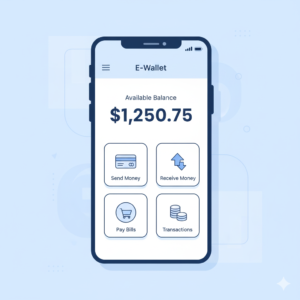
You cannot reach a destination if you do not know where you are starting. The first step in financial organization is absolute clarity. Many people avoid looking at their bank accounts out of fear, but knowledge is power. You need to calculate your Net Worth.
Your net worth is the most important scorecard of your financial health. It is a simple calculation: Assets minus Liabilities.
-
Assets (What you own): Cash in savings, checking accounts, retirement accounts (401k, IRA), the value of your car (if you sold it today), and real estate equity.
-
Liabilities (What you owe): Credit card balances, student loans, personal loans, car loans, and your mortgage.
The Power of Tracking
Do not just calculate this once. Set a recurring date—perhaps the first Sunday of every month—to update this figure. Watching your liabilities decrease and your assets increase provides the psychological momentum needed to stick to a financial plan. There are many apps available that can automate this, but a simple spreadsheet often works best for beginners because it forces you to engage with the numbers manually.
2. Mastering Your Cash Flow: The Art of Budgeting
Many people view a budget as a restriction—a diet for your money. In reality, a budget is permission to spend without guilt. It is the roadmap that tells your money where to go instead of wondering where it went.
To organize your finances for investing, you must have a surplus. You cannot invest if you spend more than you earn.
The 50/30/20 Rule
For those new to budgeting, the 50/30/20 rule is an excellent starting point:
-
50% Needs: Housing, groceries, utilities, transportation, and minimum debt payments.
-
30% Wants: Dining out, entertainment, hobbies, and subscriptions.
-
20% Savings & Debt Repayment: This is your “wealth building” category.
If your “Needs” exceed 50%, you have two choices: reduce your lifestyle (downsize your apartment, sell an expensive car) or increase your income (side hustles, career advancement). You cannot invest successfully until your cash flow is positive.
3. Eliminating Toxic Debt: The Snowball vs. Avalanche Method
This is the most critical step before investing. If you have credit card debt with an interest rate of 20% or 25%, paying that off offers a guaranteed “return on investment” of 20% or 25%. The stock market, on average, returns about 7% to 10% per year (adjusted for inflation). Mathematically, it makes no sense to invest while holding high-interest debt.
Identifying “Bad” Debt vs. “Good” Debt
-
Toxic (Bad) Debt: Credit cards, payday loans, and high-interest personal loans. These consume your wealth.
-
Manageable (Good) Debt: Mortgages or low-interest student loans. You do not necessarily need to pay off your house completely before investing, but you must eliminate the toxic debt first.
Choosing Your Strategy
To clear debt, choose one of these two proven psychological strategies:
-
The Debt Snowball: List your debts from smallest balance to largest balance, ignoring interest rates. Pay minimums on everything, but throw every extra dollar at the smallest debt. When it’s gone, roll that payment into the next smallest. This builds quick wins and motivation.
-
The Debt Avalanche: List your debts from highest interest rate to lowest. Attack the debt with the highest interest rate first. This saves you the most money mathematically over the long run, though it may take longer to see the first debt disappear.
4. Building the Fortress: The Emergency Fund

Imagine you start investing $500 a month. Three months later, your car transmission breaks, costing $1,500. If you don’t have cash savings, you will have to sell your investments (potentially at a loss) or put the repair on a credit card (going back into debt).
An emergency fund is your buffer against life’s unpredictability. It protects your investment portfolio.
How Much is Enough?
-
Stable Job/Dual Income: Aim for 3 months of essential living expenses.
-
Freelancer/Single Income/High Risk: Aim for 6 months of essential living expenses.
Where to Keep It?
Do not keep this money under your mattress, but do not invest it in the stock market either. It needs to be liquid (accessible) but separate from your checking account so you don’t accidentally spend it. A High-Yield Savings Account (HYSA) is the perfect vehicle. It offers a better interest rate than a standard bank account while keeping your principal safe and accessible within days.
5. Risk Management: The Role of Insurance in Financial Planning
Often overlooked, insurance is a cornerstone of financial organization. One major accident or health issue can wipe out decades of saving and investing if you are not properly insured. Before you focus on growing wealth, you must focus on protecting it.
-
Health Insurance: The number one cause of bankruptcy in the United States is medical debt. Ensure you have adequate coverage with a manageable deductible.
-
Auto and Home/Renters Insurance: Review your liability limits. If you are sued after an accident, your future investments could be garnished.
-
Life Insurance: If anyone relies on your income (spouse, children), term life insurance is essential. It is generally affordable and provides a safety net for your family. Avoid mixing insurance with investing (like Whole Life policies) unless you have exhausted all other tax-advantaged investment options; for most beginners, Term Life is superior.
-
Disability Insurance: Your ability to earn an income is your greatest asset. Short-term and long-term disability insurance protects your cash flow if you are injured and cannot work.
6. Understanding and Optimizing Your Credit Score
Even if you are not planning to borrow money soon, your credit score impacts your financial life. It can dictate your insurance premiums, your ability to rent an apartment, and even your eligibility for certain jobs.
Before investing, pull your credit report (you can do this for free once a year). Look for errors and dispute them.
Best Practices for a High Score:
-
Payment History: Never miss a payment. Set up autopay for the minimum amount on all accounts to ensure you are never late.
-
Credit Utilization: Keep your credit card balances below 30% of your limit. For example, if you have a $10,000 limit, never carry a balance over $3,000.
-
Length of History: Do not close old credit card accounts unless they charge an annual fee. The age of your accounts helps your score.
A high credit score is a tool. When you are ready to invest in real estate, for example, a high score will secure you a lower interest rate, saving you tens of thousands of dollars over the life of a loan.
7. Defining Your “Why”: Setting SMART Financial Goals

Money is a tool, not the goal. Investing just to “get rich” is vague and often leads to panic selling when the market drops. You need specific goals to guide your investment strategy.
Use the SMART criteria:
-
Specific: “I want to save for a down payment on a house.”
-
Measurable: “I need $40,000.”
-
Achievable: “Based on my budget, I can save $1,000 a month.”
-
Relevant: “I want to stop renting and build equity.”
-
Time-bound: “I will reach this goal in 40 months.”
Differentiate between Short-Term Goals (vacation, wedding, car) and Long-Term Goals (retirement, child’s education). Short-term money should generally be kept in savings accounts or CDs (Certificates of Deposit), while long-term money belongs in the market.
8. Increasing Your Income Shovel
There is a limit to how much you can cut from your budget (frugality), but there is no limit to how much you can earn. Once you have optimized your spending, look at the income side of the equation.
Can you work overtime? Is there a certification that would increase your salary? Do you have a skill you can freelance?
Every extra dollar you earn after your basic needs are met is a “super-dollar.” It goes purely toward debt elimination or investing. Increasing your income speeds up the timeline of every step mentioned above. This is the “business” side of personal finance—treating your career and skills as a business that needs to grow year over year.
9. The Psychology of Money: Preparing for Market Volatility
Organizing your finances is 80% behavior and 20% math. Before you invest, you must understand your own risk tolerance.
Ask yourself: If I invested $10,000 today and the market crashed tomorrow, leaving me with $6,000, would I panic and sell? Or would I see it as a sale and buy more?
If you would panic, you are not ready for aggressive investments. Organizing your mind is just as important as organizing your bank account. Educate yourself on the history of the stock market. Understanding that markets go up and down in cycles helps you stay calm when the inevitable downturns happen.
10. The Pre-Investment Checklist
Before opening that brokerage account, run through this final checklist. If you can check all these boxes, you are ready to start building wealth through investing:
-
[ ] Budget is active: I know exactly what comes in and goes out every month.
-
[ ] Gap created: I spend less than I earn consistently.
-
[ ] High-interest debt is gone: I have zero credit card debt.
-
[ ] Emergency fund is funded: I have 3–6 months of expenses in a generic savings account.
-
[ ] Employer match is maximized: (Note: If your employer offers a 401k match, this is the only investing you should do while paying off debt, as it is literally free money).
-
[ ] Goals are defined: I know what I am investing for and when I need the money.
The Path to Wealth is Boring, then Exciting

The process of organizing your finances is not glamorous. It involves spreadsheets, discipline, saying “no” to impulse purchases, and patience. It is the boring part of wealth building.
However, once this foundation is laid, the investing journey becomes incredibly exciting. You can watch your money grow without the anxiety of looming debt or the fear of a financial emergency derailing your progress. You will have moved from a position of financial fragility to one of financial strength.
By organizing your finances today, you are buying your future freedom. Start with step one—calculate your net worth—and take control of your financial destiny.